
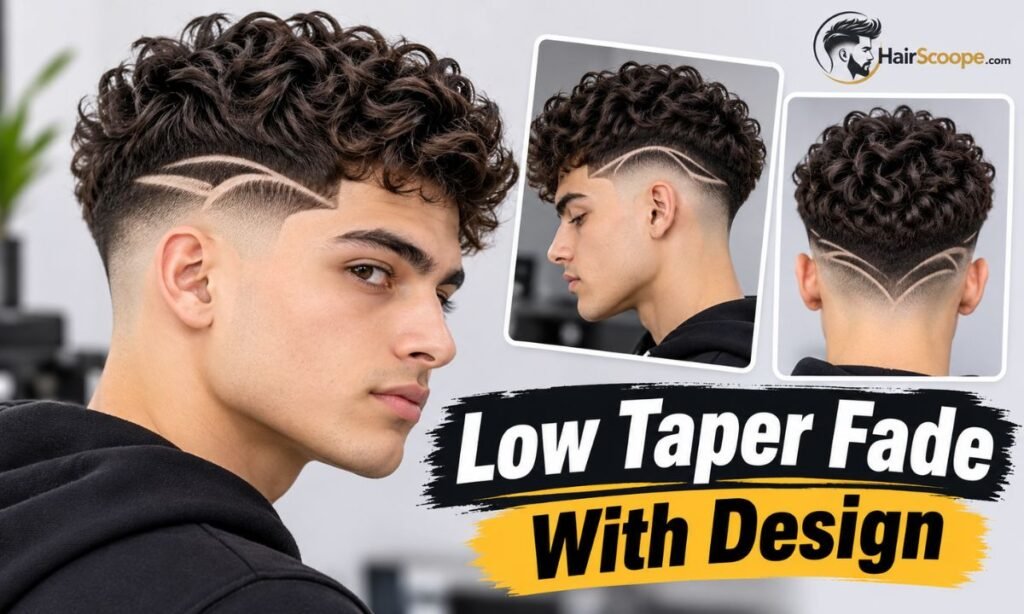
A low taper fade with design is a short, clean haircut with one extra detail: a pattern, line, or shape cut into the hair at the sides or back. For boys, it is one of the easiest ways to make a neat everyday cut feel personal without growing out a dramatic style.
This guide is written mainly for parents and for boys and teens who are choosing a cut. You will find what the haircut actually is, six genuinely different design placements, notes on hair type and face shape, how it compares with mid and high tapers, what to say to the barber, and how to keep it looking sharp between visits.
What Is a Low Taper Fade With Design?
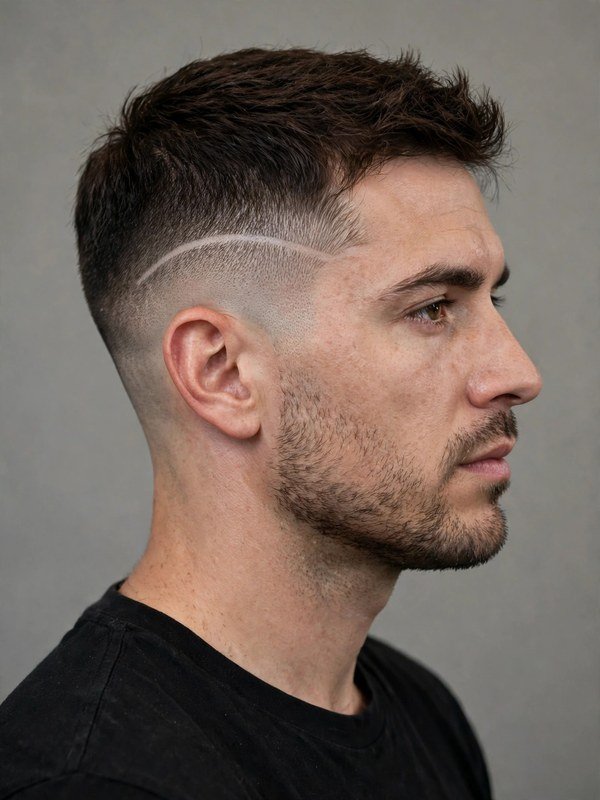
It is a low taper fade haircut with a shaved or clipper-cut design added on top of the faded area. The taper keeps the cut tidy. The design is the decoration.
Start with the taper. A low taper leaves the hair gradually shorter only around the sideburn area, the edge of the hairline around the ears, and the nape of the neck. The top stays longer, and most of the sides keep their length. A taper fade is a softer cousin of a skin fade: it blends, but it does not climb far up the head. If you are still weighing the two terms, this breakdown of low fade vs low taper explains how they differ.
The design is then cut into the short hair, usually with a trimmer or a razor. It might be a single thin line, a curve, a small star, or a shape on the back of the head. Because the hair around the ears is already short, the pattern shows up clearly without needing much removal of length.
Two terms come up often:
- Low taper line up: a crisp, straight edge along the front hairline and temples. Many designs begin here, and some boys simply ask for the line up with no other design.
- Hard part: a thin shaved line to mark where the hair parts. It is the most common “first design” for kids.
A useful rule of thumb: the shorter the surrounding hair, the sharper the design reads. On a very short taper, a pattern looks bold. On a slightly longer one, it looks softer and more subtle.
Why the Low Taper Designs Is Popular in 2026
There is no reliable data that ranks this cut against others, so it is better to talk about why it appeals than to claim it is the number-one style. The practical reasons are easy to see.
It looks finished without being extreme. A low taper stays close to a classic cut, so it works for school, family events, and sports. The design gives it personality in a way a plain cut does not.
It suits a wide range of boys. Because the top can be left short, medium, curly, or textured, the same base cut works for many hair types.
It is easy to adjust. A boy who is unsure about a design can start with a thin line. If he loves it, the next visit can add more. If he does not, it grows out within a couple of cuts.
It is easier to live with than a high fade. The taper is less dramatic as it grows, so the shape tends to stay presentable a bit longer than a skin fade does.
School rules matter too. Many schools allow small, simple designs and restrict anything large, offensive, or distracting. It is worth checking the dress code before booking.
Best Low Taper Fade With Design Ideas for Men and Boys
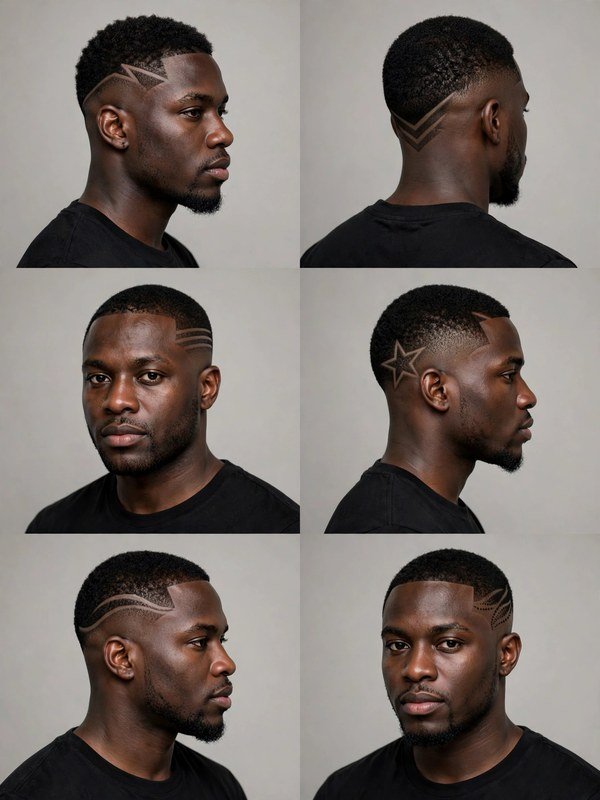
The six options below differ in where the design sits, how large it is, and how much upkeep it needs. Everything works on boys from toddlers to teens, and most also work for adult men.
Low Taper With Design on the Side
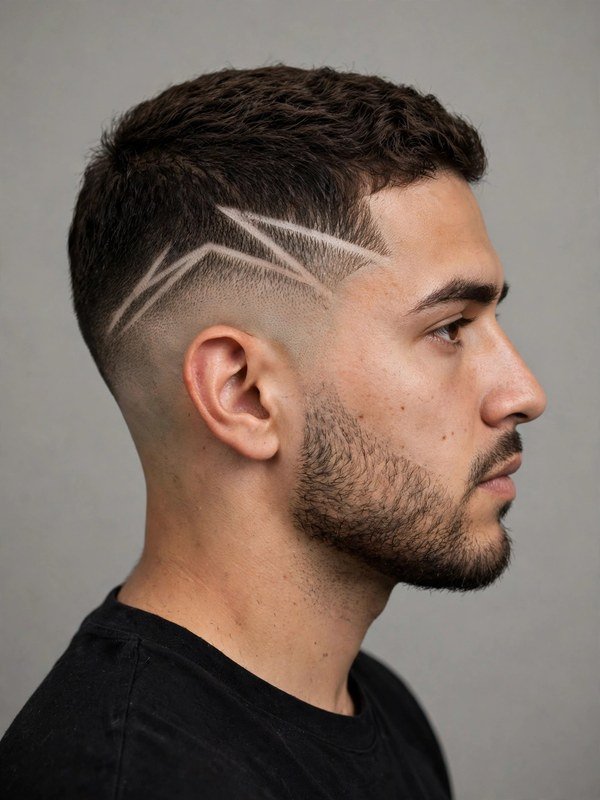
This is the classic placement. A design is cut into the short hair above and behind one ear, or on both sides. Usually it is a short, simple shape: a slim line, a pair of lines, or a small cut-out.
It is the best starting point for a first design, because it is easy for the boy to see in a mirror and easy for the barber to keep it symmetrical. The trade-off is that it fades quickly. Once the surrounding hair grows in, the edges blur.
A low taper with design on the side suits boys who want something visible but not loud.
Low Taper With Design on the Back
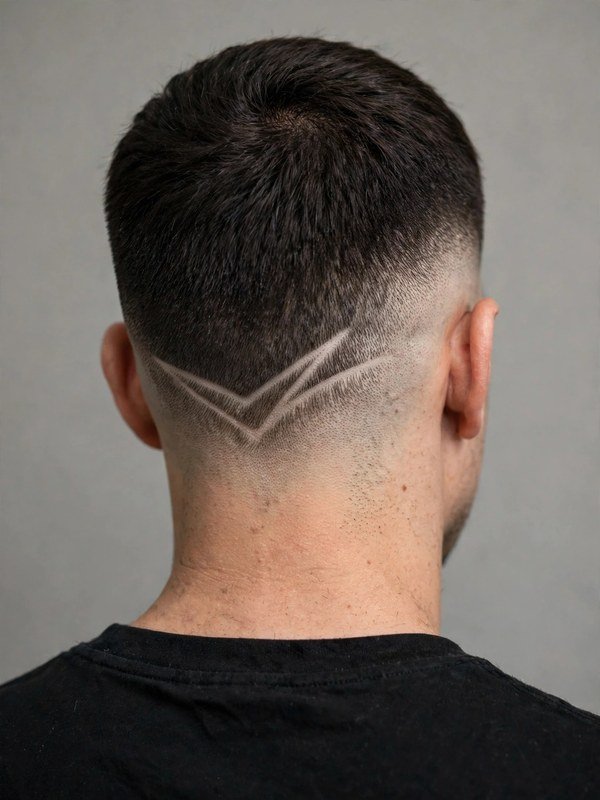
Here the design sits at the back of the head, above the neckline, often centered. The barber might cut a vertical line, a short pattern, or a small symbol.
This placement is more subtle from the front, which makes it a good choice for boys who attend schools with stricter appearance rules or who want a surprise element. It does have a downside: the boy cannot easily check it himself, so it is worth asking the barber to show the finished result with a hand mirror.
Back placement also needs a clean neckline to look good. More on that in the neckline section below.
Low Taper Fade With a Line Design
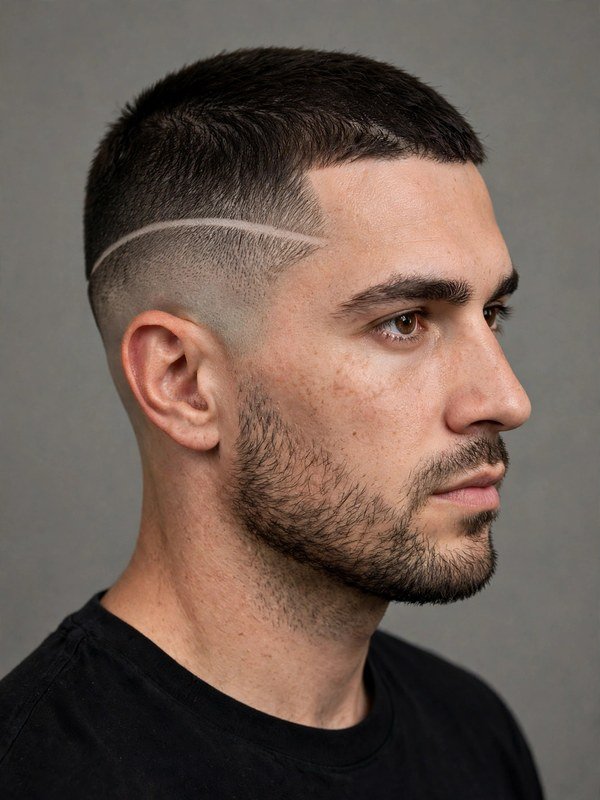
This is the simplest and most popular type. One or two thin lines are cut parallel to the taper edge, or a single line is cut from the temple towards the back.
Line designs are quick to cut, easy to match on both sides, and forgiving as they grow. They work well for younger children who may not sit still long, because the barber does not need many passes. They also look right on every hair type.
Low Taper Fade With a Star Design
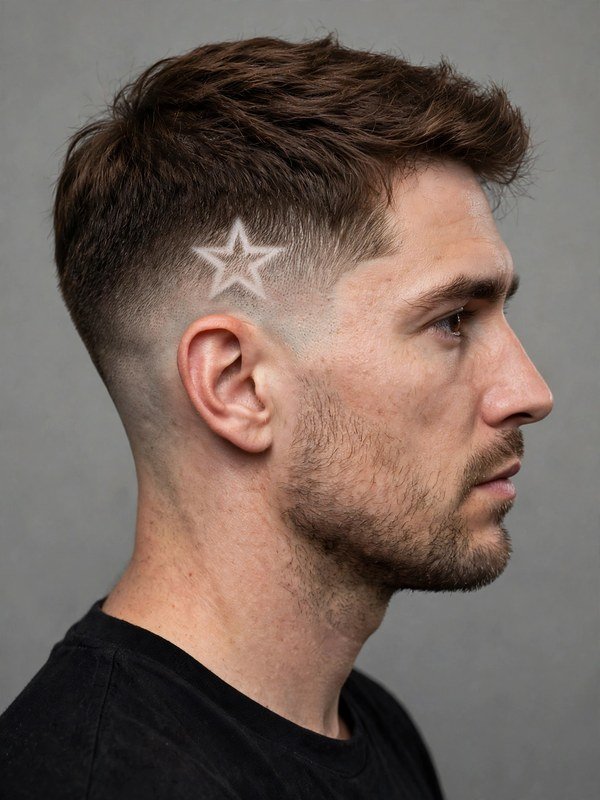
A star is a small, recognizable shape, usually cut near the temple or just above the ear. It is more playful than a line and often requested by younger boys, sports fans, and teenagers who want something with a theme.
Stars are more detailed than lines, so they need steadier clipper work and a haircut that has been kept fresh. A blurry star can look like a mistake, so this one is best for boys who can get regular visits. If your child wiggles in the chair, a line is the safer choice.
Low Taper Fade With a Curved Design
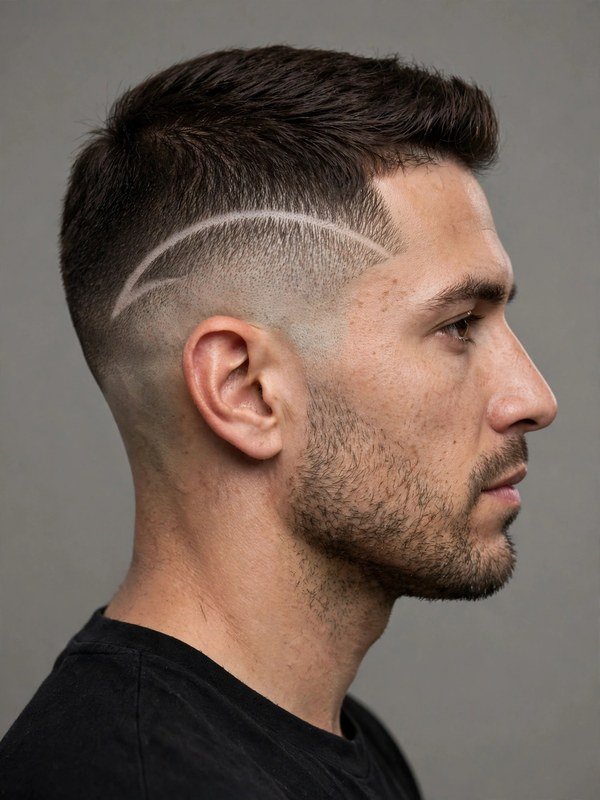
Curved designs use a flowing line or swoop instead of a straight edge. They might follow the shape of the ear, sweep towards the back of the head, or combine with a curved part.
The curve softens the look. It reads as a bit more artistic than a straight line, which suits boys who want a design that feels designed, not geometric. Curves are harder to cut cleanly than straight lines, so choose a barber who has shown similar work.
Low Taper Fade With Design for Black Men
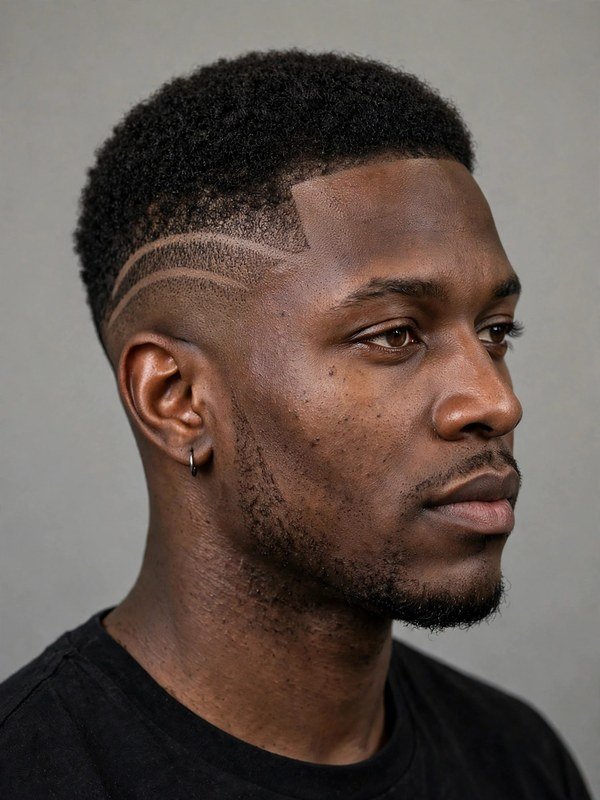
Low taper fades with designs are a long-standing part of many Black barbershop traditions, and the cut works especially well on tightly textured hair. For boys and men with coily or curly hair, a taper creates a crisp, defined edge, and a design shows up clearly against the short sides.
A few practical points:
- Edge-up and hairline: a sharp line up is often part of this look. Ask for the shape you want at the temples and forehead, whether it is natural, slightly squared, or rounded.
- Top texture: the top can be kept short with waves, shaped with a short twist-out, or left as natural curls or coils.
- Skin and razor care: curlier hair is more prone to razor bumps or irritation after close shaving. If your son has sensitive skin, ask the barber to use a trimmer rather than a razor on the design, and apply a soothing aftershave balm or moisturizer afterward.
- Designs on short hair: because coily hair can look dense, a design is easy to see even on a longer taper. A barber can choose how bold to make it.
A skilled barber will adjust the design to the boy’s hairline and head shape, rather than copying a picture exactly.
Simple Line Designs for a Clean Look
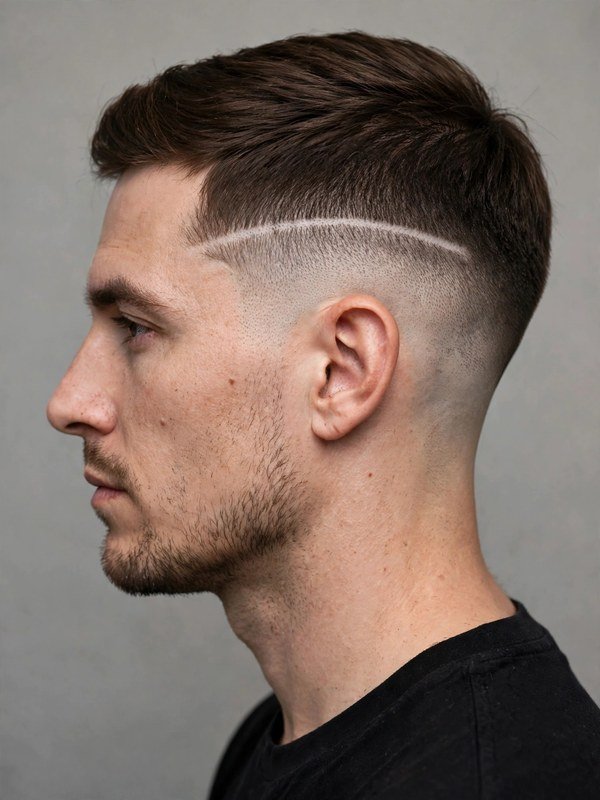
If you want the look without the commitment, simple lines are the safest place to start. They fade into the haircut naturally, and they are the least likely to look wrong if the cut grows out a little.
Types of simple line work:
- Single straight line: one thin line near the temple, usually angled or curved slightly. Subtle and tidy.
- Double or triple lines: two or three parallel lines. More visible, still clean.
- Hard part: a shaved line that marks the side part. It adds structure to a short top.
- Low taper line up: a precise, straight line along the forehead and temples. It is not technically a pattern, but it gives the haircut the same “finished” appearance that a design does.
For children, a few small tips help: ask the barber to explain what they are doing, keep the cut short, and avoid anything with many tiny details. A single clean line looks better than a complicated shape that comes out uneven.
Low Taper Fade With Design on the Back and Neckline
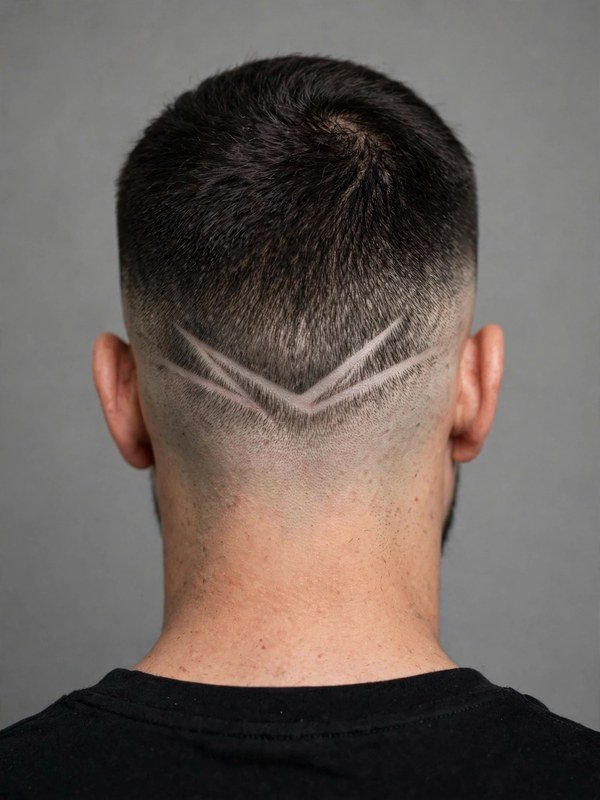
The back of the head and neckline decide how polished the whole haircut looks. A taper already thins the hair at the nape, so any back design sits on a neat base.
Neckline choices change the final look:
- Rounded: follows the natural curve of the nape. Soft and forgiving as it grows.
- Squared (blocked): straight across with sharp corners. Crisp, but it looks messy faster.
- Tapered (natural): fades into the skin with no hard line. The most relaxed and the easiest to maintain.
A design on the back usually works best with a tapered or rounded neckline. A squared neckline paired with a back design can feel busy.
If a boy has a strong hair whorl or cowlick at the crown or nape, mention it before the barber begins. Some designs sit awkwardly over a whorl because the hair grows in different directions. The barber may suggest moving the design slightly.
Low Taper Fade With Design for Different Hair Types
The taper and design stay the same in principle, but hair type changes how the top looks, how visible the design is, and what the haircut needs afterward.
Low Taper Fade With Design for Curly Hair

Curly hair adds volume and shape to the top, which creates a strong contrast with the tight taper and design on the sides. Curls tend to spring up after cutting, so the barber may leave a bit more length than you expect. A curl cream or leave-in conditioner keeps definition and cuts frizz. Design lines look especially neat against curls because the contrast is so clear.
Low Taper Fade With Design for Wavy Hair
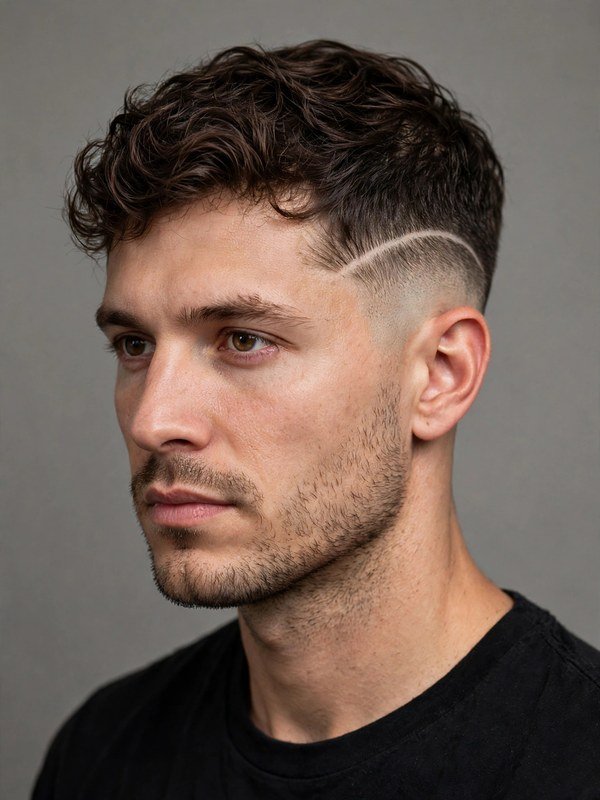
Wavy hair sits between straight and curly. It adds natural movement and a little texture without too much volume. A taper keeps the sides slim so waves on top do not make the head look wider. Lightweight cream or sea-salt spray can add shape. Wavy hair can also lie flat when too short, so ask the barber how much to leave on top.
Low Taper Fade With Design for Straight Hair

Straight hair shows every line, which is good news for a low taper fade with design for straight hair: the transitions and the pattern look clean. The trade-off is that mistakes are also visible, and straight hair can look flat on top. A little paste or clay adds texture. A side part, a short crop, or a swept-forward fringe all work. Fine, straight hair needs a carefully blended taper, because any harsh line shows.
Low Taper Fade With Design for Coily or Thick Hair
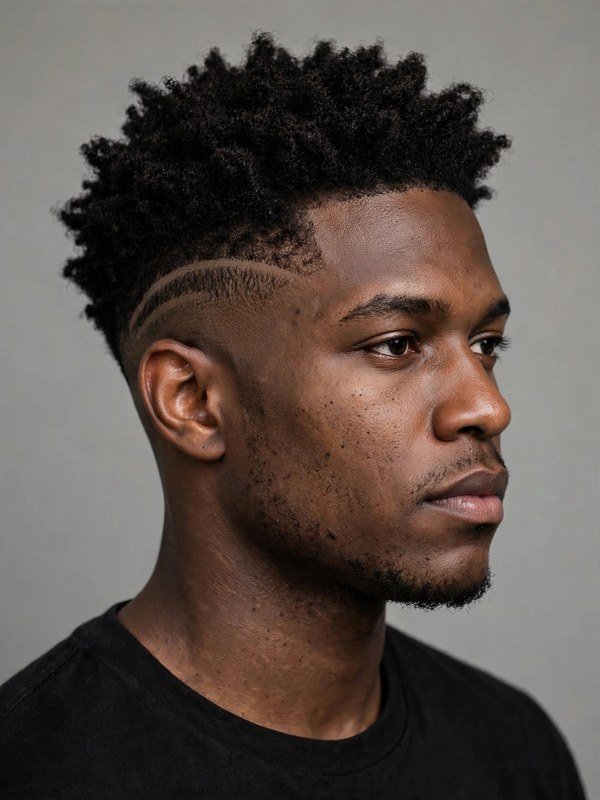
Coily or thick hair holds a design very well because it is dense and defined, and the taper creates an easy, neat shape. The top can be left short, shaped into waves or twists, or kept natural. The main consideration is shrinkage: coily hair looks shorter than it is, so the barber may leave extra length to get the effect you want. Moisturizing products help avoid dryness, and a clean line up keeps the shape sharp.
Low Taper Fade With Design for Fine Hair
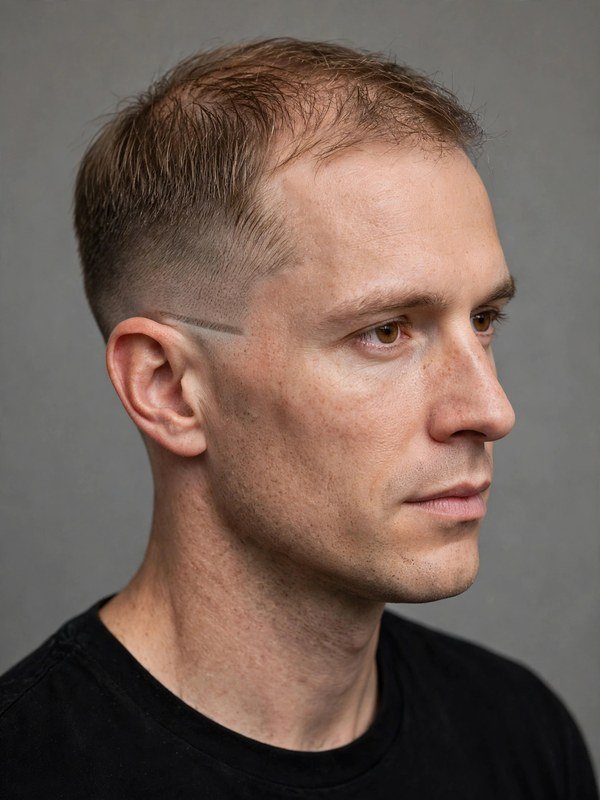
Fine hair can look thinner at the top, and a design in the sides may expose more scalp than expected. A taper helps because it keeps sides slim while leaving some density. Keep the design small and simple. A light texturizing spray or a little matte paste adds body to the top without weighing it down. Avoid heavy products, which flatten fine hair.
Low Taper Fade With Design for Different Face Shapes
Face shape is only a guide, not a rule. Still, small changes in top length and design placement can balance the overall look.
- Oval: most versions work. Choose by preference.
- Round: a bit of height on top and a clean, angled design can add definition. A line that follows the cheekbone direction helps avoid a wider look.
- Square: a softer curve in the design can balance a strong jaw, while a short top keeps it sharp.
- Oblong or long: avoid adding too much height. A shorter top and a design placed at the sides can emphasize width.
- Heart: a slightly longer fringe can balance a wider forehead, while a tapered neckline keeps the chin area light.
- Diamond: keep the sides close and consider texture on top to soften the cheekbones.
For children, face shape changes as they grow. A cut that works at six may look different at twelve, so treat it as a starting point.
Low Taper Fade With Design vs. Mid Taper Fade
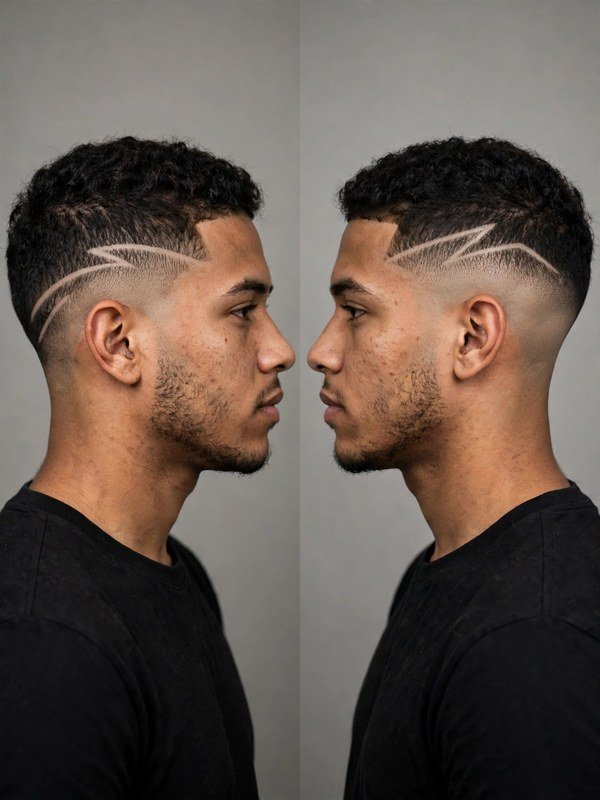
The main difference is where the fade starts. A low taper stays near the ears and neckline. A mid taper fade begins higher, around the temples, so more of the side is short.
On a mid taper, the design has more room, so it can be larger or more detailed. The cost is that the haircut is more noticeable and needs more frequent visits. A low taper looks more natural and more conservative, and the pattern is naturally smaller.
Choose the low version if you want a softer look or stricter school rules apply. Choose the mid version if you want more contrast or a larger design. For a fuller side-by-side, see our guide to low taper fade vs mid taper fade.
Low Taper Fade With Design vs. High Taper Fade
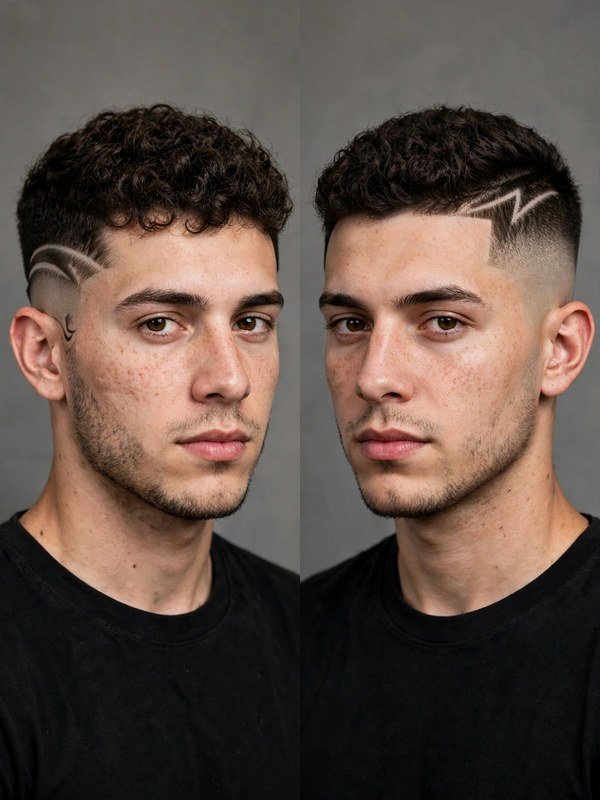
A high taper fade starts at the upper sides of the head and leaves much less hair on the sides. It creates the strongest contrast with the top and gives the most space for a design.
The trade-off is upkeep and visibility. High tapers lose their shape quickly, and designs grow out more noticeably. Some schools and workplaces may also see them as bolder.
| Low taper | Mid taper | High taper | |
| Where it starts | Around ears and neckline | Around temples | Upper sides of the head |
| Contrast | Soft | Moderate | Strong |
| Design space | Small to medium | Medium | Large |
| Grow-out | Gentlest | Moderate | Most noticeable |
| Best for | Everyday, school, conservative settings | Balanced look | Bold style |
If you like the idea of a design but want less commitment, a low taper is the easiest way in.
How to Ask Your Barber for a Low Taper Fade With Design
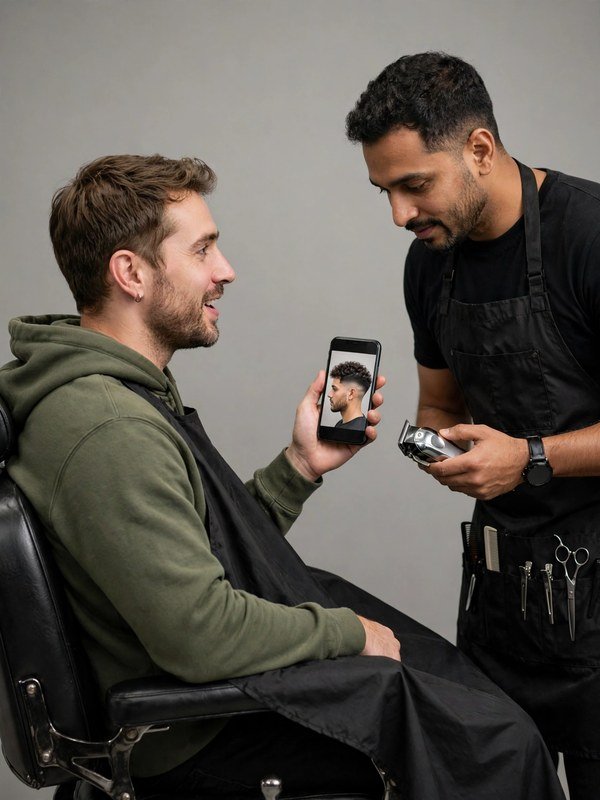
The cut’s name does not tell the barber everything. Explain these points:
- Taper height: “low taper,” starting near the ears and neckline.
- Top length: how much you want left on top. A photo helps more than words.
- Side length: whether the sides should be very short or have some length.
- Design: show a picture and say where it goes (side, back, near the temple). Explain size and whether the design should be thin and subtle or bold.
- Hairline: whether you want a sharp line up or a natural edge.
- Neckline: rounded, squared, or tapered.
- Maintenance: how often you can visit and how much styling you want to do.
For a child, bring a reference photo, say if he has a sensitive scalp or hair whorl, and ask the barber to check in with the boy during the cut. If your son is nervous, a calm barber and a simple design make the visit easier.
Maintenance and Styling Tips
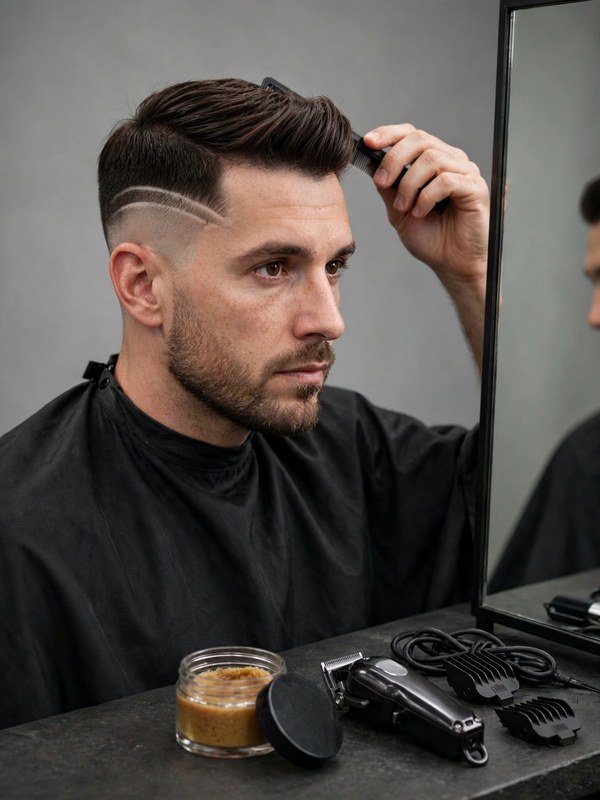
Expect to return every few weeks. Short tapers and designs lose clarity as hair grows, and the speed varies with each child’s hair. When the design looks blurry or the neckline looks fuzzy, it is time for a refresh.
Styling is simple.
- Straight or fine hair: a small amount of paste or cream for texture.
- Wavy hair: light cream or sea-salt spray.
- Curly or coily hair: a curl cream or leave-in conditioner to keep curls defined and moisturized.
- Very short tops: often no product needed. A brush and water may be enough.
Keep the scalp comfortable. Wash regularly, rinse out products thoroughly, and moisturize if the skin feels dry. If you notice irritation, redness, or ongoing itching, speak to a doctor rather than guessing the cause.
School and sports. Helmets, hats, and swimming do not damage the design, but sweat and chlorine can dry hair, so rinse and moisturize afterward. Check school guidelines for any restrictions on designs.
Grow-out. The taper blurs first around the ears and neckline. The design usually fades gradually rather than disappearing at once. If you want a softer finish, a barber can clean up the sides and neckline and leave the design out the next time.
Common Mistakes to Avoid With Haircut Designs
- Choosing a design that is too detailed. Fine details disappear quickly and are hard to cut on a wiggly child.
- Not showing a photo. Describing a design in words often leads to a different result.
- Ignoring hair type. A pattern that looks great on tight curls may disappear on fine, straight hair.
- Forgetting school rules. Check what is allowed before the appointment.
- Putting the design where it cannot be seen or checked. Ask to see the back with a mirror.
- Skipping barber visits. The cut only looks sharp when it is fresh.
- Using heavy products. Thick pomades can weigh down fine hair and clog a young scalp.
- Pushing a child into a design. The best haircut is one the boy likes and feels comfortable wearing.
Final Thoughts
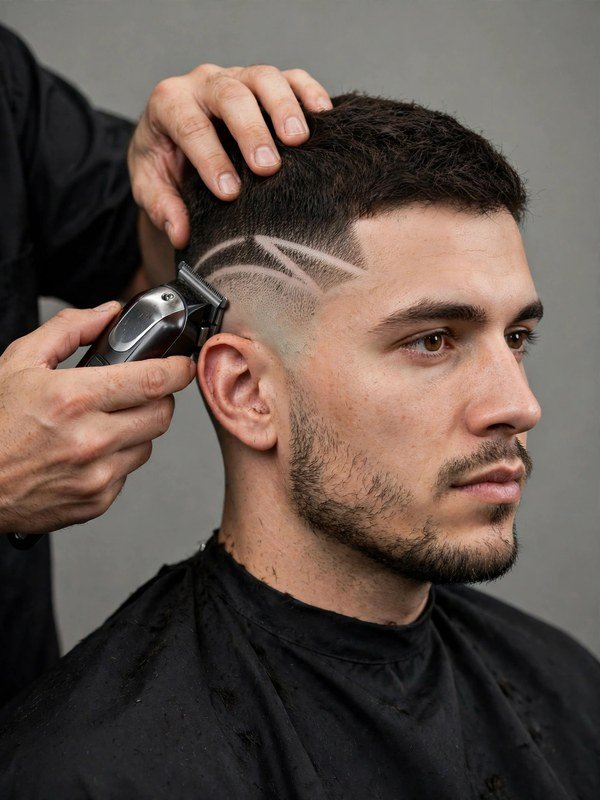
A low taper fade with design is a flexible cut: neat enough for everyday life, with a detail that makes it personal. The best version depends on three things: how visible you want the design to be, how often you can get back to the barber, and how the boy’s hair behaves.
If you are unsure, start with a thin line on a low taper. It is easy to cut, easy to grow out, and easy to build on. Bring a reference photo, mention any hair whorls or sensitive skin, and let the boy have a say. That combination gets you a cut he is happy to wear.