
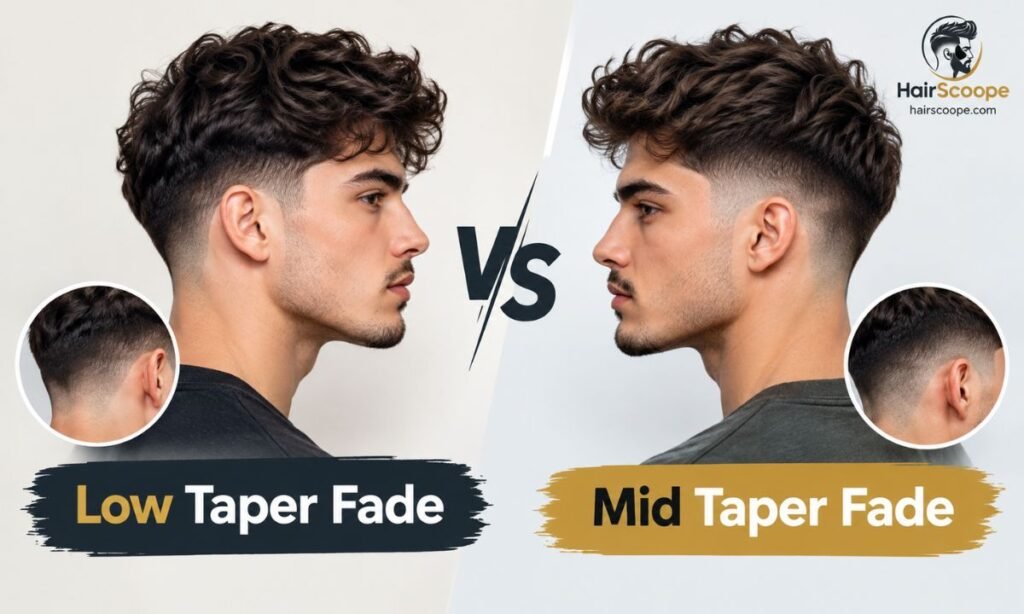
If you’re stuck between a low taper vs mid taper, you’re picking between two versions of the same idea. Both keep hair longer on top and shorten the sides and back gradually. The real question is how much of the head gets that treatment.
This guide explains what each cut looks like, how they behave on different hair types, which hairstyles pair best with them, and how to ask for the one you want.
Low Taper Fade vs Mid Taper Fade: The Short Version
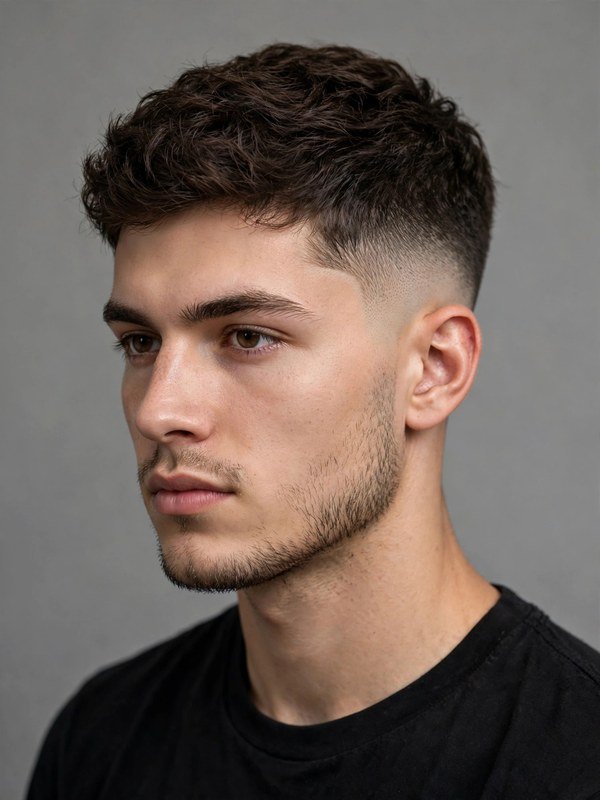
The difference is where the taper starts. A low taper begins close to the ear and the nape, so only a narrow band of hair gets shorter and most of the sides stay intact. A mid taper starts higher, around the temple and the middle of the sides, so more of the head is shortened and the contrast with the top is stronger.
In the low vs mid taper decision, a few things matter most:
- Choose low for a softer, more conservative look, gentler grow-out, and more length left on the sides.
- Choose mid for a cleaner, more defined shape, less side bulk, and more contrast with the top.
- Both can be cut as a taper (gradual, usually finishing with a little length) or a skin fade, depending on what you request.
What Is a Low Taper Fade?
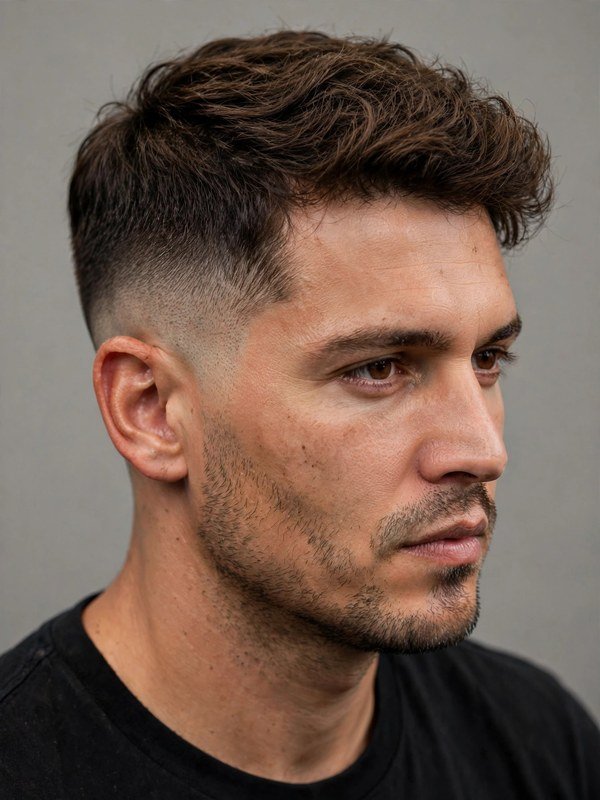
A low taper fade shortens the hair in a thin arc around the ear and across the nape, following the natural hairline. Above that line, the sides stay longer and blend up into the top. From the side, you see a small, tidy area of shorter hair framing the ear and neck, while most of the side of the head keeps its length.
This is the more restrained of the two. The change in length is gradual, so the cut reads as neat rather than dramatic. If you’re also comparing a taper with a true fade at this height, our breakdown of low fade vs low taper explains how the finish differs.
What Is a Mid Taper Fade?
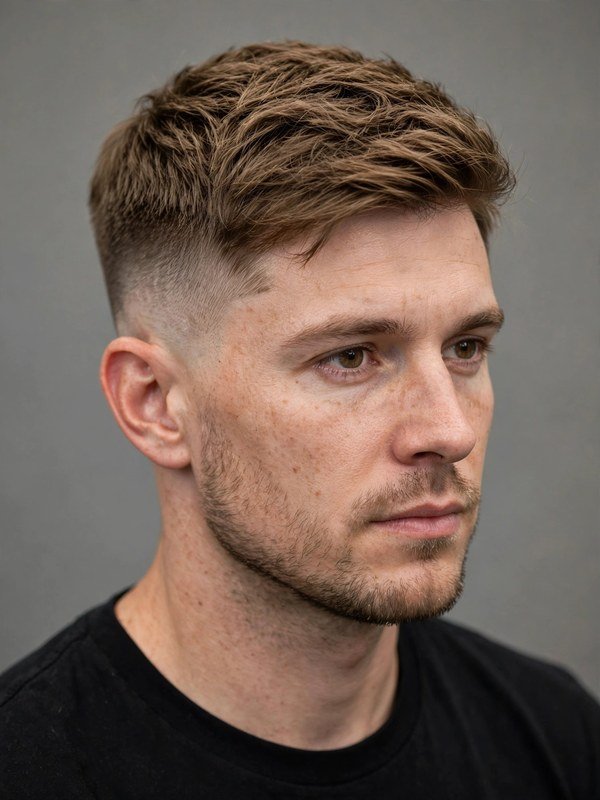
A mid taper fade starts higher on the head, roughly around the temple, and works down through the sides to the neckline. The shortened area is larger, so you see more of the contrast between the closely cut sides and the longer top. The silhouette is slimmer at the sides and the head looks more sculpted.
It sits in the middle of the range: sharper than a low taper, but not as bold as a high one. That’s why it’s a common default for men who want a defined cut without making a big statement.
Low Taper Fade vs Mid Taper Fade: Side-by-Side Comparison
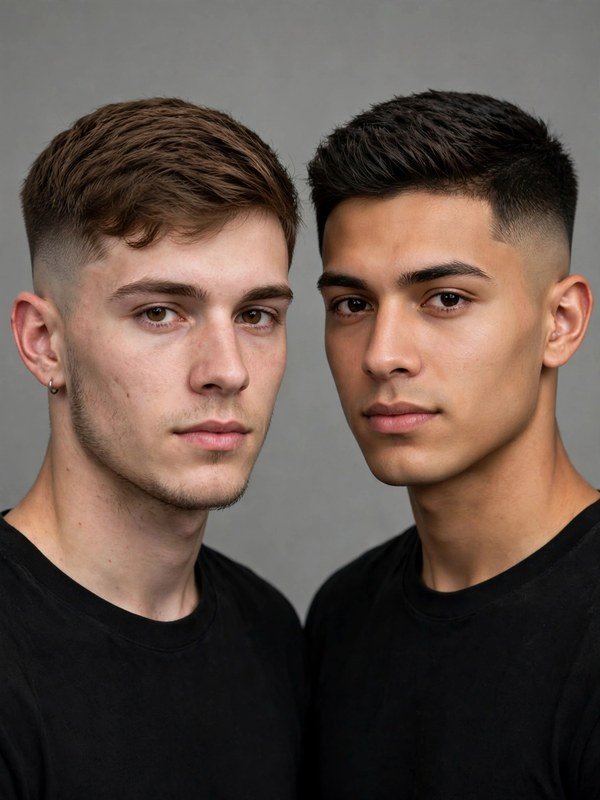
Here’s how the mid taper fade vs low taper fade question breaks down in practice:
| Factor | Low Taper Fade | Mid Taper Fade |
| Where it starts | Around the ear and nape | Around the temple, mid-side |
| Amount of hair shortened | A narrow band | A larger section of the sides |
| Contrast with the top | Soft and subtle | Moderate and more defined |
| Side bulk | More retained | Less, so a slimmer profile |
| Overall feel | Conservative, classic | Clean, sculpted, a little sharper |
| Grow-out | Softer, more forgiving | Shows sooner because more area is short |
| Best for | Subtle change, easy upkeep | Defined shape, reducing side width |
A low taper leaves more hair around the sides than a mid taper, creating a softer transition and generally less dramatic grow-out. That single relationship explains most of the other differences in the table.
Which Taper Fade Looks More Professional?
Both work in professional settings, and neither is automatically the safer choice. What makes a cut look office-appropriate is how much contrast it shows, how tidy the edges are, and how the top is styled.
A low taper tends to read as the more conservative option because the shortened area is small and the sides stay fuller. A mid taper is still perfectly workable for most offices, but the larger area of short hair makes the cut look a little more deliberate and modern. If your workplace or school has specific grooming expectations, a taper that finishes with some length instead of skin is usually the more understated version of either cut.
Styling matters as much as height. A neatly combed side part on a mid taper can look more formal than a messy low taper with a loose fringe.
Which Taper Fade Suits Your Face Shape?
Face shape is a guideline, not a rule. What a taper really changes is the visual balance between the top and the sides, and you can adjust that with fringe, top length, and volume.
- Oval: Balanced proportions, so either works. Choose based on lifestyle and styling preference.
- Round: A mid taper slims the sides and adds contrast, which can make the face look a little longer when paired with some height on top. A low taper can still work if the top has lift.
- Square: Either height works. A softer top, such as a textured fringe, can offset a strong jawline if you want less angularity.
- Oblong: Very short sides plus a lot of height can emphasize length. A low taper keeps more width at the sides, and a fringe can shorten the look of the forehead.
- Heart: A wider forehead and narrower chin often pair well with a fringe or lower-volume top. A low taper keeps the sides from looking too stripped back.
- Diamond: If you want to soften wide cheekbones, a low taper leaves more hair at the sides, while a mid taper works with a fringe to balance the forehead.
Treat these as starting points. Hairline, hair density, and how you style the top will change the result more than the taper height alone.
Low Taper Fade vs Mid Taper Fade for Different Hair Types
Hair type affects how the taper looks as much as the height does, mostly through side volume and how visible the transition is.
Straight Hair
Straight hair shows the blend clearly, so the cleanliness of the taper is more noticeable. It also tends to lie flat at the sides, so a low taper looks neat without much effort. A mid taper gives straight hair a sharper outline, though it can look stark if the top is styled completely flat.
Wavy Hair
Wavy hair can puff out at the sides when it has length. A mid taper removes some of that width and keeps the top waves as the feature. A low taper retains a softer, fuller side profile, which suits a relaxed look.
Curly Hair
With curls, the contrast between a curly top and shortened sides is the point of the cut. A mid taper makes the curls on top stand out more. A low taper keeps more curl at the sides, which looks fuller but needs more shaping to avoid a wide silhouette. A wide-tooth comb used on wet hair can help limit frizz and breakage, which Healthline’s guide to hairbrush types notes is a risk with combing dry curly hair.
Thick Hair
Thick hair builds bulk at the sides, so a low taper can leave a wider silhouette, sometimes called a mushroom shape, as it grows. A mid taper removes more weight and keeps the shape tighter, which is why many men with dense hair prefer it.
Fine Hair
Fine hair can look thinner when the sides are cut very short, since less hair means more scalp shows through. A low taper preserves more coverage at the sides. A mid taper can still work, but ask for a gentler finish rather than a skin-level blend, and keep the top long enough to give the look some body.
Afro-Textured Hair
Tapers are well suited to coily and afro-textured hair because the structure holds a defined shape and the contrast is easy to see. Shrinkage matters here: the top will look shorter than it really is, so discuss length with your barber while the hair is stretched or at its natural size. A mid taper makes twists, coils, or a high-top stand out, while a low taper keeps a softer frame. For more options, see this guide to mid taper fade styles for Black men.
Best Hairstyles to Pair With a Low or Mid Taper Fade
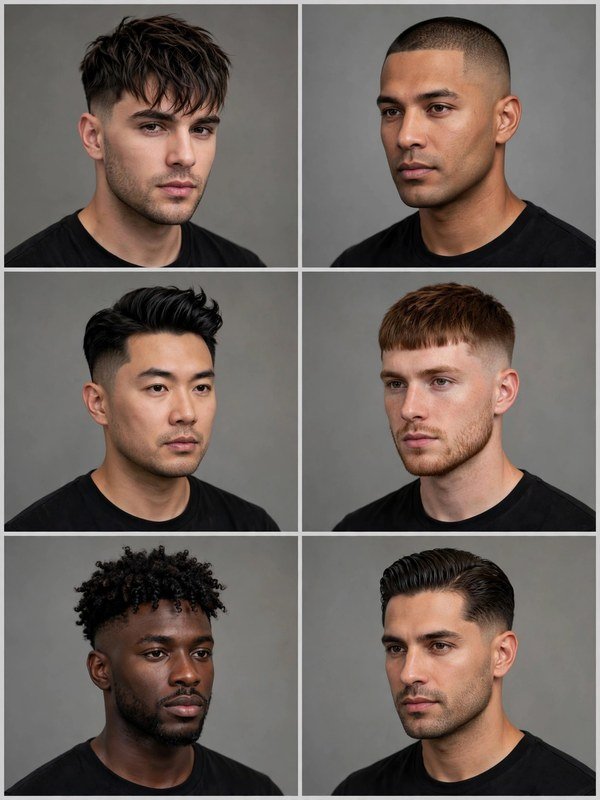
Most tops work with either taper. What changes is the balance: low keeps the look softer, mid sharpens the outline.
Textured Fringe
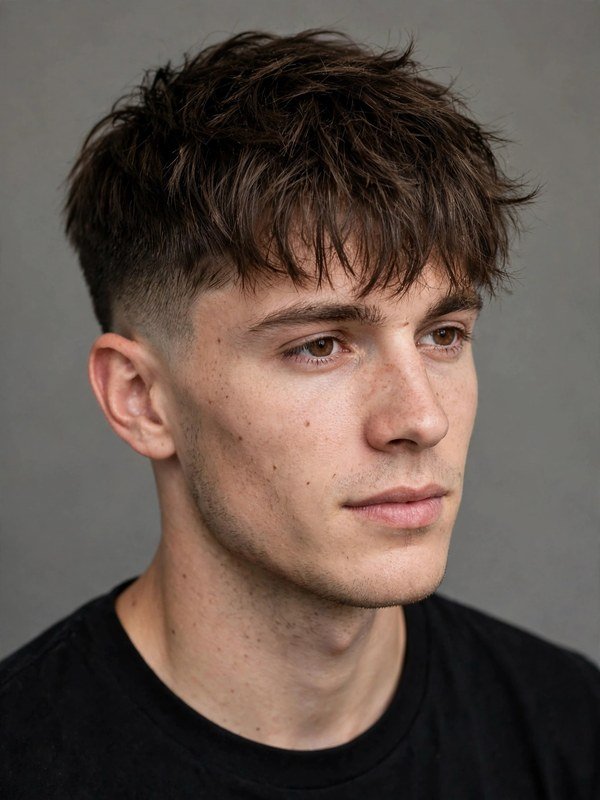
A short to medium fringe is cut with choppy layers so it breaks up across the forehead. It works well with a low taper because the soft sides match the soft top. A mid taper makes the fringe look more deliberate and structured.
Curly Top
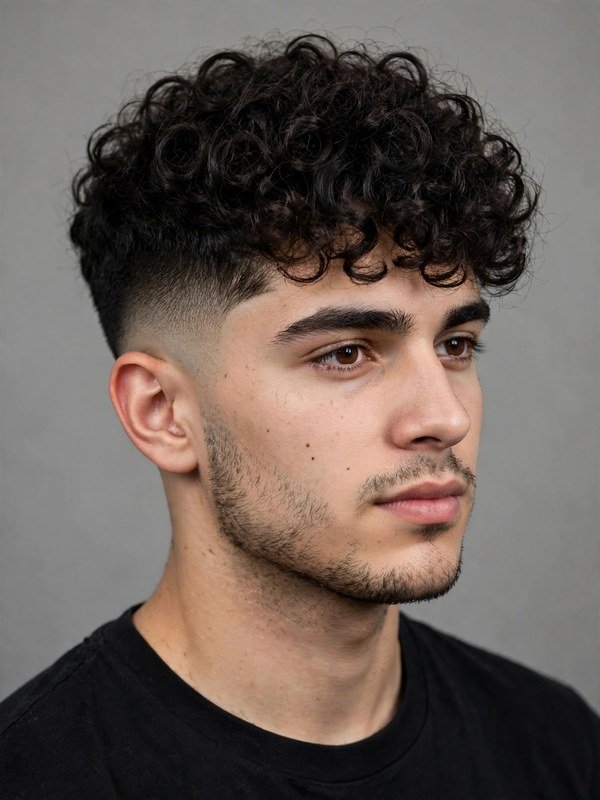
Natural curls sit on top with shortened sides. This is where a mid taper really helps, since it keeps the curls from being swallowed by side volume. A low taper works if you want more fullness around the sides.
Buzz Cut
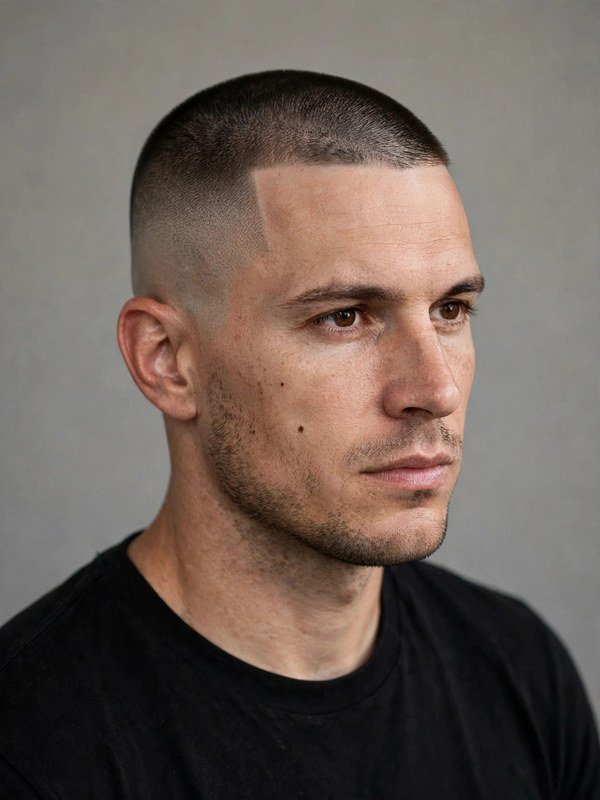
A buzz cut with tapered edges keeps everything short, with the taper defining the neckline and ears. A low taper keeps the effect subtle. A mid taper gives it a slightly sharper outline, which is useful if the buzz has a bit of length left on top.
French Crop
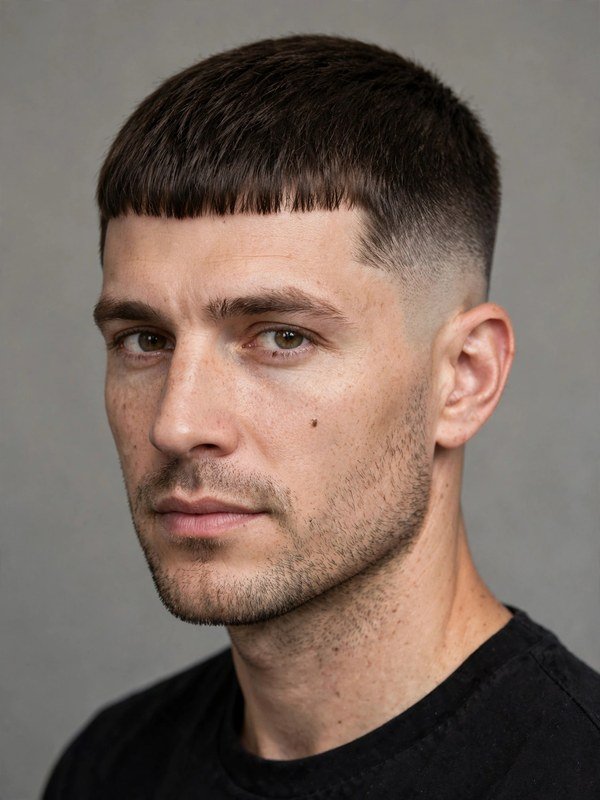
A French crop is short on top with a straight, blunt fringe across the forehead. It’s an easy, low-styling cut. A low taper keeps it casual, while a mid taper makes the crop look more graphic.
Quiff
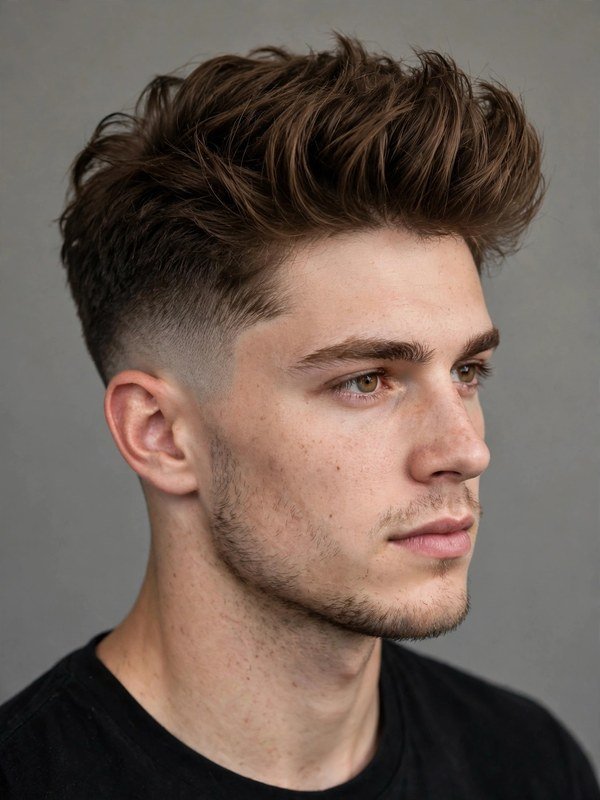
A quiff is longer on top, swept upward and back at the front. The extra height looks balanced with a mid taper since the sides are slimmer. A low taper gives a quiff a softer, more classic frame.
Slick Back
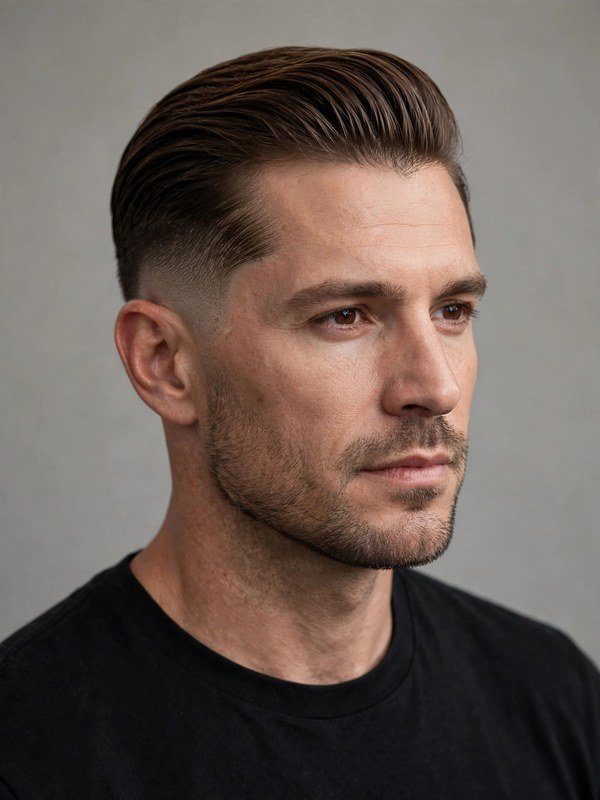
Hair is combed straight back with product for a smooth finish. Because the outline is so exposed, the cleanliness of the taper shows. A mid taper tends to look sharper here, while a low taper feels more traditional.
Messy Textured Hair
A loose, piece-y top styled with a matte product. Messy styles benefit from a low taper that keeps the sides relaxed, though a mid taper can stop the look from becoming shapeless on thicker hair.
Side Part
A defined part with hair combed to one side, ranging from casual to formal. A low taper keeps it conservative, and a mid taper adds a crisper, modern edge. This is one of the easiest styles to pair with either.
Maintenance: Which Taper Fade Lasts Longer?
The low taper usually lasts longer visually. The shortened area is small, so as hair grows the cut softens gradually and still looks reasonable for longer. The neckline and sideburns lose their crispness first.
A mid taper has a more freshly cut area, so growth shows sooner and the shape loses definition faster. If you like crisp edges, you’ll probably visit the barber more often with a mid taper.
Exact timing depends on how fast your hair grows, how short the sides are cut, and how sharp you want the cut to stay. If you can stretch the time between visits, a low taper with a taper finish (rather than skin) is the more forgiving option.
As either grows out, the sides are what you notice first. A low taper tends to turn into a rounded, natural shape. A mid taper can look unbalanced for a short period while the sides catch up with the top. Asking your barber to leave a little extra length at the finish gives you a softer transition.
Everyday Styling and Best Hair Products
The taper only does half the work. The top determines how the cut looks day to day, and product choice depends on the finish you want:
- Matte clay or paste: Adds texture and hold without shine, good for textured fringes, crops, and messy styles.
- Pomade: Gives a polished, smoother finish for side parts and slick backs.
- Sea-salt spray or light mousse: Adds grip and volume to fine or straight hair before blow-drying.
- Curl cream or leave-in conditioner: Defines curls and controls frizz on curly and afro-textured hair.
- Heat protectant: Worth using if you blow-dry regularly, since heat can damage hair over time.
For a quiff or volume, blow-dry the top while pushing hair upward and back, then finish with product. For a flatter style, a comb and a small amount of product are enough. Use less than you think you need, because too much product weighs hair down and builds up over time.
Low Taper Fade vs Mid Taper Fade: Pros and Cons
Low taper fade
- Pros: Subtle and easy to wear, leaves more length at the sides, softer grow-out, works in most settings.
- Cons: Less contrast, can look bulky on thick hair, and the sides may look fuller than you want.
Mid taper fade
- Pros: Cleaner, more defined shape, reduces side bulk, highlights the top.
- Cons: Needs more frequent barber visits, shows growth sooner, and can reveal thinner areas on fine hair.
Neither is better overall. The right pick depends on your hair, your schedule, and how much contrast you like.
How to Ask Your Barber for the Right Taper Fade
Don’t rely on the name alone. Guard numbers and terminology vary between barbers and between countries, and “taper” can mean different finishes to different people. Be specific about:
- Where the taper starts: “Start the taper around the ear and nape” for low, or “start around the temple” for mid.
- How short it ends: Skin, a very short stubble, or a little length left.
- Top length: Show with your fingers or a reference, especially for fringes and quiffs.
- Neckline: Natural, rounded, or squared off.
- Sideburns: Whether to keep, trim, or blend them in.
- Finish: Soft and natural or sharp and defined.
Bring a reference photo and say what you like about it. If your hair has a cowlick or a strong whorl, point it out, because it affects how the top and sides will sit.
Common Mistakes to Avoid When Choosing a Taper Fade
- Asking for “a taper” with no details. The name does not say where it starts or how short it ends.
- Ignoring your hair type. Thick or curly hair behaves differently from fine, straight hair at the same height.
- Going too short too fast. You can always take more off later, but not put it back.
- Skipping the grow-out plan. A mid taper changes shape sooner, so factor in how often you can get to the barber.
- Not considering your hairline. A mid taper sits closer to the temples, so ask your barber how it will frame a receding or uneven hairline.
- Overusing products. Heavy product on a clean taper makes the top look flat and greasy.
- Choosing by trend alone. A cut that looks good on someone else may not suit your hair density or routine.
Which One Should You Choose?
Start with how you live and what your hair does:
- If you want a subtle, easy-to-wear cut that grows out well, go with a low taper.
- If you want a sharper outline and less side bulk, especially with thick or curly hair, go with a mid taper.
- If you have fine hair, lean toward the low taper, or a mid taper with a softer finish.
- If you can book regular appointments and like crisp edges, the mid taper will reward that.
- If you’re unsure, start low. You can ask for the taper to go higher next time.
Final Verdict
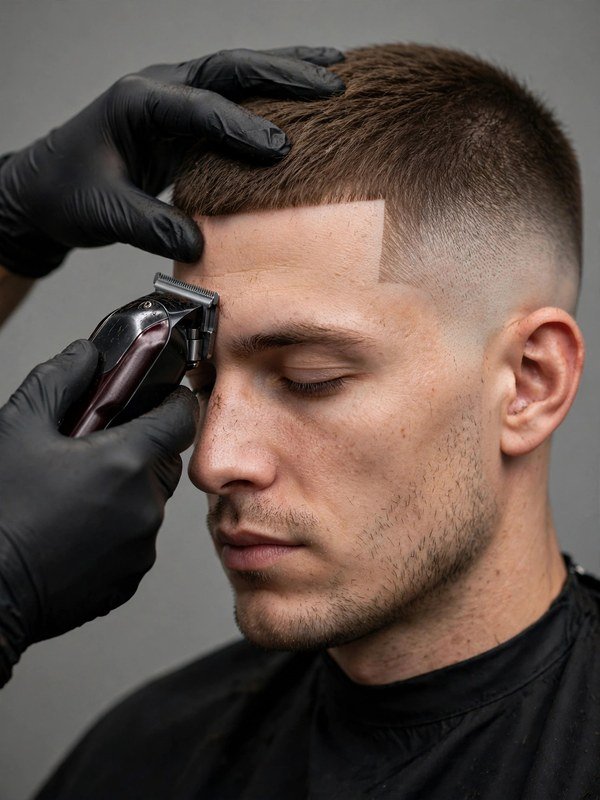
The low taper vs mid taper choice is about contrast and upkeep, not quality. A low taper is softer, more forgiving, and easier to live with between visits. A mid taper is sharper, trims down side bulk, and rewards regular upkeep. Think about your hair type, how much time you have, and the look you want, then give your barber specifics instead of just a name.
If you’re torn between a mid taper fade vs low taper fade, start with the lower one: it’s the easier version to adjust later.