
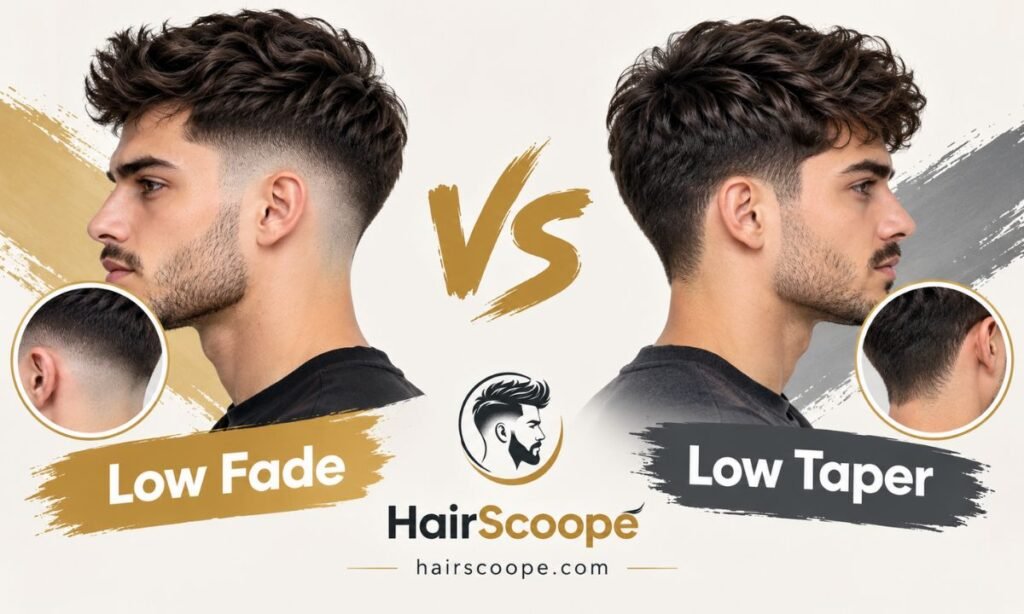
A low taper and a low fade look similar in a quick glance and get mixed up constantly, even by people who have been getting the same cut for years. Both start low on the head, around the sideburns, behind the ear and across the neckline. Both keep the sides tidier than the top. The difference is how much hair gets removed and how obvious the transition is.
This guide is for men trying to decide between the two, or trying to work out what they’ve already been getting. It covers what separates them, how they behave on different hair types and face shapes, how each grows out, and how to ask for the one you want.
Low Fade vs Low Taper: The Main Difference
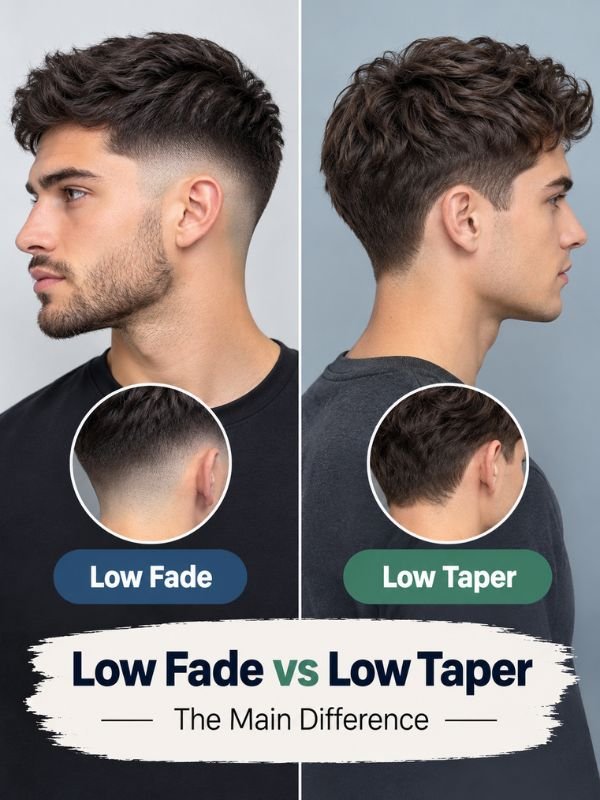
A low taper shortens the hair gradually and keeps visible length on the sides. A low fade cuts much shorter at the bottom, often down to the skin, and blends upward in a more noticeable gradient.
Think of it as contrast. A taper is a subtle clean-up: the hair gets shorter as it approaches the sideburns and neckline, but it never disappears. A fade is a visible shift from very short (or bare skin) at the bottom to longer hair above, so the eye catches the gradient itself.
A low taper generally gives you a softer finish and a more forgiving grow-out. A low fade gives you a sharper, more defined finish, but it looks fresh for a shorter time.
One caution on terminology: barbers don’t all use these words identically. Some call a taper with very short sides a “taper fade,” and in some shops a “fade” always means a skin fade. If a name could mean two things, describe what you want in terms of length and contrast (more on that below) instead of relying on the label.
What Is a Low Taper?
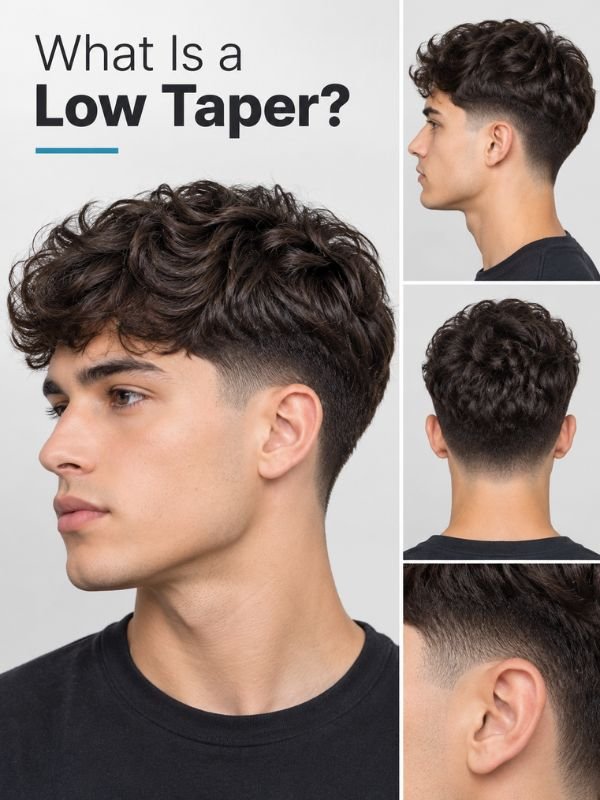
A low taper is a haircut where the length shortens progressively around the lower edges of the head, mainly the sideburns, the area around the ears and the nape. The rest of the sides stays at a visible length, typically blended into the top without a dramatic step.
Here’s what you’d actually see:
- Sideburns: Neatly shortened, but with hair still present rather than skin.
- Around the ears: A light, clean outline, with hair gradually getting shorter toward the ear.
- Neckline: Hair gets shorter toward the nape, often with a natural or slightly rounded finish.
- Overall effect: The sides look trimmed and tidy, not cut away.
Because the taper stays conservative, the haircut keeps its shape across the whole head. The top can be short, medium or long, and the sides still look like they belong to the same haircut.
A low taper is the classic choice for people who want a neat, finished look without a noticeable “cut-in” effect. It’s also a common starting point if you’ve never had a fade and aren’t sure how short you’d like to go.
What Is a Low Fade?
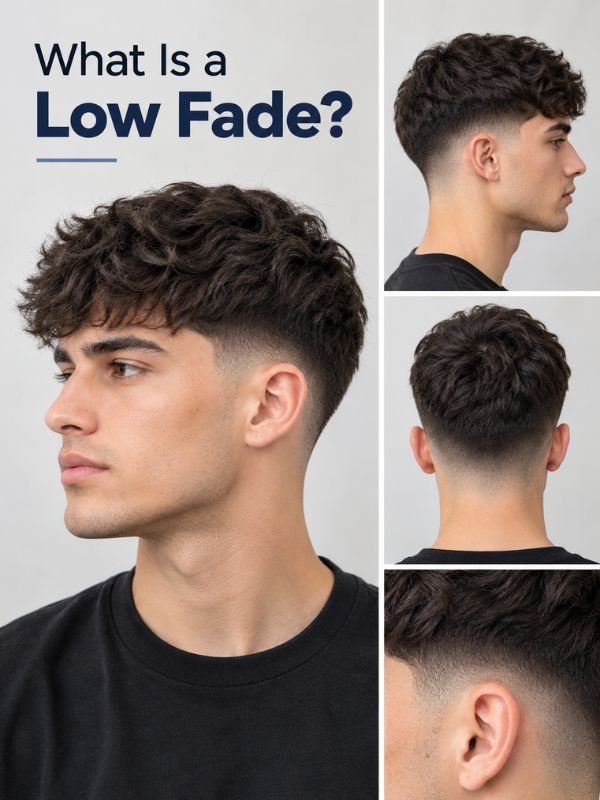
A low fade is a haircut where the hair on the sides and back is cut very short at the bottom (frequently down to bare skin, though not always) and then graduates upward into longer hair. The key word is “low”: the shortest part sits near the bottom of the head, just above the ear and around the nape, rather than climbing toward the temples.
What you’d see:
- Sideburns and ear area: Very short or skin-bare at the base, with a visible gradient rising from there.
- Nape: A clear shift from clipper-short hair to the length above it.
- Contrast: Noticeable. The fade is the point of the haircut, not a background detail.
- Overall effect: Crisp and defined, with more of the scalp visible near the bottom edge.
Low fades come in different intensities. A skin fade goes to the skin. A shadow or “short” fade stops a little longer, leaving a faint trace of hair. These are variations in how short the base gets, and they change how bold the haircut looks without changing the “low” placement.
Low Fade vs Low Taper at a Glance
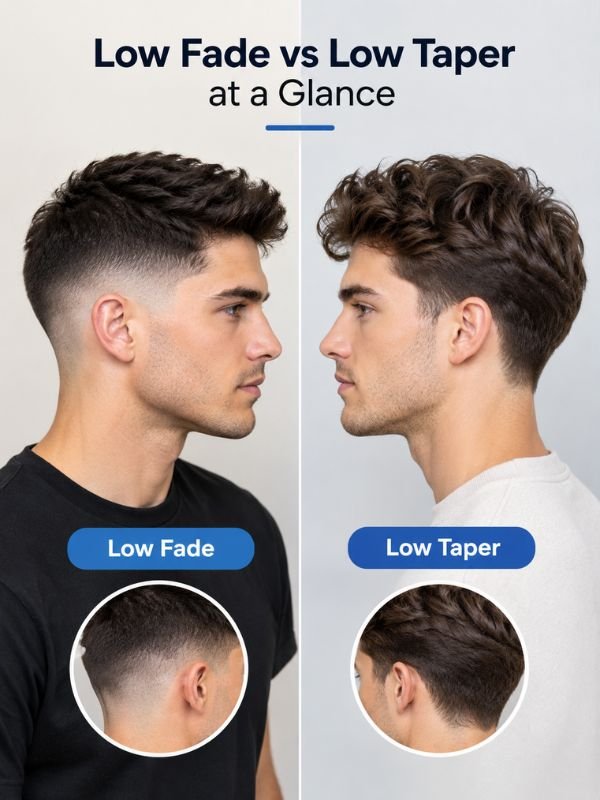
| Feature | Low Taper | Low Fade |
| Shortest length | Visible hair remains | Often skin or very close to it |
| Transition | Gradual, soft | Noticeable, defined gradient |
| Contrast | Subtle | Higher |
| Look | Classic, understated | Sharp, modern |
| Sides | Mostly kept at length | Cut closer overall |
| How quickly it softens | Slower | Faster |
| Grow-out | Gentler, easier to live with | Loses crispness sooner |
| Best for | Natural, polished looks | Defined, clean-edged looks |
| Style flexibility | Works with most tops | Works with most tops, with a stronger edge |
The table is a general pattern, not a rule. Individual results change with hair density, how fast your hair grows and exactly how the barber cuts it. A very conservative low fade and a short low taper can end up looking surprisingly close.
Which Looks More Natural and Where Each Works Best
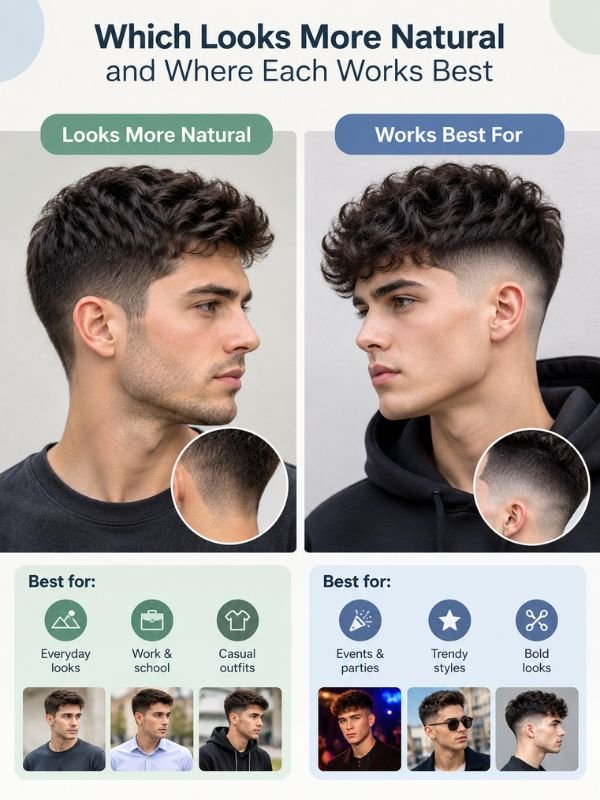
For a natural look, the low taper usually wins. Because it never strips the sides down to skin, nothing about it draws attention to itself. Someone glancing at you would read “neat haircut,” not “fade.”
The low fade looks cleaner and more deliberate. It suits you if you want your haircut to be seen as a feature, such as a defined edge against a textured top or a sharp line that frames a beard.
How that plays out in everyday settings:
- Office and client-facing work: Both fit, but a low taper is the safer default in more conservative environments because it looks quieter. A low fade is entirely workable too; a conservative one reads as groomed.
- School or college: Rules vary by school, so it’s worth checking the policy if one applies. A low taper is generally the milder option for dress-code environments.
- Formal events: A taper leans classic. A fade leans sharp. Either works with a suit.
- Sport, gym and outdoor life: Both are practical because the sides and neck are short, which keeps hair off your collar and out of the way under a helmet or cap.
- Hot or humid climates: The shorter sides on a fade can feel lighter on the neck, though a taper is hardly heavy either.
Low Taper vs Low Fade for Different Face Shapes
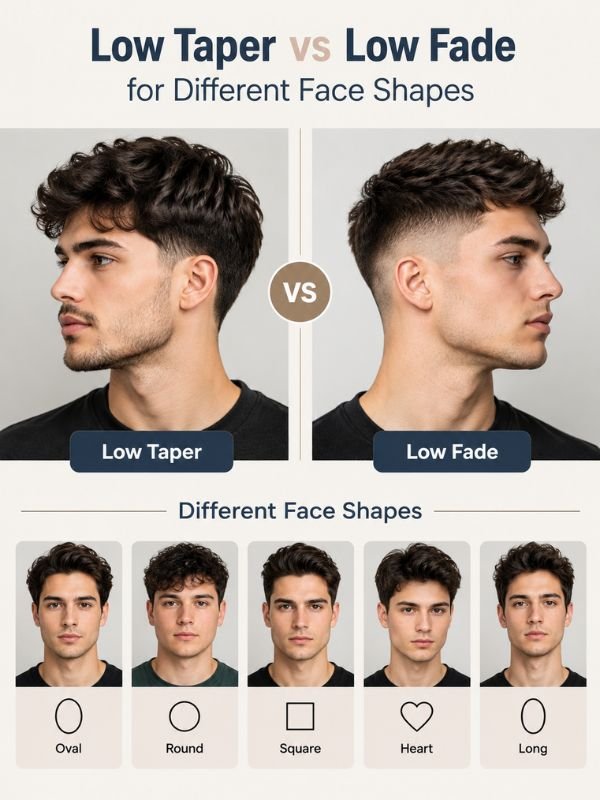
Face shape is a styling consideration, not a rule. Both cuts are flexible, and the top you pair them with has a bigger impact than the choice between taper and fade. That said, the sides do change how the head looks, so a few patterns are useful.
Oval: Almost anything works. Pick the one you prefer on maintenance and style grounds.
Round: Shorter sides with some height on top can make the face look a little longer. A low fade can add more definition at the sides, while a low taper with a textured top and some lift also works. If you keep the sides very short and the top flat, the face can read wider, so a bit of volume up top usually helps.
Square: Square jawlines already have strong angles. A low taper softens the overall effect, while a low fade emphasizes the structure. Both look good, so go by the look you want: softer or sharper.
Oblong or long: You generally want to avoid adding more vertical length. Keeping the sides a bit fuller (a low taper rather than a lean fade) and not stacking too much height on top helps keep proportions balanced. A fringe can also shorten the visual length of the face.
Heart: A narrower chin can look balanced with a slightly softer finish on the sides, so a low taper with a textured or side-swept top is a comfortable fit. A low fade also works with a longer top that adds some width up there.
Diamond: Wide cheekbones with a narrower forehead and chin respond well to a fringe or textured top that adds forehead width. Either low option works; a taper keeps things more balanced near the cheekbones.
None of these combinations is guaranteed to suit everyone with that face shape. Hairline, ear position, head shape and beard all matter, so use these as starting points and adjust with your barber.
Low Fade vs Low Taper for Different Hair Types
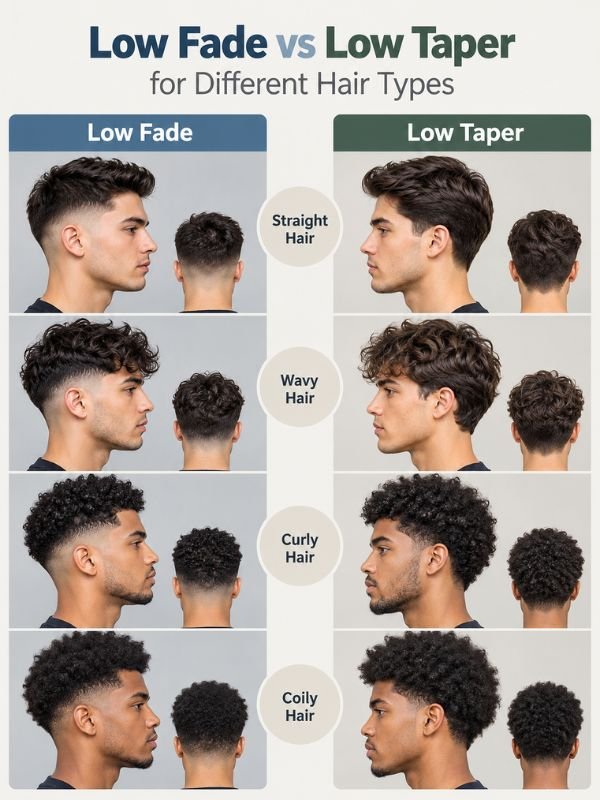
Hair type affects how both cuts behave, especially on top and in how the blend looks.
Straight hair: Straight hair shows the gradient clearly. A low fade will look very crisp, and a low taper will look clean and flat against the head. Fine straight hair can look sparse at the edges when cut very short, so a taper may look fuller. Thick straight hair can stand out from the head on top, and a taper keeps more weight on the sides to balance it.
Wavy hair: Wavy hair is forgiving. Short sides keep the waves on top from looking bulky, and either option sits well. A low taper retains a little more side volume if your waves tend to puff outward.
Curly hair: Curly hair sits on top with plenty of shape, and a fade creates strong contrast between tight sides and defined curls. A taper gives a more gradual connection. Curls shrink when dry, so ask your barber to assess the cut on dry or slightly damp hair to see how the length behaves.For more ideas on pairing a taper with natural texture, see these low taper fade haircuts for curly hair.
Coily hair: Coily textures hold a precise edge very well, which is why fades are popular on these hair types. Both options work. A low fade gives the sharpest line-up and shape definition, while a low taper keeps a softer, denser look at the sides. Shrinkage matters here too, so the visible length can be noticeably shorter than the hair’s actual length.
Fine or thin hair: A very short fade can expose more scalp and make fine hair look thinner at the sides. A low taper keeps more coverage and often looks fuller. If you do go for a fade, a shadow version that leaves a trace of hair can be more flattering than bare skin.
Thick or high-density hair: Thick hair can make the head look wider as it grows. A low fade removes bulk quickly and gives a very clean shape. A low taper keeps more weight, so it may need more frequent shaping to prevent the sides from flaring out.
Cowlicks and strong growth patterns: Cowlicks at the nape or crown can make tapered or faded areas look uneven as hair grows in different directions. Tell your barber where you sit. They can adjust the shape so the pattern doesn’t fight the cut.
Maintenance and How Long Each Style Lasts
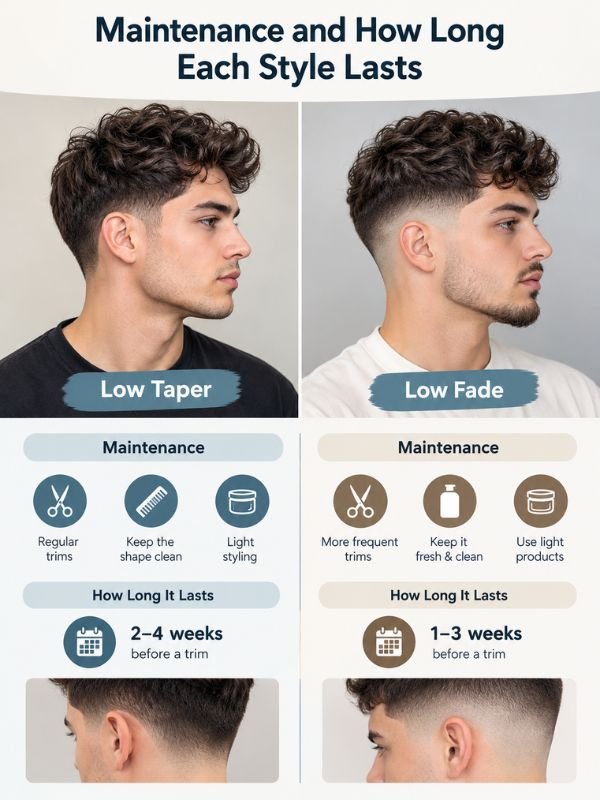
The key point: low fades lose their sharpness sooner than low tapers, because the contrast between bare skin and growing hair becomes visible quickly. A taper starts with length already on the sides, so new growth is less obvious.
Exact timing depends on how fast your hair grows and how short the cut started, so there’s no universal number. Many people who like a crisp fade book a trim every few weeks, while those with a taper often stretch the time between appointments. If you’re someone who notices a fuzzy neckline early, expect to visit more often with a fade.
Daily styling
Neither cut demands much on the sides. Styling effort is almost entirely about the top. A low taper or low fade on its own is a short, tidy foundation, and your styling depends on the top’s length and texture.
How each one grows out
- Low taper: The transition is soft, so the sides fill in gradually. It looks a little fuller and less defined over time, but it rarely looks awkward. The neckline is usually the first place you’ll see change.
- Low fade: The bare or very short area grows in first, and the clean gradient flattens into a more uniform length. The nape and around the ears will show it earliest. If you let it keep growing, it can look uneven until it all grows to a consistent length.
If you want to go from a fade to something easier to live with, ask for a taper at your next appointment. If you want to let your hair grow out altogether, a taper is the smoother path because there is no stark short zone to catch up.
Product buildup and scalp
Short hair at the sides shows buildup less than longer hair does, but heavy products on top can still migrate. Wash thoroughly, especially if you use clay or pomade, and avoid scratching freshly clipped skin. If you notice persistent irritation, the American Academy of Dermatology has a guide to common causes of scalp itch, and a board-certified dermatologist can advise on anything persistent.
Popular Hairstyles to Pair With a Low Taper or Low Fade
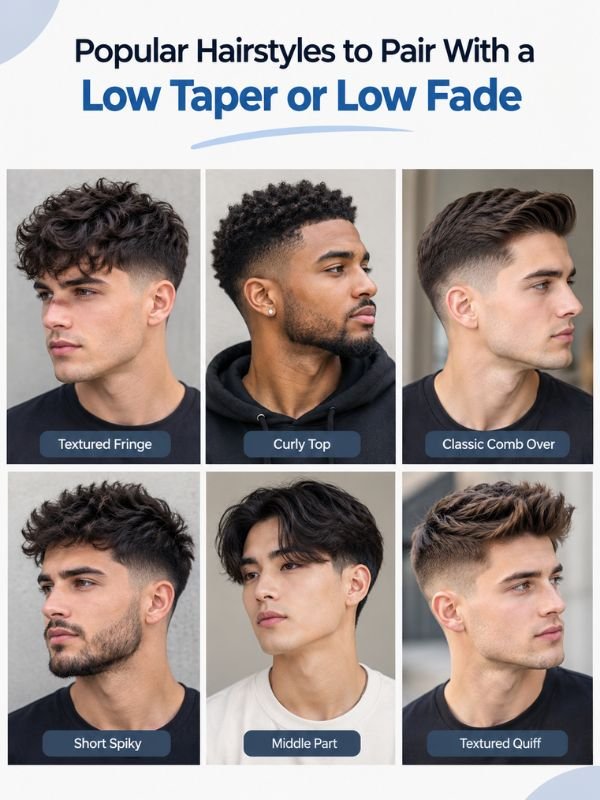
The choice between taper and fade matters less than how it pairs with the top. These six combinations are actually different from one another in shape, length and styling.
1. Classic Side Part with a Low Taper
A neat, combed-over top with a defined parting, usually medium-short length. The low taper keeps the sides subtle so the part is the focus. It’s tidy and traditional, easy to wear to the office, and uses a light product like cream or pomade.
2. Textured Crop with a Low Fade
A short, choppy top with a cropped fringe pushed forward or to one side, over sides cut tight and low. The fade creates contrast against the texture. Matte clay or paste gives separation. This one suits people who want a sharp but low-effort look.You’ll find more variations in our guide to textured crop with low taper fade haircuts.
3. Quiff with a Low Fade
Longer hair on top is lifted and swept up and back from the forehead, with volume at the front. The tight, low sides make the height stand out. It needs blow-drying or styling with mousse or a light-hold product, so it’s higher maintenance than the crop.
4. Curly or Coily Top with a Low Taper
Natural curls or coils left at a medium length, defined with curl cream or leave-in conditioner, over sides that taper smoothly. Here the taper keeps a soft, balanced outline around the shape of the curls. Ask for a taper that respects shrinkage, since the cut looks shorter once the curls spring up.
5. Slick Back with a Low Fade
Hair on top combed backward with a polished finish, often with some shine. The low fade tightens the sides to frame the slicked-back top. This works best on hair that’s long enough to comb back and holds the style with pomade or gel. It looks deliberate and groomed.
6. Medium-Length Textured Flow with a Low Taper
Longer, loose top hair (roughly ear-to-jaw length at the back, or flowing off the forehead) with a low taper keeping the sides and neckline tidy. This is the easiest of the six to grow out and to keep presentable with sea-salt spray or a light cream. It’s a good middle ground if you want length without looking unkempt.
If you like the shape of one of these but want less upkeep, swapping a fade for a taper (or vice versa for more definition) is a simple adjustment.
How to Ask Your Barber for a Low Taper or Low Fade
Don’t rely on the name alone. Barbers use “taper” and “fade” in slightly different ways, so describe what you actually want. A reference photo, ideally of someone with similar hair, removes most of the guesswork.
Cover these details:
- Taper or fade, and how low. Say “low” and confirm that it should start around the ear and nape, not climb toward the temples.
- How short the base gets. For a fade, say whether you want skin, near-skin or a bit of shadow. For a taper, say you want visible hair left at the bottom.
- Top length. Show how long you want it, either with a photo or by using your fingers to show length.
- Fringe or parting. Say whether you want it forward, swept, or parted, and where.
- Neckline. Natural, rounded or squared off. A natural neckline grows out more gracefully.
- Finish and upkeep. Tell them how often you’re willing to come back and how much time you’ll spend styling.
A simple script might sound like this: “I’d like a low taper, with the hair staying visible at the sides, a natural neckline, and about this much length on top.” For a fade: “I’d like a low skin fade starting just above the ear, blending into about this length on top.”
Common mistakes
- Asking only for the name. “Low fade” can mean several levels of shortness.
- Ignoring grow-out. If you don’t want to be at the barber every few weeks, choose the taper or a softer fade.
- Picking a style that fights your hair. Fine hair, strong cowlicks and heavy shrinkage all change how the cut looks.
- Not mentioning the top. A great taper or fade can be undermined by a top that doesn’t suit your hair type.
- Going shorter than you intended. If you’re unsure, start with the taper. It’s easier to go shorter next time than to wait for a fade to grow in.
So, Which Should You Choose?
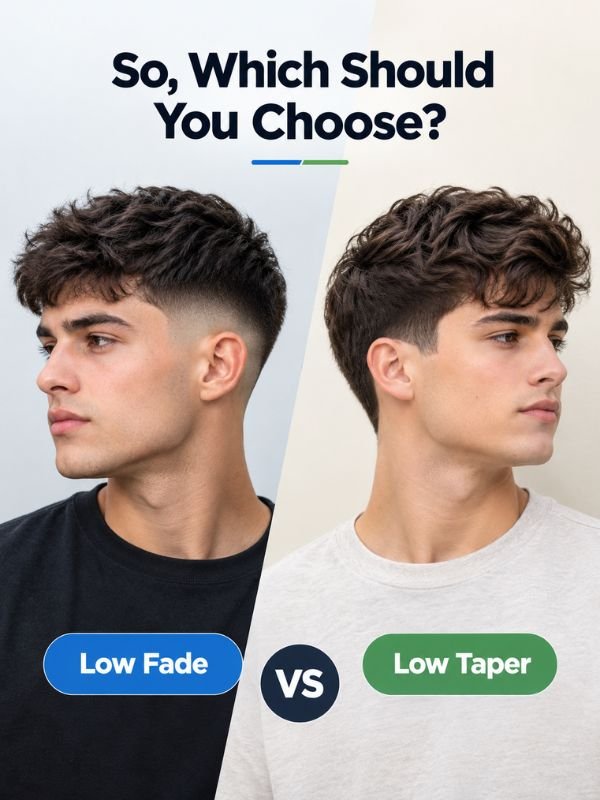
Both are good haircuts. The decision comes down to a few practical questions.
Choose a low taper if:
- You want a subtle, natural-looking finish.
- You prefer a gentler grow-out and longer gaps between trims.
- Your hair is fine and you’d like the sides to look fuller.
- You work or study somewhere with a conservative dress code.
- You’re trying a short-sided cut for the first time.
Choose a low fade if:
- You want higher contrast and a sharper edge.
- You like a crisp outline around the ears and neck.
- You have thick or curly/coily hair and want bulk removed cleanly.
- You don’t mind more frequent trims.
- You want the cut itself to be part of your style.
If you’re still undecided, a short fade (leaving a trace of hair) sits between the two, and it’s a good compromise. Neither option is the “better” choice in general. It’s about the look you want and the upkeep you’ll tolerate.
Conclusion
The difference between a low fade and a low taper is contrast. A taper trims gradually and keeps visible hair on the sides, which gives a softer, more natural look that grows out gently. A fade cuts shorter, often to skin, and creates a defined gradient that looks sharper but needs more frequent upkeep.
Beyond that, your hair type, face shape, daily routine and the style on top matter more than the label. If you want the lower-maintenance and more understated route, start with a low taper. If you want a cleaner, more defined edge and are happy to visit the barber more often, go with a low fade. Bring a reference photo, describe the length and the finish you want, and tell your barber how much upkeep you’re comfortable with.