
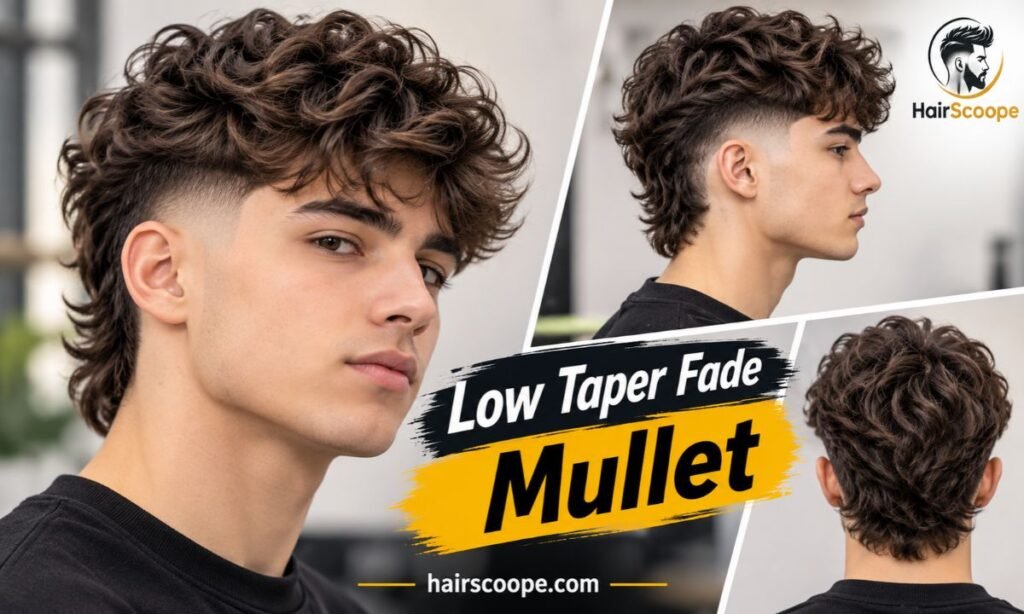
The low taper fade mullet keeps the part of the mullet people love, the length at the back, and swaps the harsh contrast for a gradual blend around the ears and neckline. That blend is why it works in more places than other mullets.
This guide covers what the cut is, 33 distinct variations, how length, fade height, face shape and hair type change the result, exactly what to say to your barber, and how to style, maintain and grow it out.
What Is a Low Taper Fade Mullet?
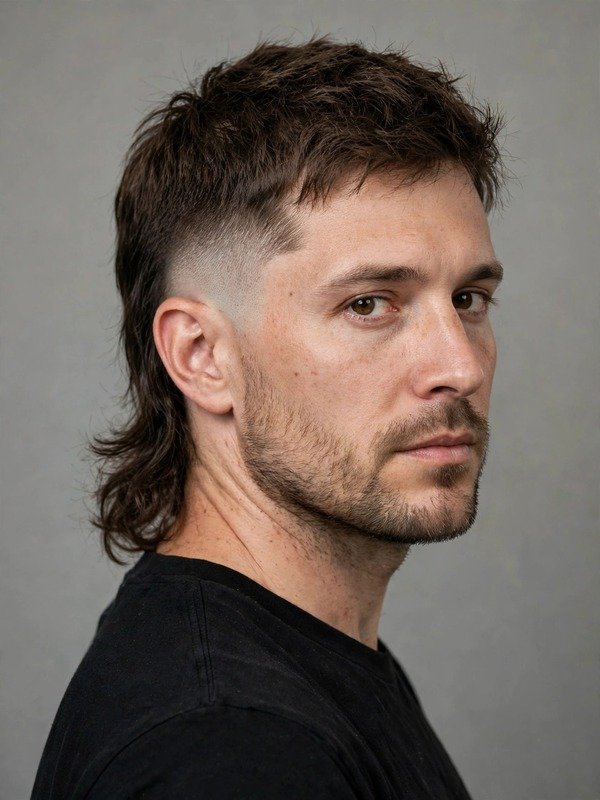
A low taper fade mullet is a haircut with short, tapered sides and back-length that stays longer than the front. The sides are blended gradually, starting very short near the hairline and lengthening as they move up, with the fade sitting low, usually around an inch above the ear. Unlike a skin fade, the sides are not shaved to skin, which makes the look softer. Short in front, long in back, with a blend that reads as neat from the front and expressive from behind.
The Features That Define a Low Taper Fade Mullet
- A low fade line. The blend begins near the hairline and stays below the temples and ears rather than climbing toward the crown.
- Enough top length to style. Many versions need roughly 4 to 6 inches on top, though shorter crops exist.
- A back that is longer than the sides. The back can graze the collar or reach toward the shoulders, with a subtle drop from top to nape.
- A gradual, never choppy blend. A good taper looks like one continuous transition, not stripes of different lengths.
- Soft layering and a clean neckline. Texture on the longer sections keeps the length feathered instead of heavy.
On the longest versions the back becomes shoulder-grazing, but the drop from top to nape should still feel gradual.
How a Low Taper Fade Mullet Creates a Modern Look
The modern look comes from contrast in proportion rather than contrast in shock value. Tapered sides and a clean neckline keep the outline tidy, while texturizing shears or point-cutting add movement to the top and the back. You can push the top forward into a fringe, sweep it back, or leave it loose. That flexibility lets the same structure read as edgy or polished depending on finish, which is why it feels like an updated classic rather than a costume.
That is why it is often described as a revived mullet: the nostalgia of the original survives, but the structure is updated.
Modern Mullet vs. Classic Mullet
The key difference: a classic mullet usually has scissor-cut sides and one long, thick back section, while a modern mullet blends the sides with clippers and layers the back. The classic shape has roots in the 1970s and 1980s and tends to look boxy, with a visible shelf between the sides and the back. Modern versions borrow from wolf layers, curtain bangs and burst fades to create one silhouette instead of two. If you want the shape without the retro bluntness, ask for the modern version and say so explicitly.
Classic cuts also tend to carry dropped, boxy layers at the back, while modern versions keep the layers softer and closer to the head.
Why Choose a Low Taper Fade Mullet Over Other Mullet Styles?
Choose it when you want a mullet that blends into everyday life. Compared with a high fade mullet, which creates bold, aggressive contrast and regrows quickly, the low taper grows out gracefully and can go longer between appointments. A mid taper fade mullet sits in the middle, with the blend around the mid-temple. A disconnected mullet creates a sharp line with no blend, which is edgier. Burst fade and drop fade mullets curve around or behind the ear for more shape. The low taper is the quietest of the group.
Clean and Subtle Appearance
Because the fade stays close to the hairline, the sides look tidy and understated. From the front you see a neat cut with a clean neckline and soft contrast. The length at the back is easy to overlook until you turn around, which is exactly the appeal for people who want a low-key version of the style.
Versatility for Different Hair Types and Face Shapes
The cut adapts to straight, wavy, curly, coily, thick, fine, fluffy, coarse and frizzy hair, mostly by changing how much layering, length and product you use. It also suits most face shapes once you adjust length and volume, which you will see in the face-shape section below. Texture changes everything about how the cut behaves, so treat the structure as flexible and the details as personal.
Everyday Wear and Professional Settings
In many workplaces, a low taper fade mullet can slip under the radar, since the front and sides look conventional and the back can be tucked or slicked. It is not guaranteed to suit a conservative office, but it is a safer choice than a skin fade or disconnected mullet. A slicked-back or short version tends to look the most office appropriate.
It also tends to be school friendly and works in smart casual settings, since the sides stay tidy and the discreet length can be tucked or styled back.
33 Best Low Taper Fade Mullet Styles for Men
These 33 styles differ in real ways: top length, fringe, layering, texture, fade shape or finish. Pick by hair texture, thickness and how much morning styling time you will give it.
Classic Low Taper Fade Mullet
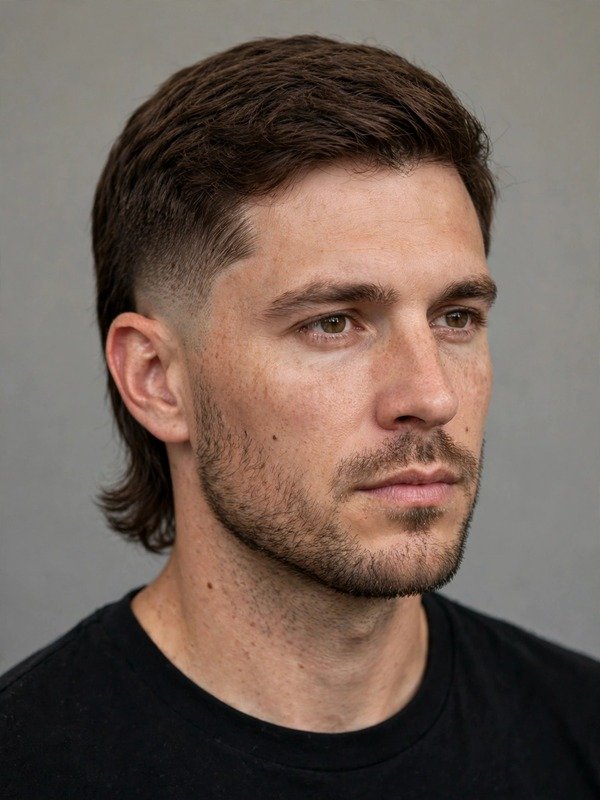
The baseline. Roughly 3 to 4 inches on top, a low taper on the sides and a layered back that reaches the collar. Style it combed forward, pushed to the side or swept back. It is the best reference point for comparing every other style here.
Textured Crop Mullet
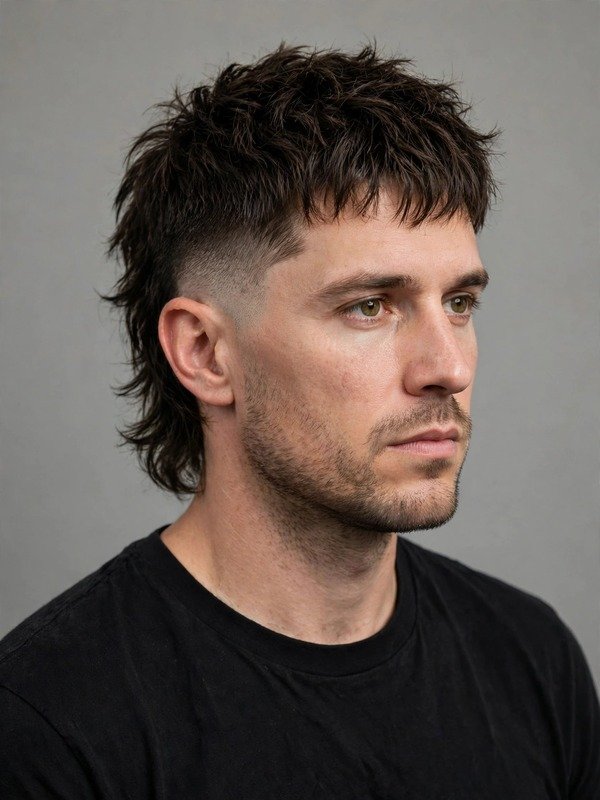
A short, choppy top, usually point-cut, sits over tapered sides with a modest mullet at the nape. The top is cropped rather than flowing, so it suits thick or wavy hair and needs only a matte texturizing paste for definition.
Curly Low Taper Fade Mullet

Let natural curls form the top and back while the taper keeps the sides controlled. The curls give volume at the crown and the back with barely any styling. A lightweight curl cream or light gel defines the pattern.
Slicked-Back Business Mullet
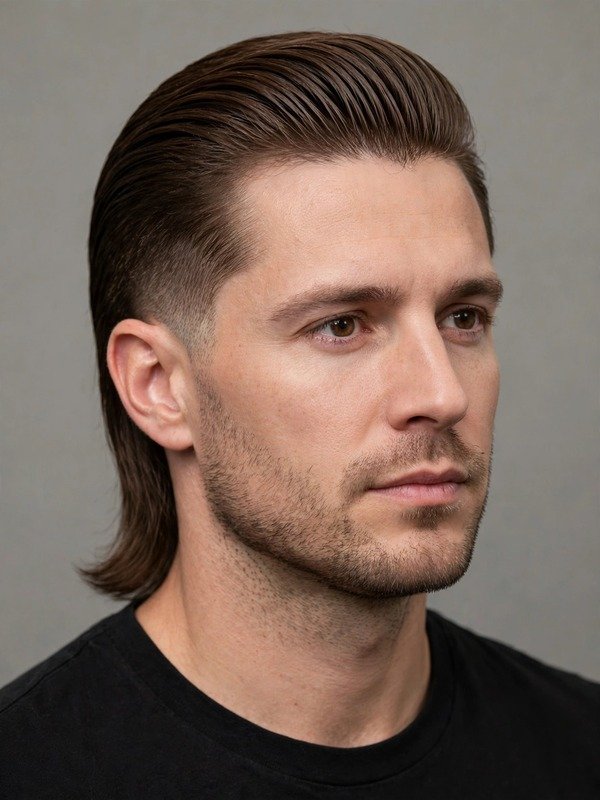
The top is combed straight back with a strong-hold pomade for a smooth, glossy finish. The back is tucked or lies flat, hiding the length. It is the most boardroom ready option, with a creative edge visible only from behind.
Shaggy Surfer Mullet
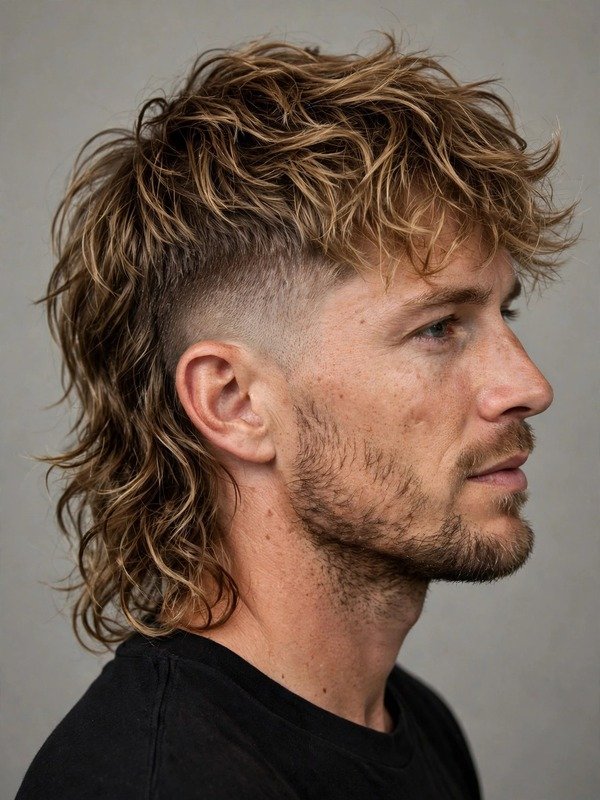
A looser take with a longer top, tousled layers and natural movement. It is not slick. Sea-salt spray on wavy hair gives it a beachy, laid-back feel, and the tapered sides keep it from looking unkempt.
Wolf Cut Mullet
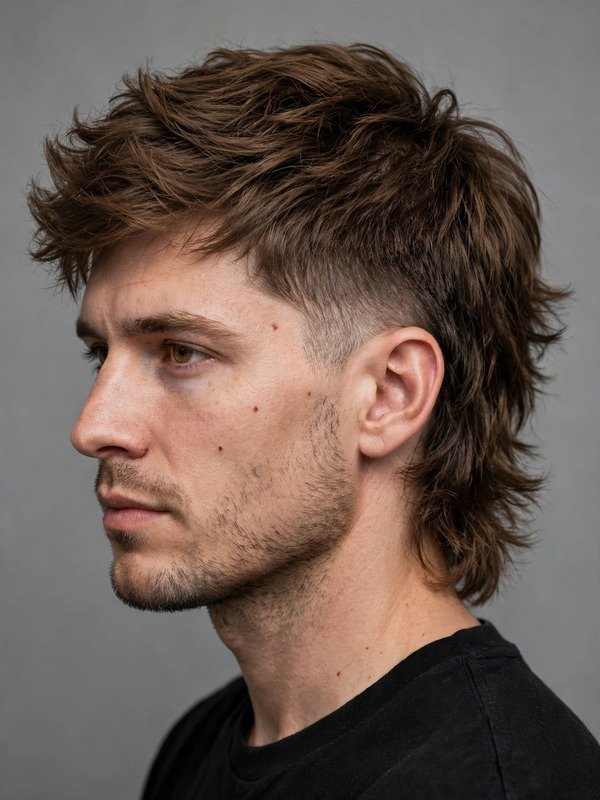
A hybrid with heavy layering from top to back, creating a fuller, continuous flow and a defined mullet shelf. It works best on medium-length hair and sits between a classic mullet and a full shag, finished with a low taper at the sides.
French Crop Mullet
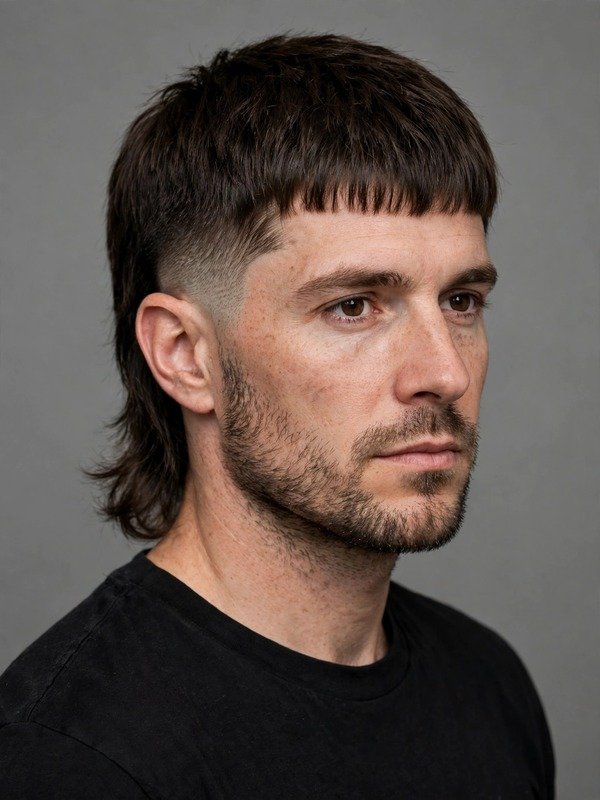
A short, blunt fringe cut straight across the forehead over a very short top, with a low taper and a longer nape. The difference from the textured crop is the fringe: this one is neat and horizontal, not piecey.
Textured Fringe Mullet
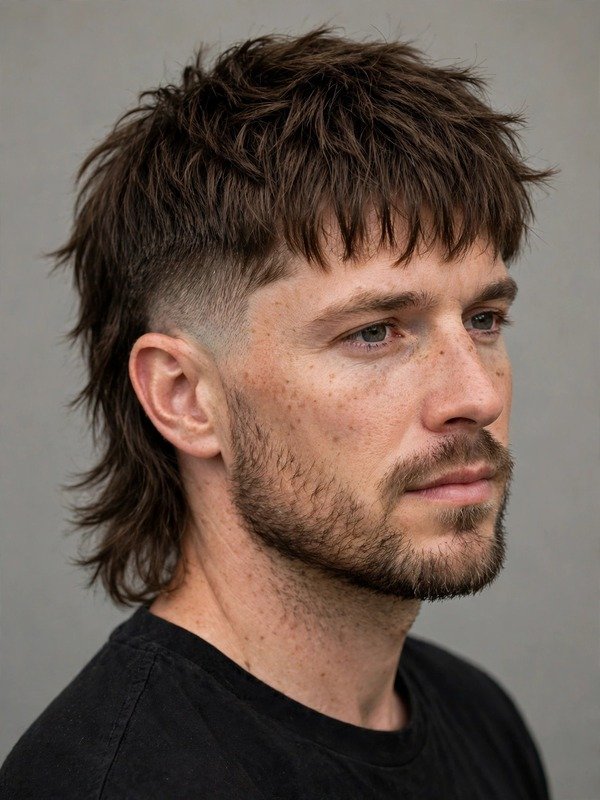
A longer, choppy fringe falls forward over the forehead, with tapered sides and a mullet back. Unlike the French crop, the fringe is irregular and face-framing, and the top is long enough to part or push aside.
Straight Hair Low Taper Fade Mullet
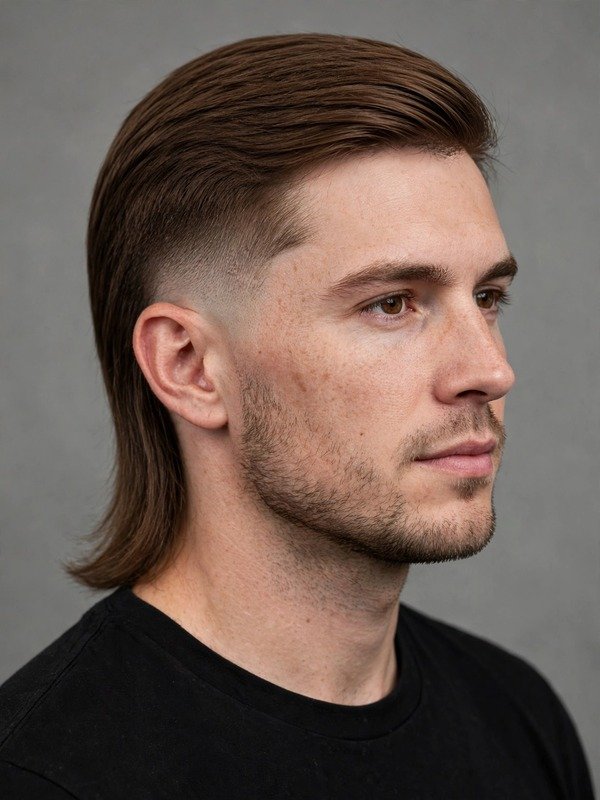
Straight hair tends to lie flat and look one-dimensional, so precise layering fakes movement. A texturizing spray and a little heat build my body. The result is sleek, with clean lines and a smooth back.
Wavy Hair Low Taper Fade Mullet

Wavy hair is the easiest texture for this cut. The bend creates separation between layered sections, so it looks intentional with hardly any product. A light sea-salt spray or texturizing cream is enough.
Fluffy Mullet with Low Taper Fade
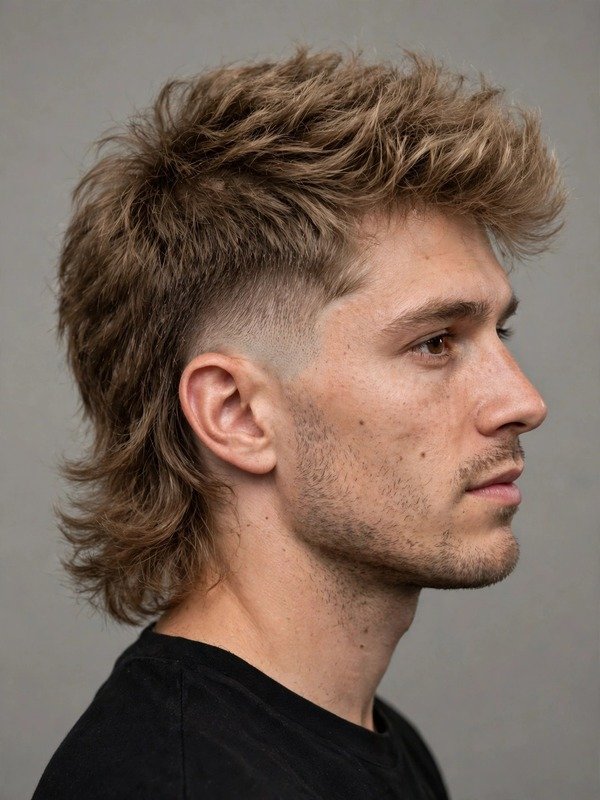
Built around airy volume on top and soft layers throughout, giving a full, bouncy shape. A blow-dry lifts the roots, and a lightweight product keeps the finish matte instead of heavy.
Buzz Cut Mullet with Low Taper Fade
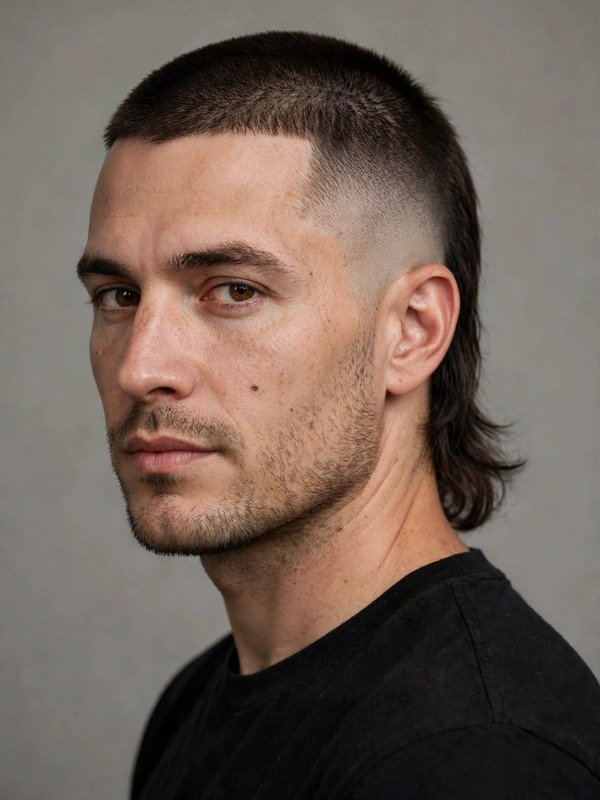
The top is clipped very short, with tight tapered sides and a small, longer strip at the nape. It is the lowest maintenance in this list and needs almost no styling, though the nape section still needs regular trims.
Permed Mullet with Low Taper Fade
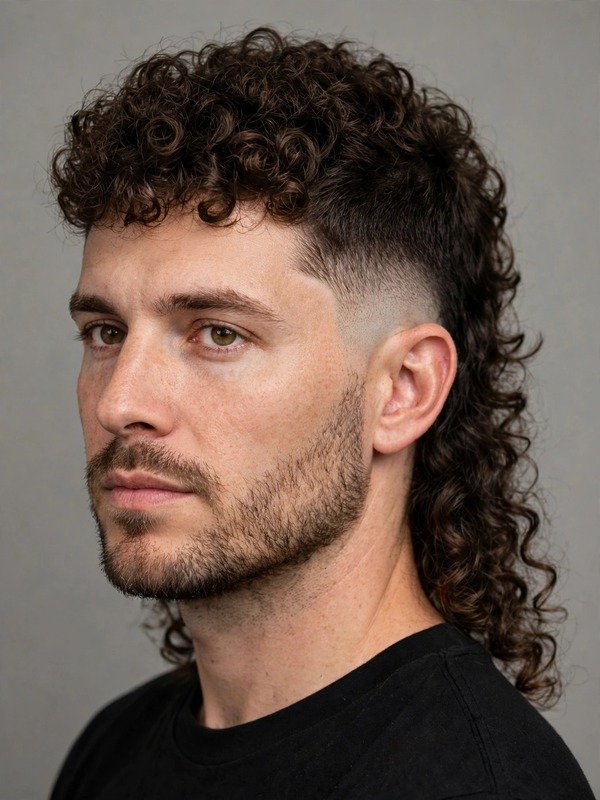
A perm adds lasting curls or waves to straight hair, and the taper keeps the sides neat. It suits men who want textured, bouncy volume without relying on daily styling, but it needs chemical-service care.
Edgar Mullet with Low Taper Fade
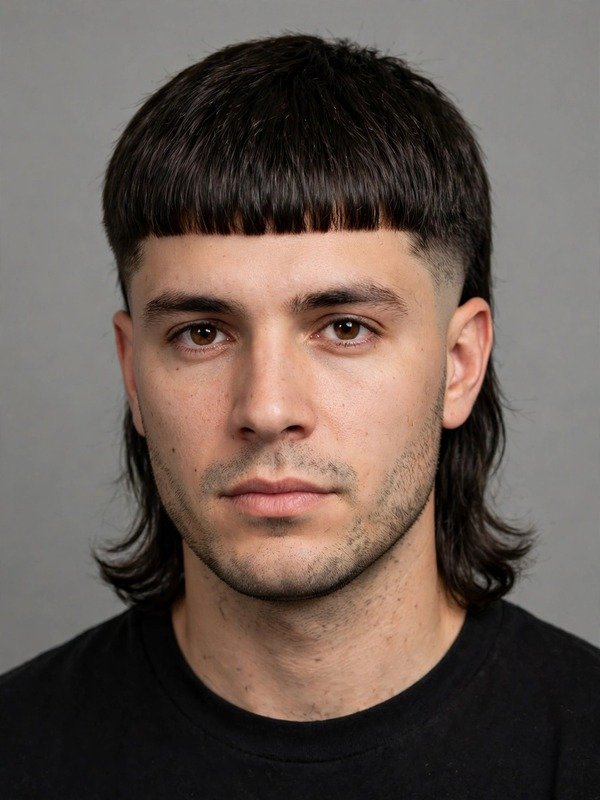
The Edgar cut is defined by a blunt, straight fringe line over a short, structured top. Paired with a low taper and a longer back, it creates a sharp, statement look with crisp edges.
Blowout Mullet with Low Taper Fade
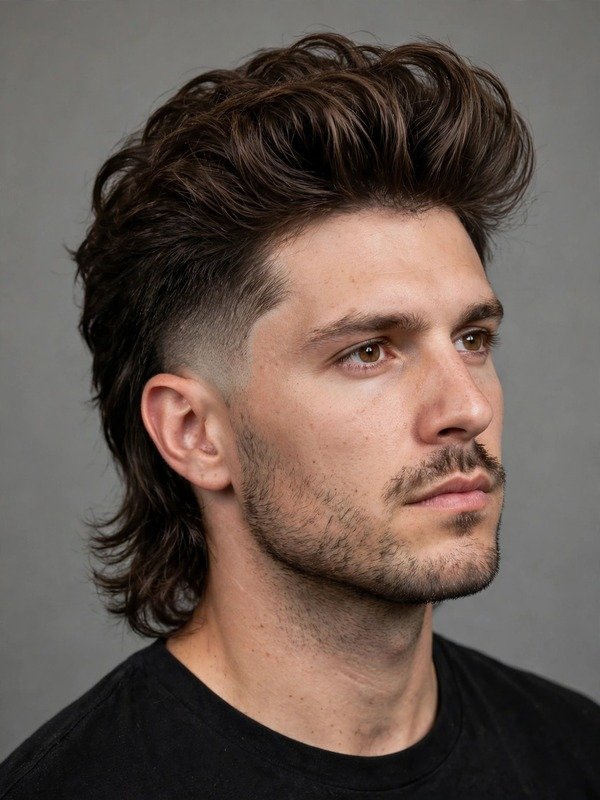
The top is blow-dried with a round brush for smooth, lifted volume and a flowing back. It has a salon finish and looks polished, but it takes real styling time.
Low Drop Taper Mullet
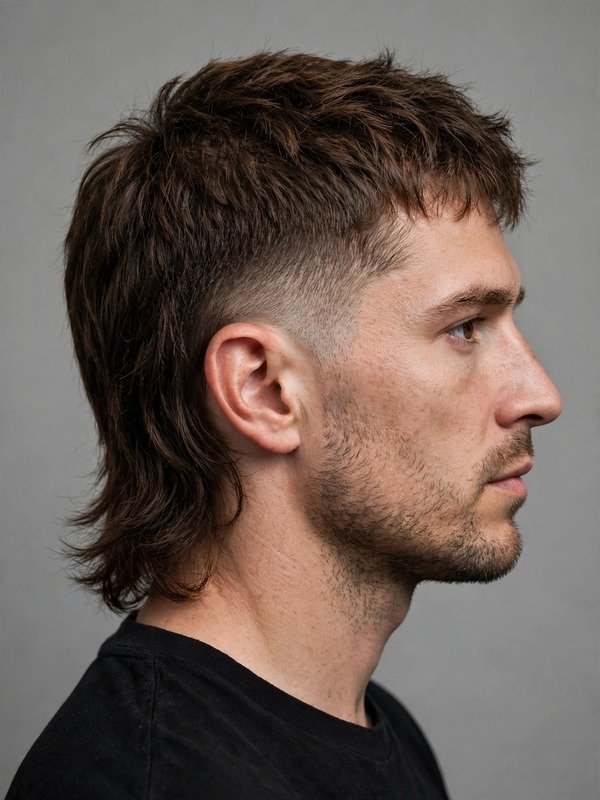
The fade line curves down behind the ear instead of running straight. This subtle drop follows the head’s shape and softens the transition toward a longer nape.
Temple Taper Mullet
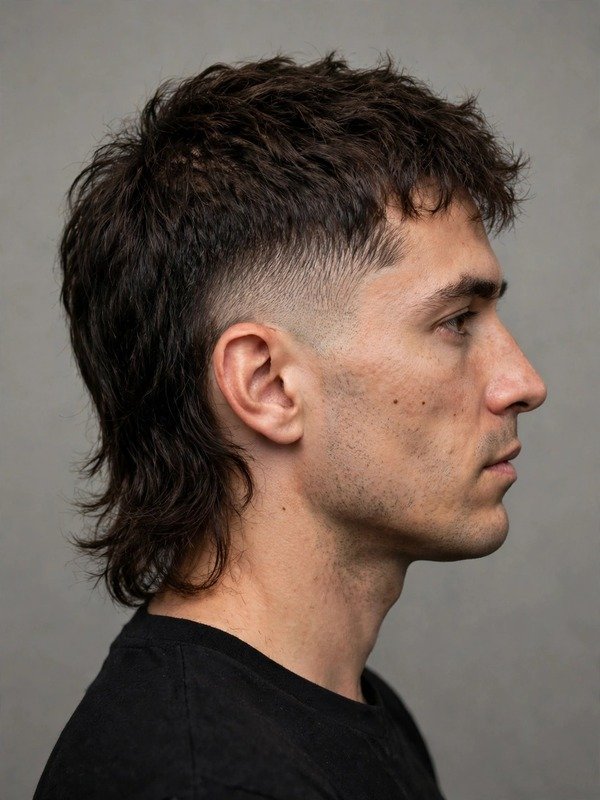
The taper concentrates at the temples and sideburns, keeping them clean while leaving more length elsewhere. It is a good choice if your hairline needs a tidy frame.
Long Low Taper Fade Mullet
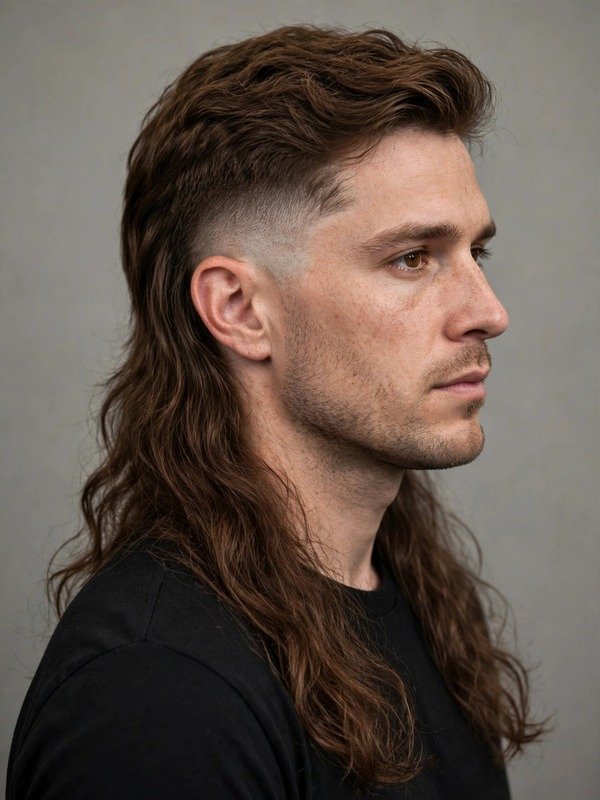
The back goes past the collar toward the shoulders, and the top is long enough to sweep back. Expect a patient grow-out and active styling with a blow dryer and heavier pomade. It suits expressive types who want dramatic length.
Short Low Taper Fade Mullet
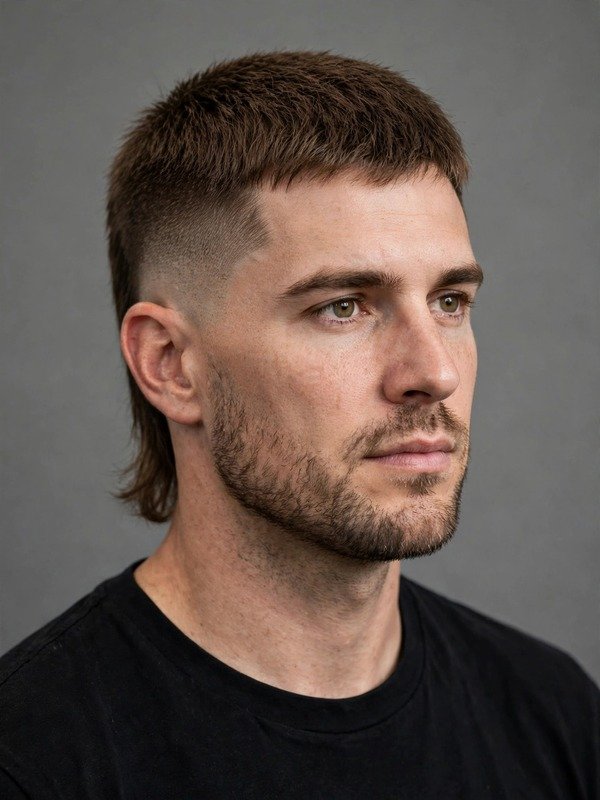
The back grazes the collar and the top is about 3 to 4 inches. Styling is quick, and it looks tidy on video calls, with the mullet flair showing once you stand up.
Medium-Length Low Taper Fade Mullet
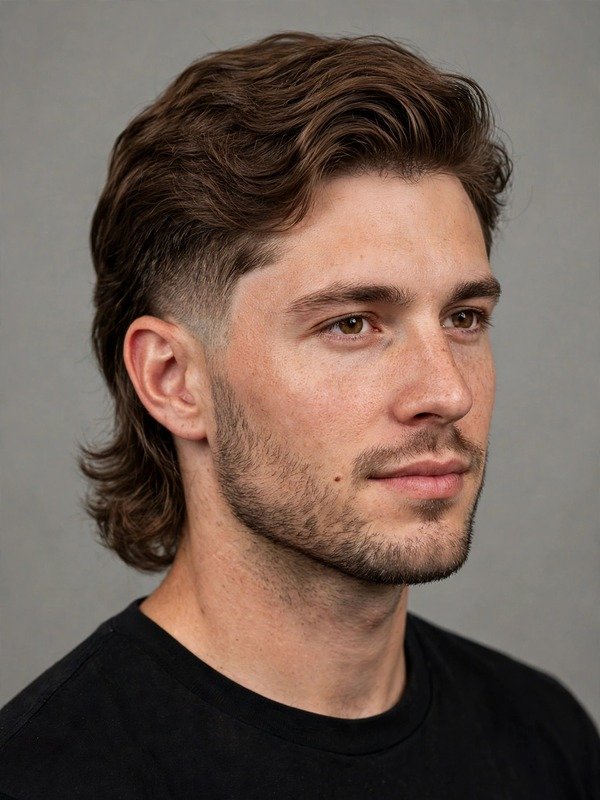
The sensible middle ground and the safest first mullet. It is distinct from a regular taper, easy to trim shorter if you change your mind, and a fair preview of the longer style.
Low Taper Fade Mullet with Beard
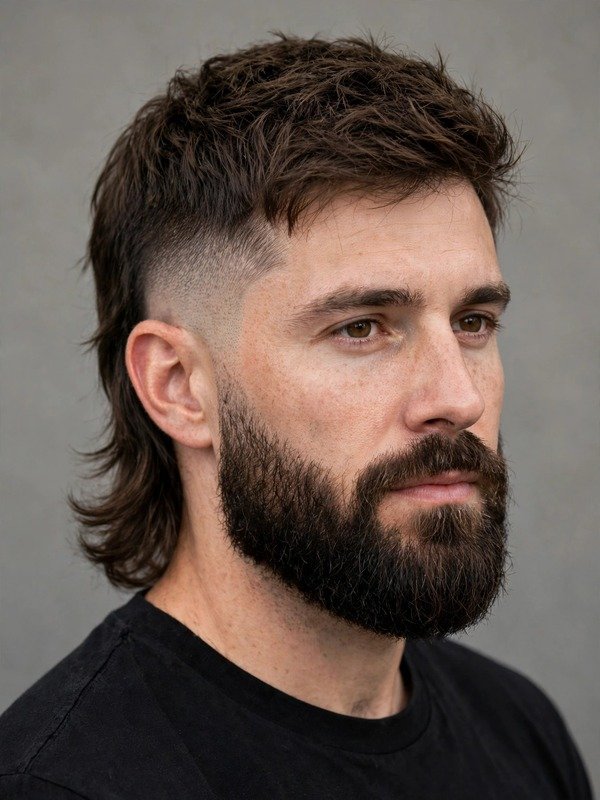
Blend the beard into the taper so the facial hair and sideburns connect to the sides instead of stopping abruptly. A short or full beard both work, as long as the neckline and cheek lines match the fade.
Modern Mullet Flow with Low Taper
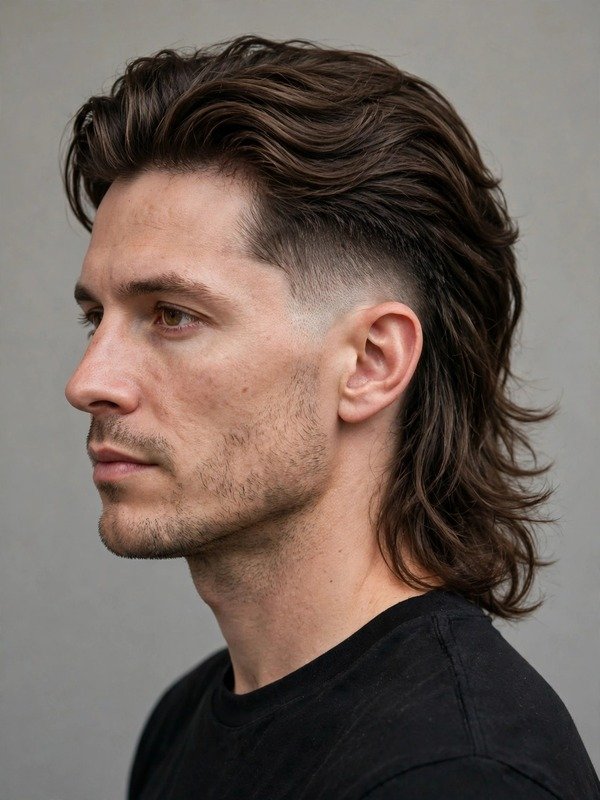
The top, sides and back connect through gradual length changes, so there is no hard shelf. The result is a smooth, medium-length silhouette with soft layers, best for hair that moves easily.
Messy Modern Mullet with Low Taper
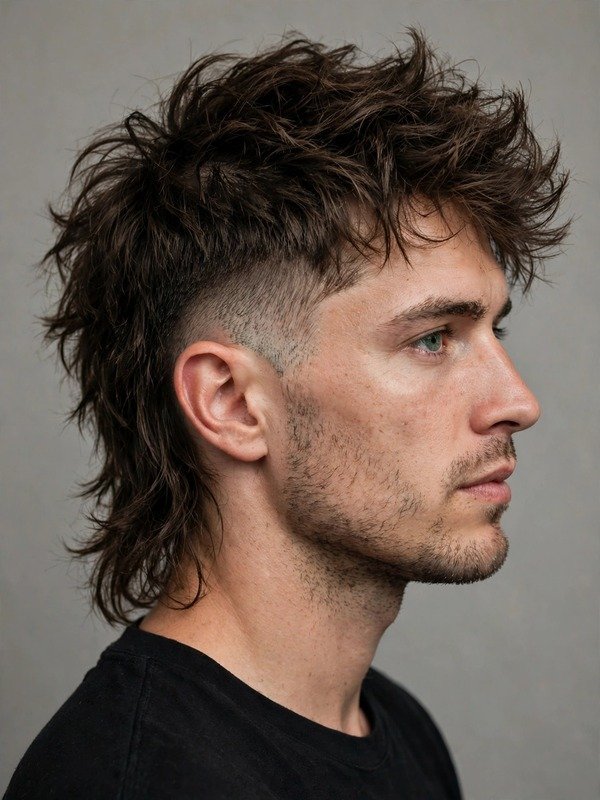
Deliberately tousled, with a less uniform fringe and piecey texture. The taper keeps the sides clean so the mess looks designed. Matte clay or texture powder helps it stay lived-in without looking unwashed.
Middle Part Mullet with Low Taper Fade

A centered part creates a symmetrical curtain effect, with the longer top falling to both sides. It frames the face evenly and works best on hair with some natural bend.
Layered Low Taper Fade Mullet
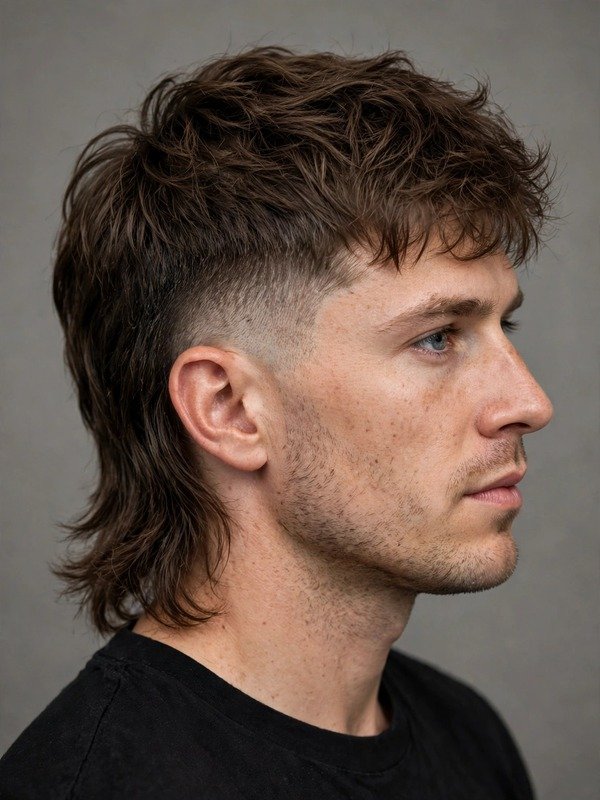
Layers run through the top and the back, creating graduated length and full flow. This is the choice if your hair is dense and needs weight removed, or if you want volume throughout.
Mullet Shag with Low Taper
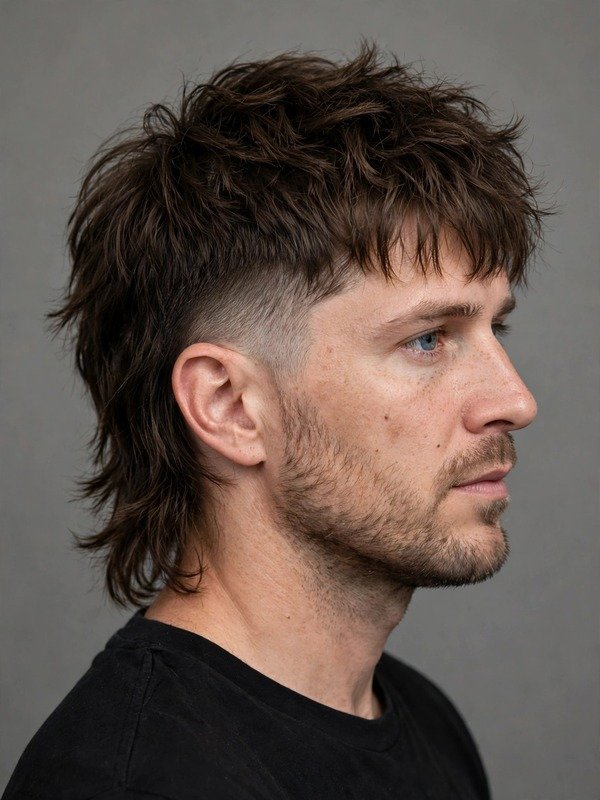
Shag-style layering over the whole head, with tapered sides and a longer, wolf-layered back. The shape is rounder and messier than a classic mullet, with feathered ends.
Choppy Mullet Taper Fade

Point-cutting and texturizing shears create chunky, uneven ends on the top and back. It is more aggressive than the shag and holds texture well on straight hair that otherwise falls flat.
Modern Mullet Skin Fade
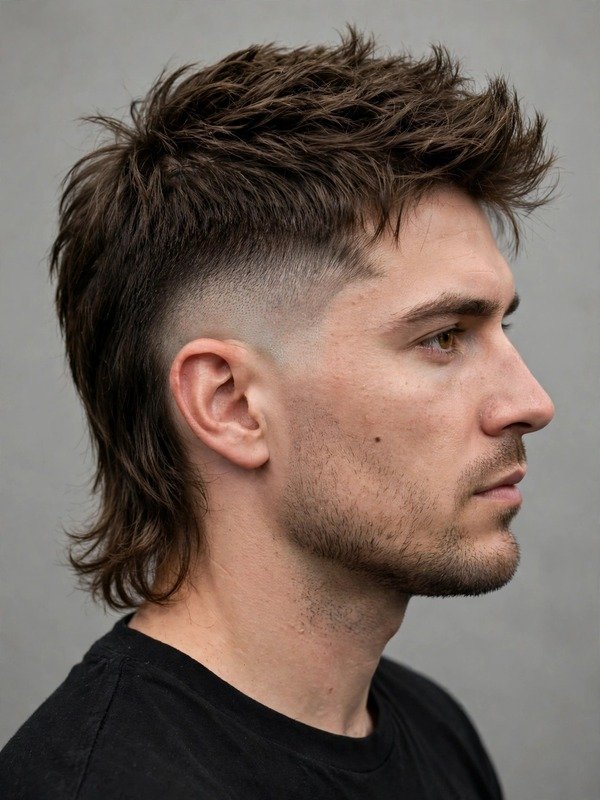
This one departs from the low taper idea: the sides fade down to skin for sharp contrast. It looks bolder, with crisper edges, and needs more frequent maintenance. Consider it only if you want a high-contrast look.
Modern Mullet Undercut
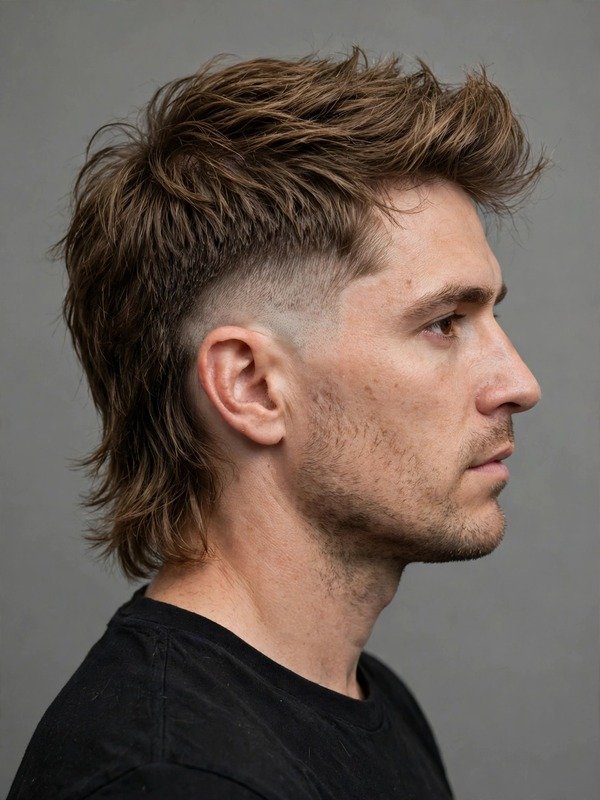
The sides are clipped short with a disconnected undercut, leaving a longer top and back with no blend. It is dramatic and less forgiving as it grows, but visually strong if you want hard contrast.
Spiky Mullet with Low Taper
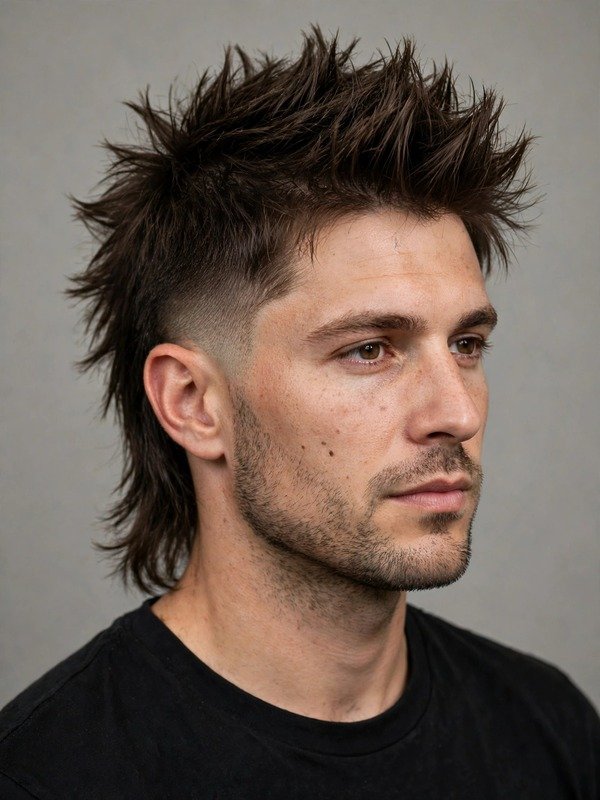
The short top is pushed into defined spikes with matte clay or strong-hold product, over tapered sides and a longer back. It has a youthful, high-energy look and works with fine, straight hair.
Quiff Mullet with Low Taper
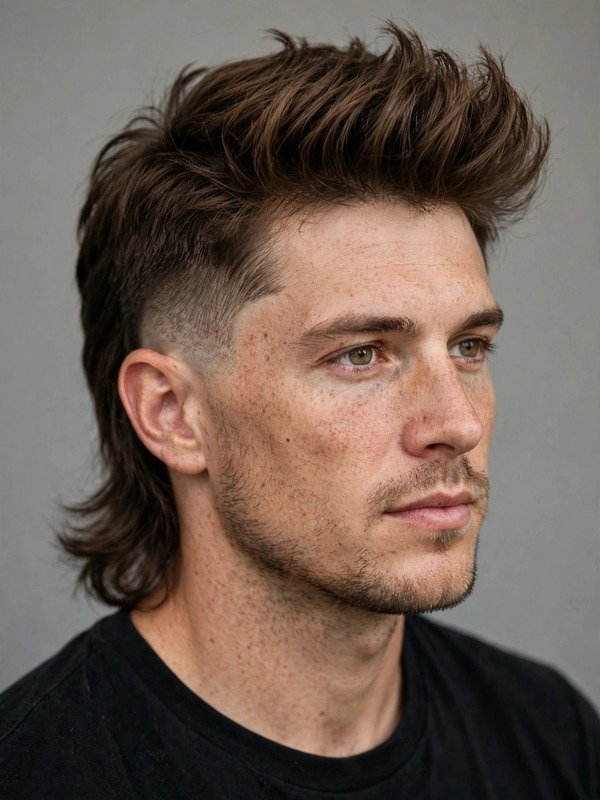
The front is lifted and swept up, with a tousled finish, over a low taper and a longer back. A blow-dry and pomade give it height without needing as much length as a pompadour.
Pompadour Mullet with Low Taper
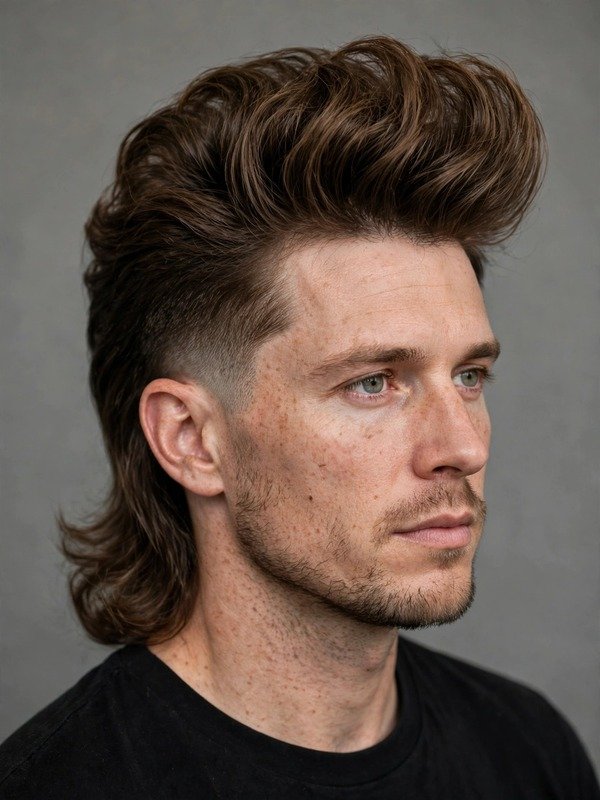
More height and a smoother sweep than the quiff, with the top combed up and back with strong-hold pomade. It needs longer top hair and takes practice, but the volume is the most dramatic.
Low Taper Fade Mullet with Design
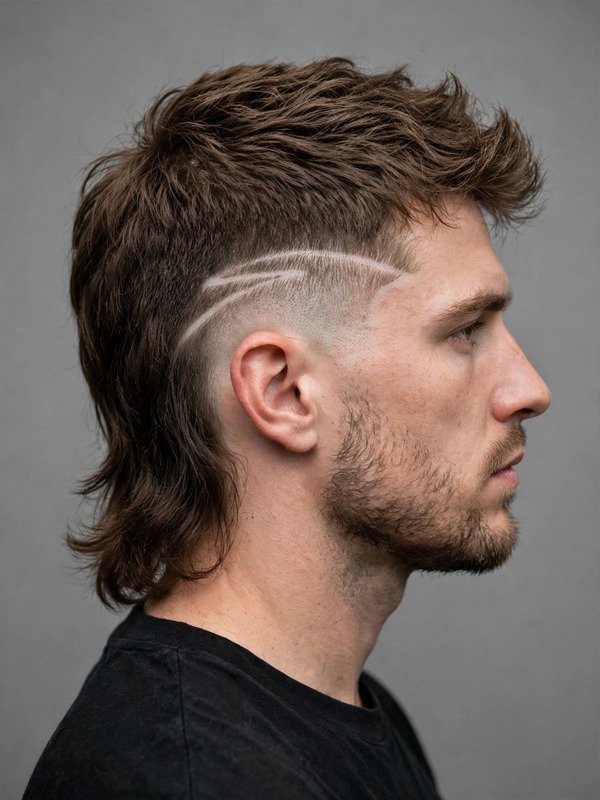
A shaved line or pattern is added to the tapered area. Because a low taper leaves little bare skin, designs are usually thin lines or small details. Choose clean, simple lines and tell your barber how much you want to show.
A crisp line-up along the front hairline pairs well with the design and keeps the whole cut looking sharp.
Short vs. Long Low Taper Fade Mullet: Which Length Is Right for You?
Short is easier to style and more office appropriate; long is more dramatic but takes patience. Deciding factors include morning styling time, how fast your hair grows and what length your workplace will tolerate. Medium sits between the two.
Short Mullet: Sharp and Easy to Style
The back is modest, grazing the collar, with about 3 to 4 inches on top. Styling is quick, upkeep is low and the cut looks tidy from the front, with flair showing mostly when you turn.
Medium Mullet: Balanced and Versatile
A good first mullet. It is distinct from a regular taper, easy to trim shorter and a fair preview of the longer version. Most variations from the list above work at this length.
Long Mullet: Relaxed and More Dramatic
The back extends past the collar toward the shoulders, and the top is long enough to sweep back. Expect an awkward stretch during growth, heavier product and active styling with a round brush and blow dryer.
It tends to suit expressive types, such as musicians or artists, who want dramatic length and are happy to put in the styling time.
How Much Length Do You Need at the Back?
For a recognizable mullet, you generally need at least 3 to 4 inches at the back, though some versions start shorter. A common barber ratio is about 4 to 5 inches at the nape and longer at the back, but these numbers are starting points, not rules. The back should be soft-layered, not blunt cut. If your hair is short now, expect to wait for growth before the shape reads clearly.
How to Choose the Right Low Taper Fade Mullet
Choose by texture, thickness, styling time and face shape. Decide the fade height first, then top length and back length, and finally the styling. Bring a reference photo, because “mullet” means different things to different barbers.
| Style | Fade or edge | Visual effect | Typical upkeep | Best for |
| Low taper mullet | Blend near hairline | Subtle, soft | Fade every 4–6 weeks | Everyday, professional |
| Mid taper mullet | Blend around mid-temple | Moderate contrast | Fade every 3–4 weeks | Balanced look |
| High taper mullet | Blend toward crown | Boldest contrast | Fade every 2–3 weeks | Statement look |
| Burst fade mullet | Curved edge around ear | Rounded shape | Similar to low/mid fades | Shape-focused cuts |
| Drop fade mullet | Curve dipping behind ear | Arched line | Similar to low/mid fades | Following head shape |
| Disconnected mullet | Hard line, no blend | Sharp, edgy | Around every 3 weeks | Bold contrast |
| Wolf cut mullet | Layered, usually tapered | Full, shaggy flow | Trim around every 5 weeks | Medium-length layered look |
The intervals above are typical guidance, not guarantees; hair growth speed and your tolerance for regrowth change them.
Choosing Between Low, Mid, and High Taper Fades
A low taper begins near the hairline and keeps a clean, subtle finish that is easy to maintain. A mid taper blends around the mid-temple and is the middle ground. A high taper blends toward the crown and is the boldest, which stands out but regrows fastest. Pick low for everyday and professional settings, mid for moderate contrast, and high for a statement. Styling does not change much: matte clay, pomade, a side-swept or messy fringe, or a slicked-back finish all work with each.
What Fade Goes Best With a Mullet?
There is no single best fade. A low taper fade is the safest all-rounder. A burst fade adds a curved edge around the ear, a drop fade adds a curve dipping behind the ear, and a skin fade or high fade creates bold contrast. Your face shape, hair type and workplace should decide, along with how often you will return to the barber.
If you are unsure whether you want a taper or a fade at all, this explainer on low fade vs low taper shows how the two differ in practice.
Low Taper vs. Mid Taper Mullet
The low taper starts near the hairline and is subtle; the mid taper starts higher and shows more contrast. A low taper usually needs touching up every 4 to 6 weeks, a mid taper every 3 to 4. Choose the low if you need a professional finish and the mid if you want a visible difference between top and sides.
For a deeper side-by-side with examples, see this guide to the low taper fade vs mid taper fade differences before you book your cut.
Low Taper vs. High Taper Mullet
The high taper climbs toward the upper scalp for aggressive contrast and shows regrowth quickly, often in 2 to 3 weeks. The low taper stays near the hairline, grows out gracefully and suits an everyday or professional setting.
Low Taper vs. Burst Fade Mullet
A low taper runs in a straight, gradual blend. A burst fade curves in a rounded shape around the ear, leaving more length behind it. Burst fades add visual interest around the ear; low tapers stay clean and understated. Both support a longer back and a modern mullet.
Low Taper vs. Drop Fade Mullet
A drop fade has an arched line that dips down behind the ear toward the nape, while a low taper follows a straighter path. The drop emphasizes the curve of the head and nape; the low taper is simpler. A low drop taper (style 16) combines both ideas.
Low Taper Fade Mullet vs. Disconnected Mullet
A disconnected mullet has a hard line with no blend between sides and top. A low taper blends gradually. The disconnected version is the edgier alternative and needs refreshing about every 3 weeks, while the low taper is subtle and grows out well.
Low Taper Fade Mullet vs. Regular Mullet
A regular or classic mullet is often scissor-cut at the sides with one thick back section and boxy layers. A low taper fade mullet blends the sides cleanly and layers the back, giving an updated structure. The taper version is easier to wear in everyday and professional contexts.
Which Face Shapes Suit a Low Taper Fade Mullet Best?
The cut suits almost every face shape because you can dial length and volume and adjust fade placement to counterbalance proportion. Treat the guidance below as styling logic, not a rule. Round faces benefit from added height, square from softening, oval from almost anything, long from added width, and diamond from restraint at the crown. Heart-shaped faces generally do well with fullness at the back and a longer fringe to balance a wider forehead.
Low Taper Fade Mullet for Round Faces
Add height, not width. More volume on top, a tight, close fade and sides kept tapered can sharpen a round face. A longer fringe and crown height create vertical lines. A high taper or skin fade can emphasize this contrast further, though a low taper is still workable.
Low Taper Fade Mullet for Square Faces
Square faces are flexible. A textured crop can soften an angular jaw, while a slicked-back style pulls the eye upward. A longer fringe softens sharp corners, and either a low or mid taper works.
Low Taper Fade Mullet for Oval Faces
This is the easy case; nearly every variation sits well. A textured top, a slicked-back finish or a messy fringe all work, and any fade height is fine.
Low Taper Fade Mullet for Long or Rectangular Faces
Add width, not height. Shaggy surfer and wolf cut hybrids beat heavy top volume because they create fullness at the sides. Avoid extra height on top, keep the fade low and consider a longer fringe.
Low Taper Fade Mullet for Diamond Faces
Diamond faces are widest at the cheekbones, so fullness around the jaw and at the back helps. Keep crown volume restrained and sides close to the jaw. A burst fade or temple fade can help balance angular jawlines.
Face Shape Fit Guide: Choosing the Right Top and Back Length
- Oval: most top and back lengths and any fade.
- Square: a longer fringe to soften the jaw.
- Round: height at the crown, tapered sides.
- Diamond: sides close to the jaw, fullness at the back, restrained crown volume.
- Rectangular/long: avoid extra height; add side fullness.
A longer back balances a narrow jaw, while a shorter back keeps a wide jaw from looking heavier.
Low Taper Mullet Fade for Different Hair Types
Texture changes everything about how the cut behaves day to day. Density, shrinkage, bulk and layering decide how much product and styling time you need, and the same tapered sides adapt to each type.
Straight Hair
Straight hair lies flat and can look one-dimensional or stringy without a body. Precise layering fakes movement, and a texturizing spray plus a little heat from a blow-dry and round brush builds volume at the roots. Use light products so the smooth back stays sleek.
Wavy Hair
Wavy hair is the easiest texture for this cut. The natural bend creates separation between layered sections, so the cut looks intentional with hardly any product. A light sea-salt spray or texturizing cream defines the waves without weighing them down.
Curly and Coily Hair
Curls shrink upward, so the visible length is shorter than the actual length, and your barber must account for shrinkage. Leave generous volume at the crown and style less. A leave-in conditioner and a lightweight curl cream give definition without crunch, and the taper keeps the sides controlled around natural volume.
Thick Hair
Thick hair holds shape and looks full with little product, but it dries slowly and can feel heavy. Barbers use thinning shears or point-cutting to pull out bulk without losing length. A textured crop or layered mullet often manages thick hair best.
Fine and Thin Hair
Fine or thin hair can pull off the cut. Keep as much length as possible, because product builds density and a quick blow-dry with volumizing products creates the appearance of thickness. A matte texturizing paste adds grip at the roots. Avoid over-thinning, which can increase scalp show-through.
Fluffy, Coarse, and Frizzy Hair
These textures can go sleek or messy. Heavy layering and a leave-in conditioner or light curl cream tame frizz, and the volume softens the transition between taper and back. A matte clay suits a textured finish; a pomade suits a sleeker one.
How to Ask Your Barber for a Low Mullet
Start with the fade, then give top and back lengths separately, and bring reference photos. Hairstyle names alone do not convey every detail, so be specific about guard numbers or visual results, since barbers use different clipper setups.
The 4-Step Barber Brief Formula
- State the base style: “a modern mullet, not a classic 1980s mullet.”
- Specify the fade: low taper, or burst fade if you want the curve.
- Define the length ratio: for example 4 to 5 inches at the nape, with the top longer or shorter as you prefer.
- Confirm front styling: fringe, curtain bangs or pushed back.
Then ask about trim frequency and a grow-out plan.
Specify the Fade Height, Guard, and Blend
Say “low taper fade” with the blend beginning about an inch above the ear. A short guard near the hairline (often a 1 or 2) and a longer guard around 4 or 5 further up are common, but treat these as examples, not universal instructions. Mention whether you want a skin taper or a shadow taper, and give sideburn and neckline details.
Explain the Top and Back Length Separately
Give each its own number, such as about four to five inches on top and about six inches at the back, with soft layering instead of a hard line. Ask for a scissor-over-comb finish where the blend meets longer hair. The two lengths are separate requests, and mixing them is how mullets end up wrong.
Choose Your Fringe and Front Styling
Decide whether you want a blunt fringe, a textured or choppy fringe, curtain bangs or a swept-back front. Fringe length and texture change the whole character of the cut.
Show Reference Photos From the Front, Side, and Back
Bring photos from three angles. The back angle matters most because that is where mullets are most often misunderstood. If your hair texture differs from the photo, tell the barber so they can adjust.
Copyable Barber Script for a Low Fade Mullet
“I’d like a modern mullet with a low taper fade, starting about an inch above my ears, blended with a scissor-over-comb finish. Keep about four to five inches on top with a textured look, and about six inches at the back with soft layering rather than a hard line. I’d like [fringe style]. Here are photos from the front, side and back.”
Add your hair type and ask how often to come back.
Common Communication Mistakes to Avoid
- Using vague phrases like “mullet but cleaner.”
- Skipping sideburn, neckline and guard details.
- Assuming the barber remembers your last cut.
- Not bringing a reference photo.
- Not mentioning your hair type or styling plan.
- Skipping the maintenance question.
How to Style a Low Taper Fade Mullet at Home
Start with clean, towel-dried hair, not soaking wet and not bone dry. Warm product between your palms and work from root to tip. The method changes with length and texture.
Step-by-Step Styling Routine
- Prep damp hair with sea-salt spray.
- Work mousse through the back.
- Blow-dry the top, lifting at the crown with a round brush.
- Use matte clay for the top and pomade for the fringe.
- Scrunch a texturizing spray into the back and lock it with a light-hold hairspray.
Styling a Short or Medium Mullet
Use a lightweight sea-salt spray or texturizing powder, roots first, and scrunch with your fingers instead of combing. It takes only a few minutes and gives a natural, tousled finish.
Styling a Long or Slicked-Back Mullet
Apply a heavier pomade or styling cream with strong hold to slightly damp hair, comb the top straight back, and use a blow dryer on low heat with a round brush to set the shape.
Styling a Curly or Wavy Mullet
Skip the comb. Scrunch product upward toward the roots with your fingers and use a diffuser on low heat and low speed to set the pattern. Leave-in conditioner and a lightweight curl cream keep definition.
Adding Texture and Volume to the Top and Back
Sea-salt spray before blow-drying adds grip. Blow-dry upward, then tousle with fingers. Matte clay or texture powder adds fullness, but layer lightly.
Combing and Brushing Tips
Dampen hair before combing. Comb the top forward or straight back depending on your style, brush through the back, and use your fingers on curls so you define the pattern without flattening it.
Best Hair Products for a Low Taper Fade Mullet
- Shorter, textured styles: sea-salt spray, texturizing powder, matte clay or matte texturizing paste.
- Longer, sleeker styles: pomade, styling cream, strong-hold pomade and light-hold hairspray.
- Curly hair: leave-in conditioner, lightweight curl cream or light gel.
- Fine hair: volumizing products.
- Heat styling: a heat protectant.
A moisturizing shampoo supports the longer sections, and a clarifying shampoo helps when the product builds up.
Other useful categories include hair wax or a molding paste for definition, texture clay for matte hold, and a hydrating oil on non-wash days for dry ends.
Low Taper Fade Mullet Maintenance, Trim Schedule, and Grow-Out
The fade needs the most attention, and the top and back need the least frequent work. These intervals vary with hair growth and personal preference, so treat them as typical ranges.
How Often Should You Trim a Low Taper Fade Mullet?
A fade touch-up every 3 to 4 weeks keeps it sharp, and regrowth is usually visible within that window. A low taper fade often lasts 4 to 6 weeks before it looks grown out. The top and back usually need a full trim about every 8 to 12 weeks, though some barbers suggest trimming a mullet every 6 to 8 weeks to keep the shape. Wolf cut mullets may need attention more often, around every 5 weeks.
Fade-Only Touch-Ups vs. Full Haircuts
The fade and the length grow at different rates, creating a two-clock split. Fade-only touch-ups are quick, and some shops offer discounted fade-maintenance pricing. A full haircut every couple of months handles the top and back, with a light dusting of the ends to remove split ends and restore shape.
How to Maintain the Top and Back Length
The top and back need 8 to 12 weeks before real work is needed. Keep longer sections healthy with moisturizing shampoo, a leave-in conditioner and heat-styling care to prevent drying and breakage.
How to Keep Your Fade Sharp Between Barber Visits
Schedule fade-only touch-ups every 3 to 4 weeks, or stretch to 5 to 6 weeks if you are comfortable with a blended line. Between visits, a daily routine of combing, light product and a neat styling habit keeps the cut tidy. Avoid trimming the fade yourself.
How Long Is the Awkward Grow-Out Phase?
The awkward phase often lasts roughly 6 to 8 weeks of early growth, until the back is long enough to read as a mullet. Style with intention, use light products and stay patient. Fade touch-ups keep the sides neat while the length catches up.
How Long Does It Take to Grow Out a Mullet?
Hair growth speed varies, so the answer is measured in months rather than weeks, depending on your starting length and goal. Regular trims and fade touch-ups shape the growth while moisturizing shampoo and leave-in conditioner keep it healthy.
Daily Hair Care Routine Between Haircuts
Wash two or three times a week with a moisturizing shampoo, avoid over-washing, use a leave-in conditioner, and add a little oil on non-wash days. Dampen hair, comb or brush it, and use light product for a natural finish.
Healthline’s guide on how often you should wash your hair backs this up, explaining that shampoo is mainly meant to cleanse the scalp and that over-washing can strip natural oils.
Common Low Taper Fade Mullet Mistakes to Avoid
Making the Taper Too High
A taper that climbs toward the temple or crown turns a subtle fade into a bold, aggressive one. Specify fade height and bring a reference photo.
Cutting the Back Too Short
A short back loses the mullet shape. Keep the back long enough to graze the collar or longer, with soft layers instead of a blunt cut, and be patient during growth.
Creating an Uneven or Choppy Blend
Harsh lines between guards undermine the cut. A skilled barber blends with a scissor-over-comb finish. If you see stripes, ask for the blend to be smoothed.
Choosing the Wrong Length for Your Hair Type
Curls shrink, fine hair needs coverage, and thick hair needs bulk control. Be honest about your texture and styling plan so the barber can choose the right length.
Using Too Much Styling Product
Overuse causes buildup, a greasy look and crunchy curls. Use a small amount warmed between your palms and layer lightly.
Ignoring Maintenance and Grow-Out
Skipped trims and a neglected fade make the cut look shapeless. Plan fade touch-ups and a full haircut schedule, and treat the awkward phase as temporary.
Final Takeaway

A low taper fade mullet solves one problem: it gives you longer, expressive hair without looking careless or high maintenance. It flatters straight, wavy, curly and thick hair, and it adapts to face shape. Go short for a low-key look or long for drama.
The formula holds: tight, tapered sides and deliberately shaped length. Communicate clearly with your barber, be honest about texture, and stay patient through the early grow-out weeks.