

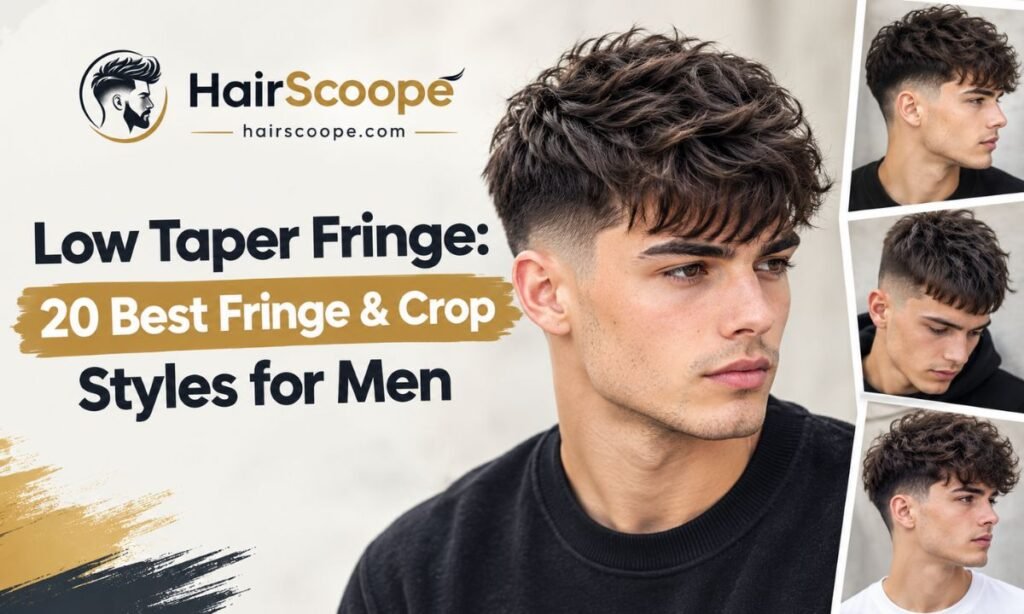
A low taper fringe pairs longer hair on top, brought forward over the forehead, with sides and back that shorten gently around the ears and neckline. It looks sharp without the starkness of a skin fade, and it works across straight, wavy, curly and coily hair.
This guide explains what the cut is, shows 20 genuinely different ways to wear it, and covers what to tell your barber, how to style it, and what upkeep to expect.
What Is a Low Taper Fringe?
A low taper fringe is a men’s haircut that combines a fringe (hair left long enough to fall forward over the forehead) with a low taper (sides and back that get progressively shorter toward the hairline, but only near the ears and nape).
The fringe is the feature; the taper is the frame. A taper usually leaves some visible hair at the edges, while a skin fade takes the shortest areas down to bare skin. That makes a low taper fringe a softer, easier-to-live-with cousin of a low fade with a fringe.
You will see “low taper fade fringe” and “low taper fade with fringe” used for the same look. Barbers do not all draw the line between taper and fade in the same place, so describe the finish you want (how short at the very edge, and whether any skin shows) rather than relying on the name alone.
“Low” refers to where the shortening happens. The hair stays full above the temples and shortens only around the ears and back of the neck.
What Does a Low Taper Fringe Look Like?
- Top: Noticeably longer than the sides, usually long enough to reach the forehead. It can be choppy, smooth, blunt or tousled.
- Fringe: Falls forward, sweeps to a side or splits in the middle, depending on the variation.
- Sides: Keep some length through the upper sides, then tighten gradually toward the sideburns and around the ears.
- Back: Tapers toward the neckline, which can be natural or squared off.
- Overall shape: A soft, rounded top over tidy, close edges. The contrast between top and sides is clear but gradual, with no hard line.
Low Taper Fringe vs. Similar Haircuts
The key difference is how much of the sides are cut short and how abruptly. The lower and softer the taper, the gentler the grow-out. If you are torn between the two, our guide to the low fade vs low taper choice compares them in more detail.
| Haircut | Sides | Contrast | Grow-out |
| Low taper fringe | Short only around ears and neckline | Moderate, gradual | Soft; neckline and ears go first |
| Low fade with fringe | Reaches skin low down | Sharper at the edges | Edges look untidy sooner |
| Mid or high fade with fringe | Short and often skin-tight higher up | High, dramatic | Most noticeable as it grows |
| Classic taper with side part | Neat, usually longer | Low, conservative | Very gradual |
| French crop | Tight sides | High, with a short blunt fringe | Depends on the fade |
If you like the fringe but want a bolder side profile, move toward a mid fade. If you want something quieter, a longer, more conservative taper is the better fit.
Who Does a Low Taper Fringe Suit?
It suits a wide range of men because the length stays on top and the sides can be adjusted. What matters most is how your hair behaves:
- Straight hair falls forward easily but can look flat, so it benefits from texture and some cut-in layering.
- Wavy hair gives natural movement and a relaxed fringe with little effort.
- Curly hair adds volume and shape; the taper keeps the sides from widening the silhouette.
- Coily hair can form a defined, compact fringe, though shrinkage means it sits shorter than its stretched length.
- Fine hair works best with a shorter, denser fringe. Thick hair often needs thinning or texturizing to avoid bulk.
Two practical checks: a strong cowlick at the front hairline can push the fringe in an unexpected direction, and since a cowlick is a natural hair growth pattern that cannot be removed, it is worth telling your barber about it. And if your hairline is receding, a fringe can soften the area, though it will not hide it completely. A shorter or side-swept fringe often looks more natural than a heavy, full one.
It also works in most day-to-day settings. School and office dress codes are usually fine with a tidy, tapered version, while the longer, messier versions read more casual.
Best Low Taper Fringe for Your Face Shape
Face shape is a guide, not a rule. Fringe length, volume and side width change how the face looks balanced.
- Oval: Flexible. Most fringe lengths and directions work.
- Round: Added height on top and a side-swept or angled fringe can lengthen the look. A heavy, straight-across fringe may emphasize width.
- Square: A softer, textured or curtain fringe can balance a strong jaw. A very blunt fringe adds more angles.
- Oblong or long: A fuller fringe that covers part of the forehead can shorten the look. Too much height on top can lengthen it further.
- Heart: A side-swept or curtain fringe softens a wider forehead. Keep the sides from looking too narrow.
- Diamond: A fuller fringe adds width at the forehead, balancing prominent cheekbones.
20 Best Low Taper Fringe Styles
These variations differ in fringe shape, length, hair type, finish or structure. Fringe names overlap in barbershops, so a reference photo always helps.
1. Textured Fringe
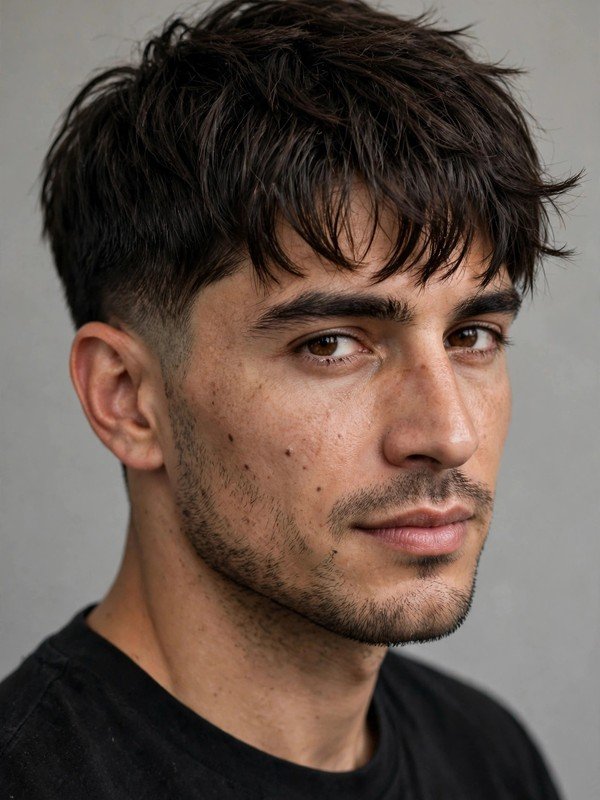
The top is cut with choppy, separated ends and styled forward with a matte product. You see distinct pieces rather than a smooth sweep. It suits straight and wavy hair and is a dependable starting point for the cut. For more on styling this look, see our low taper fade with textured fringe guide.
2. Messy Fringe

The messy fringe looks intentionally undone: pieces fall in different directions, with some forward and some pushed across. It is looser and more casual than the textured fringe, and tolerates imperfect styling.
3. Short Fringe
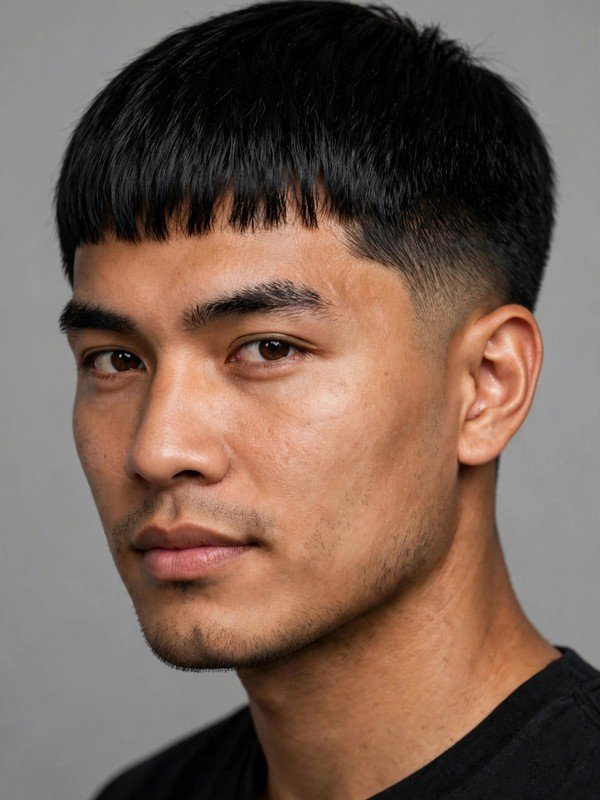
The fringe sits above or around the eyebrows, with a little more length behind it. It is easy to manage and keeps hair out of your eyes. It suits students, active men and anyone wanting less styling.
4. Long Fringe
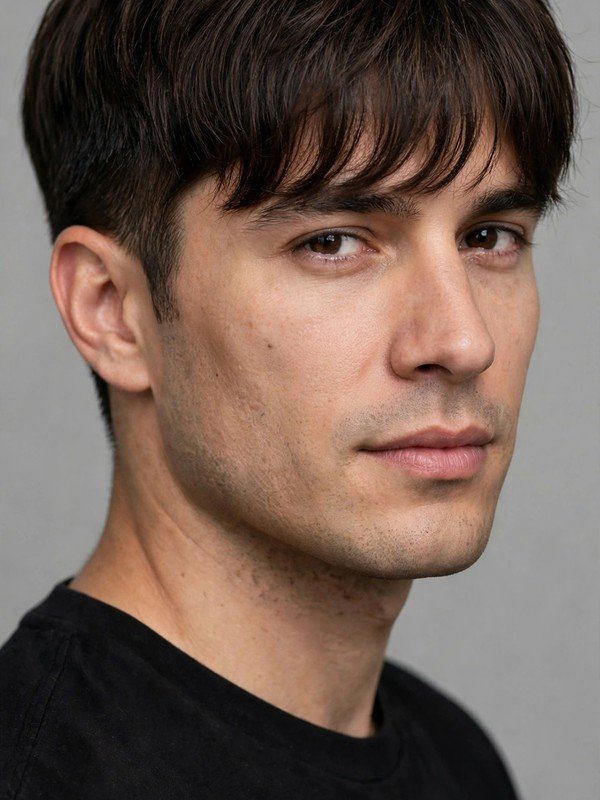
The fringe reaches the eyebrows or lower and can be swept aside or pulled back. It gives the most styling choice but needs more care and regular trims to avoid growing into your eyes.
5. Curly Fringe
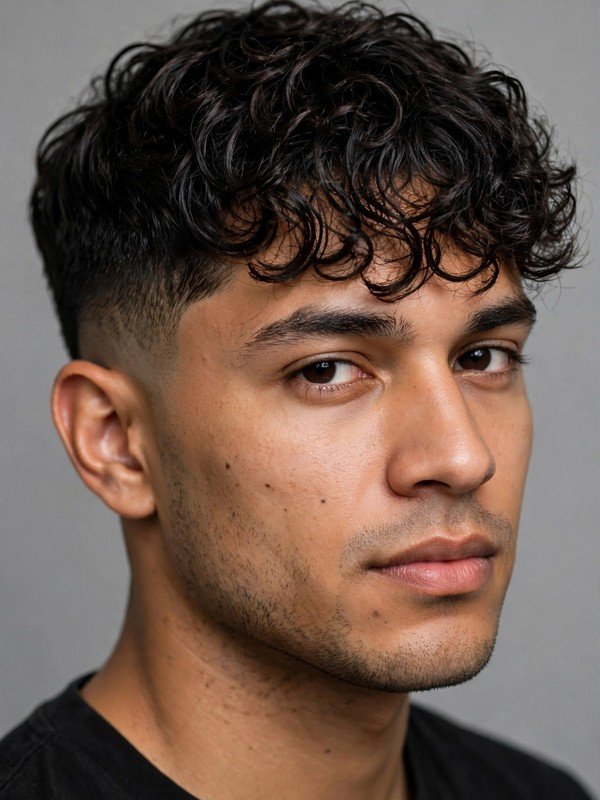
Curls fall forward over the forehead while the taper keeps the sides narrow. The curl pattern provides the volume, so the aim is definition rather than extra bulk. Cut it with the curl’s natural spring in mind.
6. Wavy Fringe
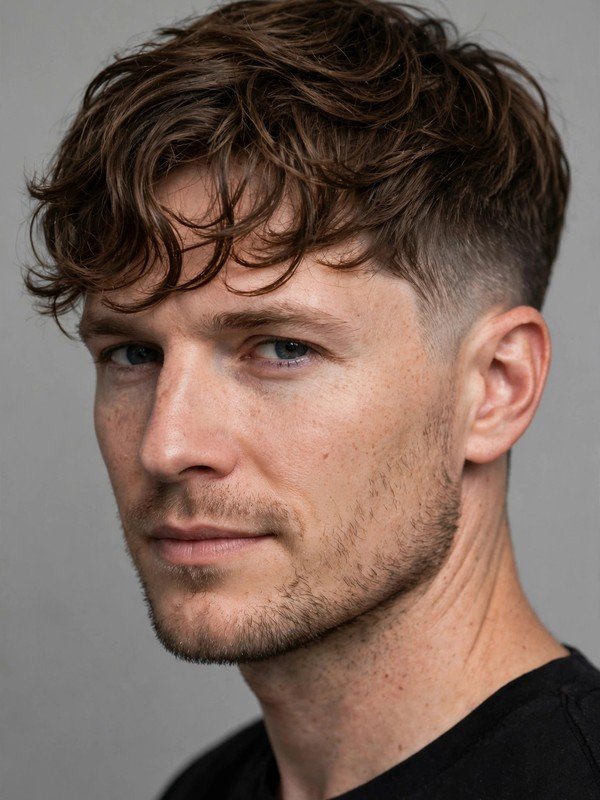
Loose S-shaped waves give the fringe a relaxed, flowing look. Cut it a bit longer than you would straight hair, since waves lift as they dry. A little product keeps it soft rather than frizzy.
7. Low Taper Fringe for Straight Hair
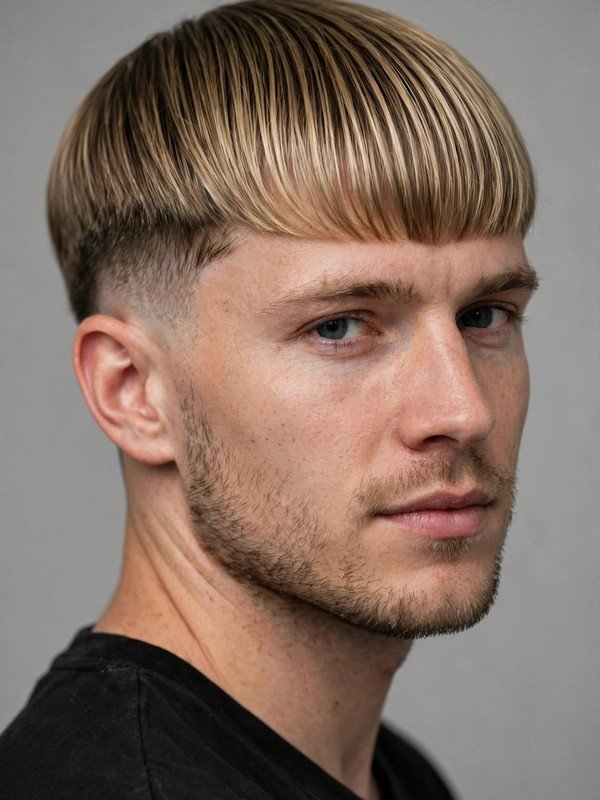
Straight hair tends to fall flat and heavy, so this version relies on layering or point cutting to create movement. The fringe is usually a bit shorter and lighter, giving shape that holds through the day.
8. Blowout With Textured Fringe
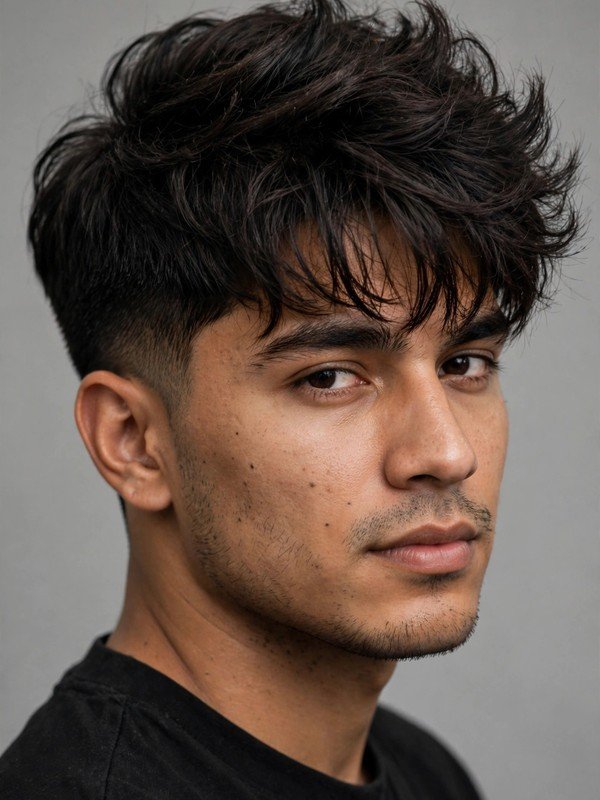
Here the top is blow-dried for lift at the front, then finished with a texturizing product. The result is a fuller, voluminous fringe that stands slightly off the forehead. It works best on medium-density hair with enough length to style.
9. Fluffy Fringe
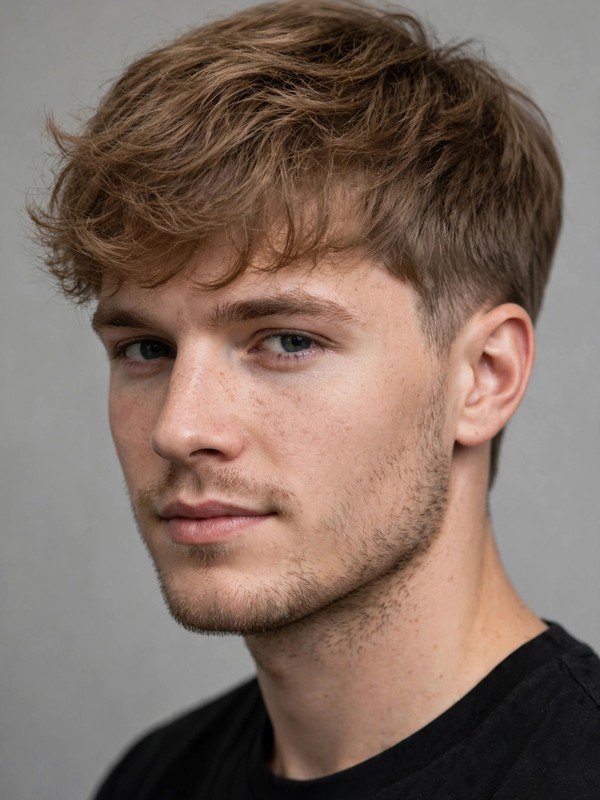
Soft, airy and rounded, the fluffy fringe has volume without sharp separation. It is typically dried with a light product or none at all. It suits fine to medium hair and looks relaxed rather than structured.
10. Side-Swept Fringe
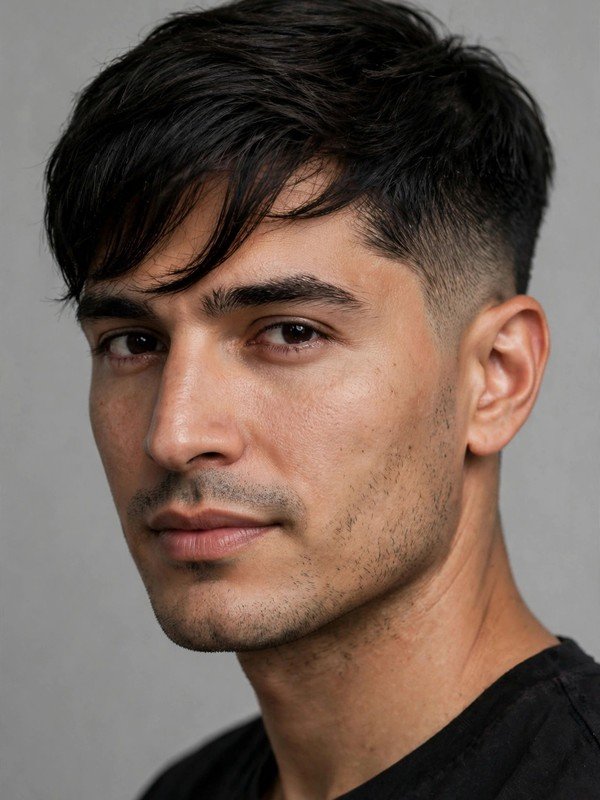
The fringe angles across the forehead to one side, usually following the natural parting. It is tidier and more classic than the messy styles, and works well for school or office use.
11. Curtain Fringe
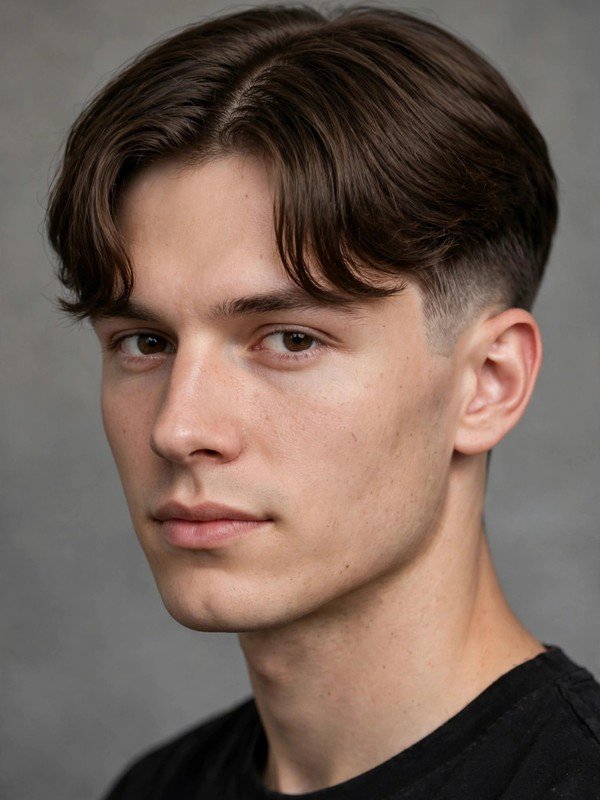
A center or slightly off-center part lets the fringe fall in two soft sections on each side of the forehead. It needs enough length to separate, and it suits wavy or straight hair better than very tight curls.
12. French Crop
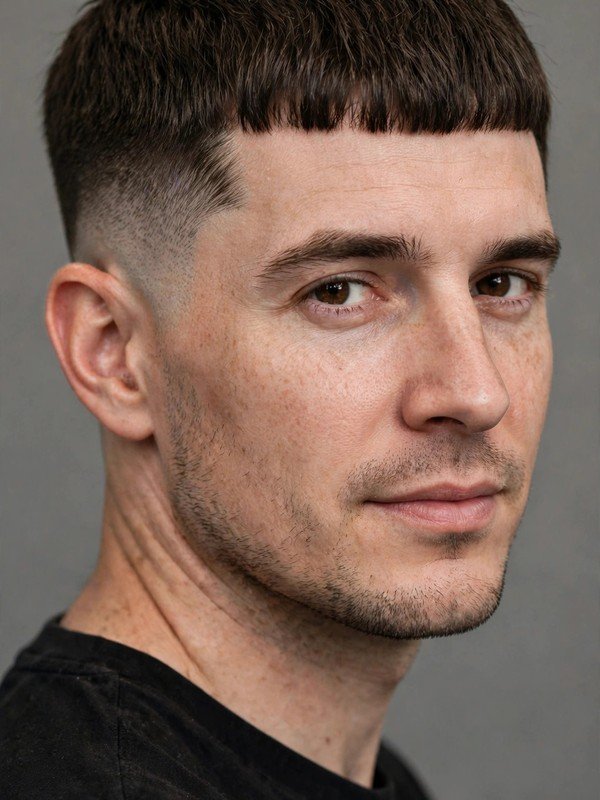
The French crop has a short, blunt fringe over a textured top, with tight sides. In a low taper version, the sides stay softer than in the classic fade. It is a good low-fuss option for straight or wavy hair.
13. Edgar Fringe
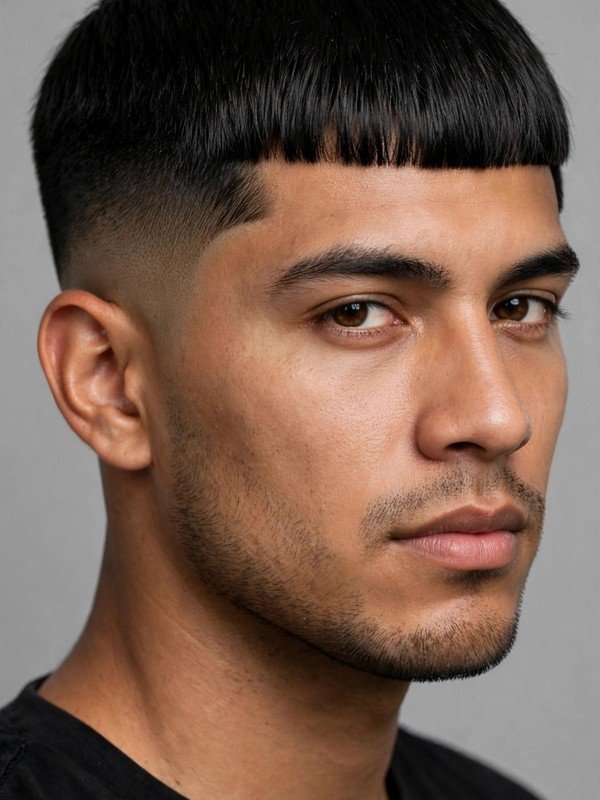
The Edgar has a straight-across fringe cut close to horizontal over the forehead, giving a sharp, deliberate line against the taper. It usually works best on thicker, straighter hair. The name is used loosely, so show your barber a picture.
14. Caesar Fringe
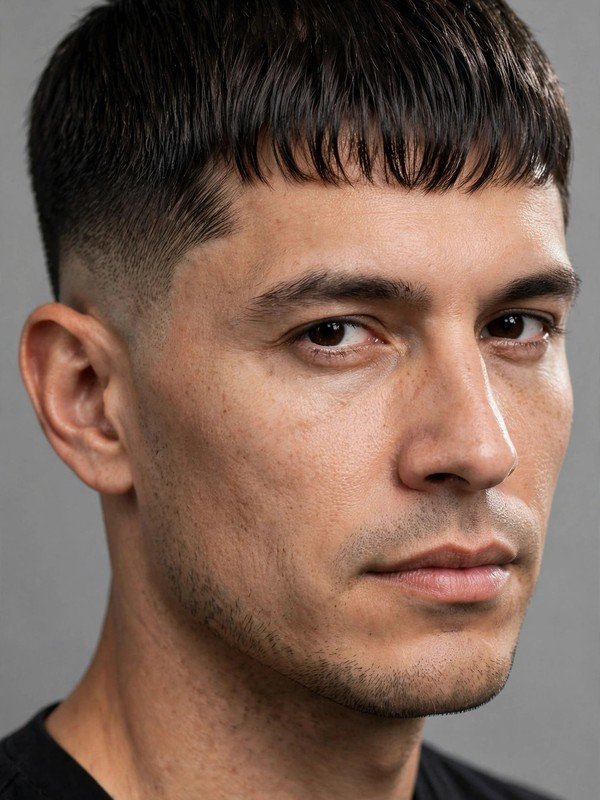
Short, even-length fringe combed forward and cut straight across, with the top kept uniformly short. Compared with the Edgar, it is typically shorter and lighter, giving a clean, minimal look that needs little product.
15. Thick Fringe
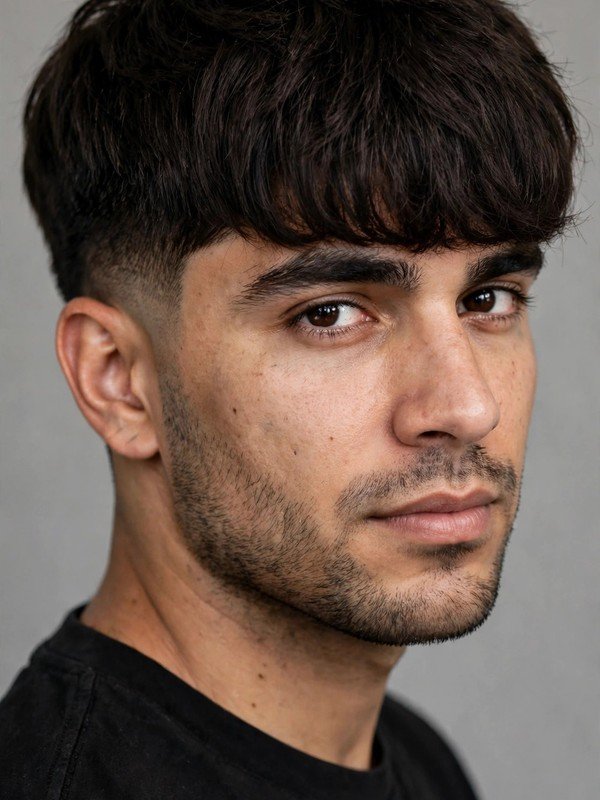
Dense hair makes a full, heavy fringe that sits forward with real weight. A good barber will thin or texturize the inside so it does not become bulky, and the style needs a firmer-hold product to stay shaped.
16. Low Taper Fringe for Fine Hair
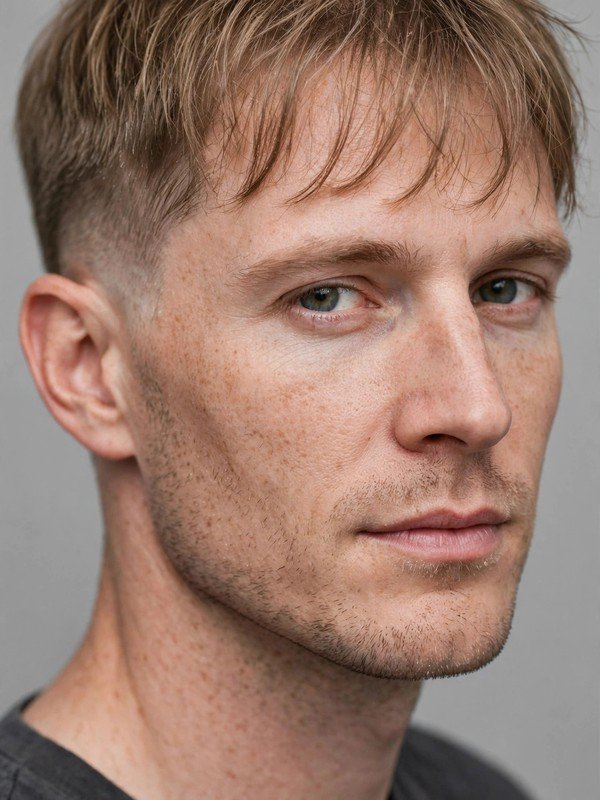
Fine hair looks thicker when cut shorter and slightly blunt. This version keeps the fringe compact, with minimal layering, and a volumizing product adds body. Heavy pomades tend to weigh it down.
17. Asian Low Taper Fringe
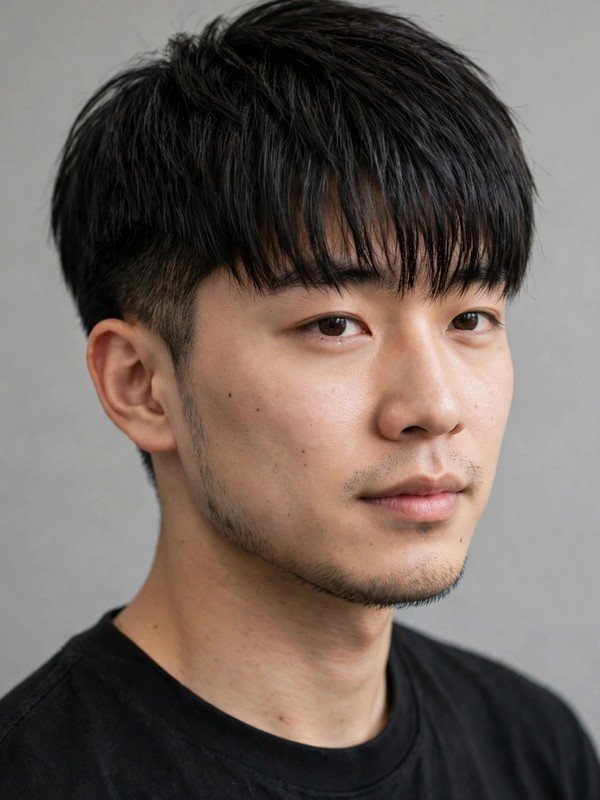
Many men of East Asian descent have straight, strong, dense hair, though hair varies by person. This version often uses a longer, textured or side-swept fringe, with thinning or layering to reduce weight. The taper keeps the sides from puffing out.
18. Low Taper Fringe for Coily or Afro-Textured Hair
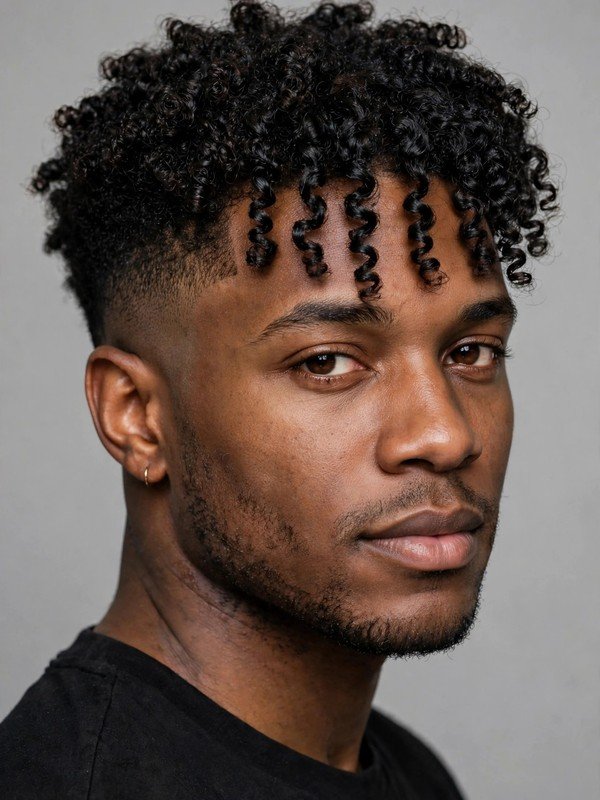
The top is shaped into a rounded or defined fringe, often with twists, coils or a twist-out, while the low taper keeps the sides neat. Because of shrinkage, the hair will appear shorter than it measures, so discuss length before the cut. Moisture helps define the pattern.
19. Low Skin Taper Fringe
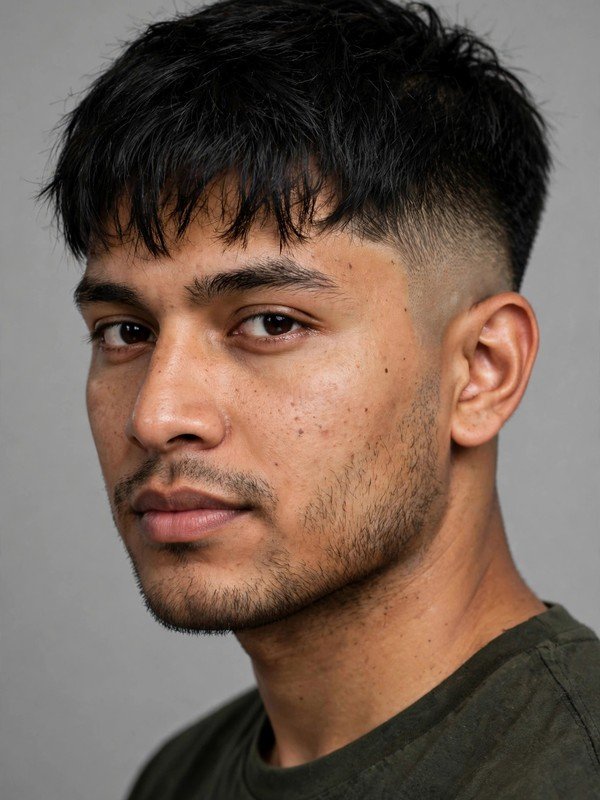
This version takes the very edges, around the ears and neckline, down to skin, while the rest stays longer. It gives a crisper outline than a plain taper but still keeps a low profile. Expect it to look untidy sooner as the skin areas grow in.
20. Subtle Natural Fringe
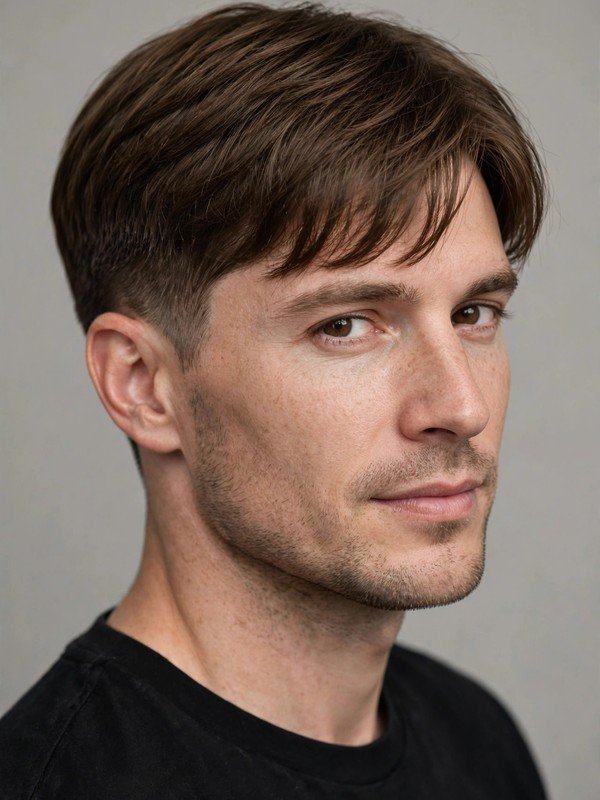
The lowest-effort version: a short, relaxed fringe that falls forward on its own, over a very gentle taper. Little styling is needed, and it grows out gracefully. It suits conservative settings and men who prefer a natural finish.
How Long Should Your Hair Be for a Low Taper Fringe?
The top needs enough length to fall forward to about the forehead when styled. If you can only just pinch it, wait a bit longer or choose a shorter, crop-style version.
For curly and coily hair, judge length by how it sits naturally, not stretched. Shrinkage can make hair look much shorter than it is, so a fringe that reaches the forehead when pulled straight may sit well above the eyebrows when relaxed.
The sides do not need to be long. They just need enough hair on the upper sides for the taper to blend into.
What to Ask Your Barber for a Low Taper Fringe
The name alone will not get you the exact result. Say:
- Taper, not fade: Ask for a low taper with a soft finish. Say whether you want any skin showing at the edges.
- Fringe length: Describe it against your face (at the eyebrow, just above, below).
- Texture: Request point cutting or texturizing for a choppy look, or a cleaner line for a smoother one.
- Sides: Ask how much length to leave on the upper sides before the taper begins.
- Neckline: Choose natural for easier grow-out, or squared or rounded for a sharper look.
- Hairline concerns: Mention cowlicks, a receding hairline or uneven growth.
Bring a reference photo. Barbers use different names for the same look, and a picture avoids guesswork.
How to Style a Low Taper Fringe at Home
- Start with damp hair. Towel-dry until it is damp, not dripping. For curly hair, apply a leave-in or curl cream while it is still wet.
- Set the direction. Blow-dry the fringe forward, or toward the side you want, using your fingers or a brush. This trains the hair and adds shape.
- Add product. Work a small amount through your fingertips, mostly at the ends. Too much weighs the fringe down.
- Define the pieces. Use your fingers to separate and place the fringe. For a smoother look, comb it into shape.
- Finish lightly. A little more product, or a light mist of spray, holds the look without stiffness.
For curls, scrunch and air-dry or use a diffuser. For coily hair, define the pattern with product and a gentle shaping, and keep it moisturized.
Best Products for a Low Taper Fringe
Product type matters more than brand. Choose by the finish you want:
- Matte clay or paste: Texture and hold with a natural finish. A good default for textured and messy fringes.
- Cream: Soft, flexible hold and a little moisture. Works well for wavy, fluffy or natural looks.
- Mousse or volumizing spray: Adds body to fine hair without heaviness.
- Sea-salt spray: Boosts texture and grip, but can dry out hair if overused.
- Curl cream or leave-in conditioner: Defines curls and coils and reduces frizz.
- Pomade: Better for smooth, polished finishes than for a loose fringe; use sparingly.
- Heat protectant: Worth using before blow-drying.
Low Taper Fringe Maintenance and Upkeep
The sides and neckline show wear first. The tapered areas lose their clean edge as hair grows, even when the top still looks fine. A low taper is more forgiving than a skin fade, but it still needs regular tidy-ups to stay crisp. How often depends on how fast your hair grows and how sharp you like it.
The fringe itself needs trims when it begins to touch your eyes or lose its shape. Thick hair may also need periodic thinning to prevent bulk.
At home, wash as your hair type requires, and clarify occasionally to remove product buildup.
As it grows out, the taper softens into a longer, fuller shape, which is why this cut is relatively easy to grow into something else. A trim around the ears and nape can keep it presentable between visits.
Common Low Taper Fringe Mistakes to Avoid
- Asking only for the name. Different barbers read it differently. Describe lengths and bring a photo.
- Ignoring your hair type. A fringe that works on straight hair can behave very differently on curls.
- Cutting the top too short. Once the fringe is gone, you have to wait for it to return.
- Using too much product. It makes fine hair limp and thick hair heavy.
- Forgetting grow-out. A skin taper looks untidy faster than a soft one.
- Overlooking cowlicks. A front cowlick can change how the fringe falls.
- Skipping a reference photo. It is the simplest way to avoid disappointment.
Pros and Cons of a Low Taper Fringe
What Works
- Clean, modern look without a dramatic fade
- Many fringe options for different hair types
- Softer, more forgiving grow-out than a high fade
- Suitable for school, work and casual settings
- Can be styled neat or messy
What to Consider
- The sides and neckline need regular tidy-ups
- The fringe can fall in your eyes or get in the way during sport
- Cowlicks and thin areas can complicate the fringe
- Styling takes a few minutes for the textured versions
- Very short hair limits your options until it grows
How Much Does a Low Taper Fringe Cost?
There is no single price. Cost depends on the shop, the barber’s experience, your city, and add-ons like a beard trim, line-up or styling. In many shops a taper is priced as a standard men’s haircut, while some charge more for fades or detailed work. Prices in the USA, UK and Canada vary widely, so check the shop’s price list or ask before booking, and remember to budget for a tip where that is customary.
Is a Low Taper Fringe Right for You?
It is a good fit if you want a clean, current look with real versatility on top and a more conservative finish on the sides. It works especially well if you have enough length to style and are happy to book regular tidy-ups.
It may not suit you if you want almost no maintenance, a very short cut, or a dramatic high-contrast fade. In those cases, consider a longer taper or a shorter crop. If you like the shape but want a softer grow-out, a low taper is a better choice than a skin fade.
Conclusion
The low taper fringe lasts because it adapts. You can keep it short and tidy, or long and tousled, with curls, waves or straight hair, and still get the same clean outline around the ears and neck.
To get it right, choose a fringe length that suits your hair type and daily routine, describe the taper you want rather than only naming it, and bring a photo. With the right product and regular tidy-ups, it is a flexible cut that works in almost any setting.