
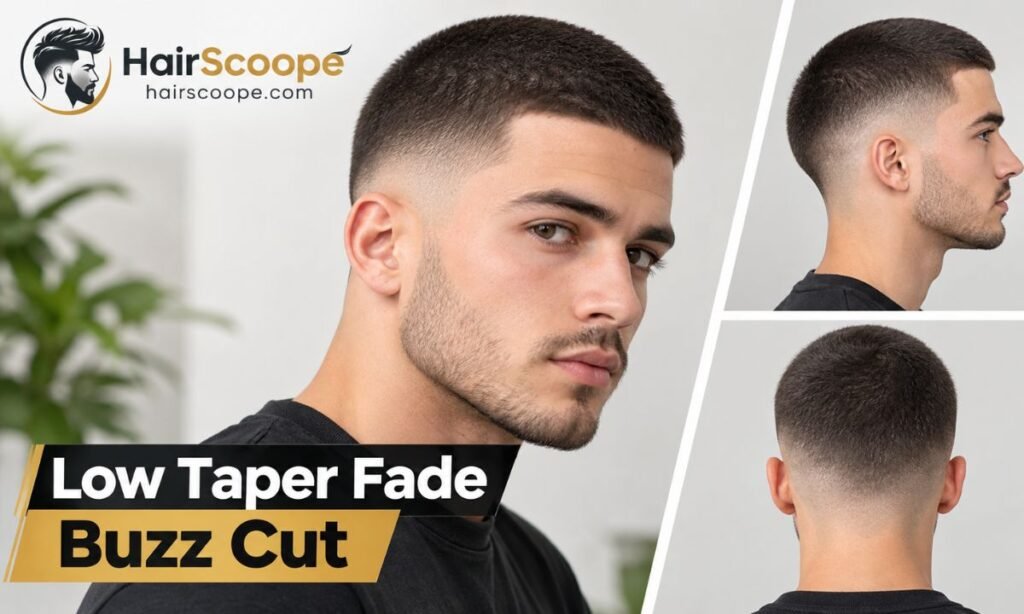
Some haircuts need a product, a blow dryer, and ten minutes in front of the mirror. The low taper fade buzz cut needs a towel. It’s short, sharp, and forgiving, and it looks deliberate whether you’re in a suit or a gym hoodie. The clippers do all the work, and the taper around your ears and neckline does the rest.
But “buzz cut with a low taper” covers a lot of ground. Guard number, line-up, beard, hair texture, and face shape all change how it looks. This guide walks through each choice so you can sit in the barber’s chair knowing exactly what to ask for.
What Is a Low Taper Fade Buzz Cut?
A low taper fade buzz cut is a short haircut with the top clipped to one even length. The hair around the ears and neckline gradually shortens, starting low on the head, so the edges look clean without a dramatic contrast.
That’s the whole idea. The top stays simple. The taper is the detail that separates it from a plain all-over buzz.
Why the Starting Point Matters
“Low” refers to where the taper begins. On a low taper, the shortening starts just above the ear and follows the natural hairline down to the nape. It never climbs toward the temples or the crown.
That starting point changes the character of the cut in three ways:
- It keeps more hair on the sides. Your head shape stays intact, which is easier to pull off than a high fade.
- It looks softer. The transition is gradual, so there’s no hard band of skin around your head.
- It’s workplace-friendly. Low tapers read as neat and conservative, even at a #1 guard on top.
A mid or high starting point pushes the fade further up and makes the contrast bolder. If you want the buzz cut without the statement, staying low is the safer and more flattering choice for most people.
What a Taper Adds to a Buzz Cut
An all-over buzz cut is one length everywhere, so the hairline around your ears and neck grows out fuzzy within days. A taper solves that problem. By shortening the perimeter, the barber gives the haircut a defined outline. The top looks intentional instead of unfinished, and the cut grows out more gracefully because the edges are already blended.
A taper also adds shape without adding length. On a very short haircut, that’s the only place shape can come from. One more thing worth clearing up: buzzing your hair won’t change how it grows. Cutting hair doesn’t affect its thickness or growth rate. As Healthline explains in its guide to shaving and hair growth myths , fresh regrowth just feels coarser because of its blunt tip. So a buzz cut is a safe experiment. If you hate it, it grows back exactly as it was.
Best Buzz Cut Low Taper Fade Styles
The base recipe stays the same across all of these. What changes is the top length, the edges, and the extras. Pick the version that matches how much upkeep you’ll realistically tolerate.
Classic Low Taper Buzz Cut
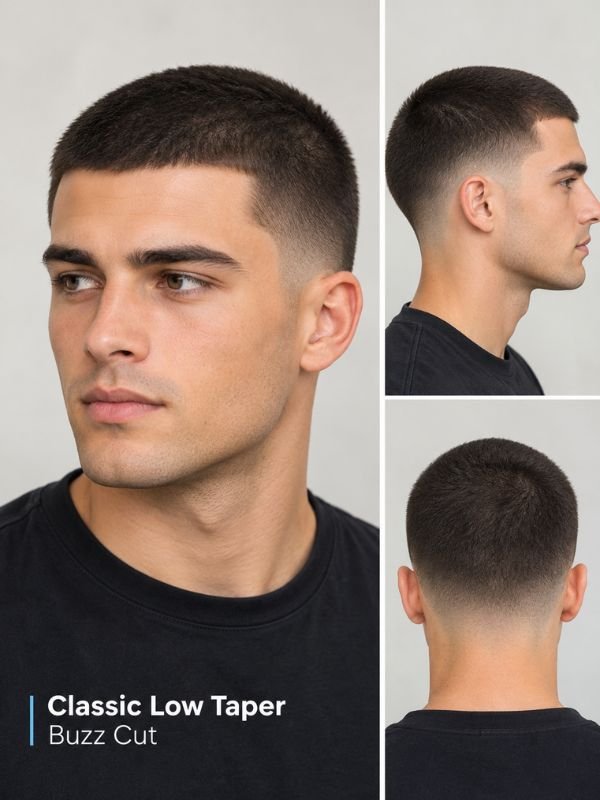
This is the default. The top is clipped evenly, usually with a #2 or #3 guard, and the sides taper low around the ears and nape. It suits almost everyone because nothing about it is extreme. If you’re trying a buzz cut for the first time, start here. You can always go shorter next visit, but you can’t add length back.
Short Low Taper Buzz Cut
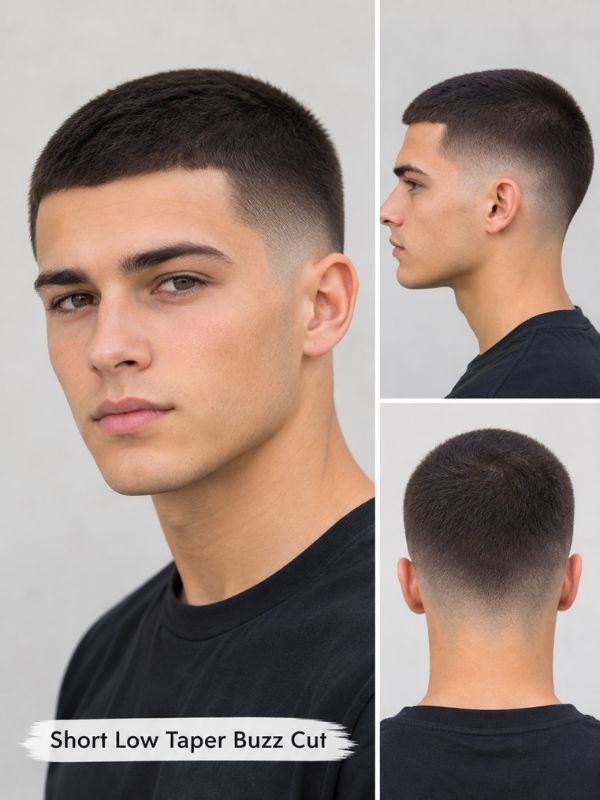
Go shorter on top with a #1 or #1.5 guard, and let the taper drop closer to the skin near the ears. The result is crisp, close, and slightly military. The trade-off is visibility. At this length, your scalp shows through, and so does every mark, cowlick, or uneven patch. It also grows out noticeably faster, so expect more frequent barber visits.
Long Buzz Cut With Low Taper Fade
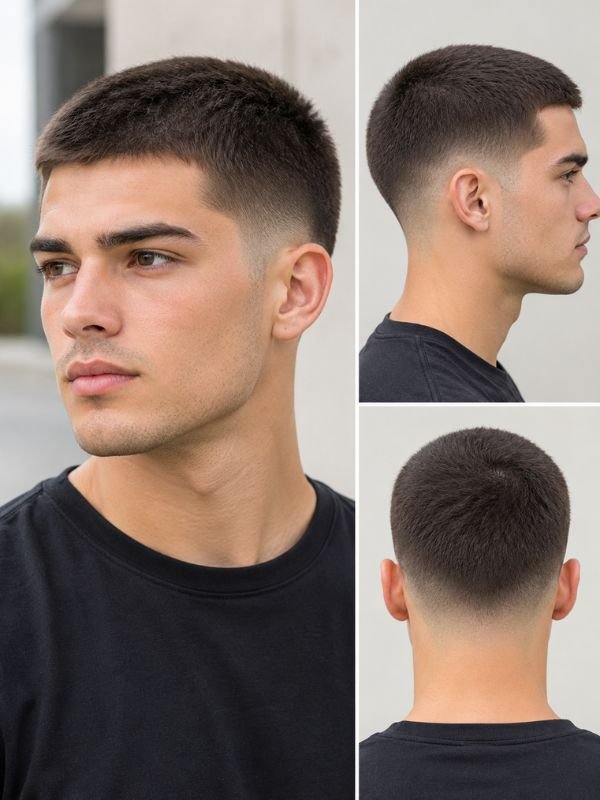
A “long” buzz cut means a #4 or #5 guard, roughly half an inch to five-eighths of an inch. At that length, the hair has enough body to look soft instead of stark. The taper matters more here. Because the top has visible length, a clean low taper gives the cut definition and stops it from looking like a grown-out crew cut. This is a great option if you’re easing into a buzz from longer hair.
Low Taper Buzz Cut With Line-Up
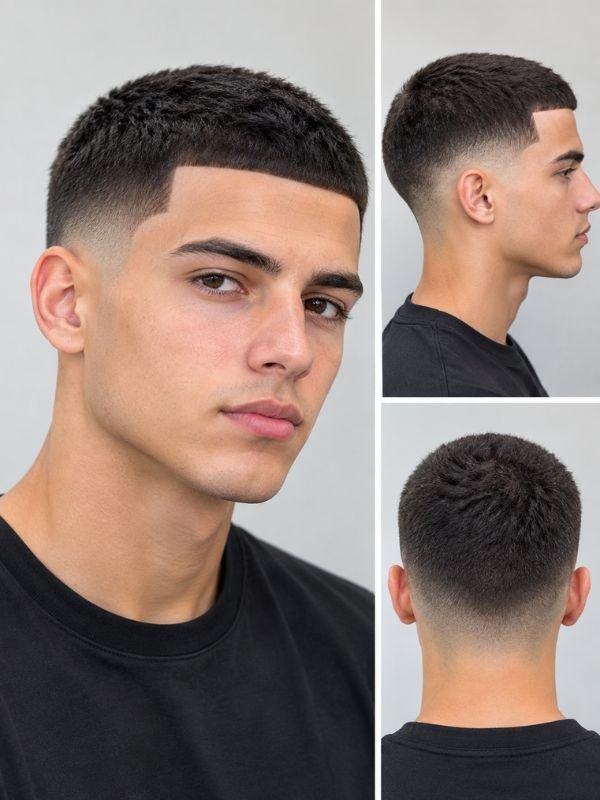
A line-up, sometimes called a shape-up or edge-up, cleans and squares the hairline across the forehead and temples. On a buzz cut, it’s the detail that makes the whole thing look sharp. The contrast between the crisp line and the even buzz does a lot of visual work with very little hair. It looks especially good on straight hairlines and on anyone who wants a polished, groomed finish.
Just be aware that line-ups need regular touch-ups. A sharp edge softens within a week or so.
Low Taper Buzz Cut With Beard
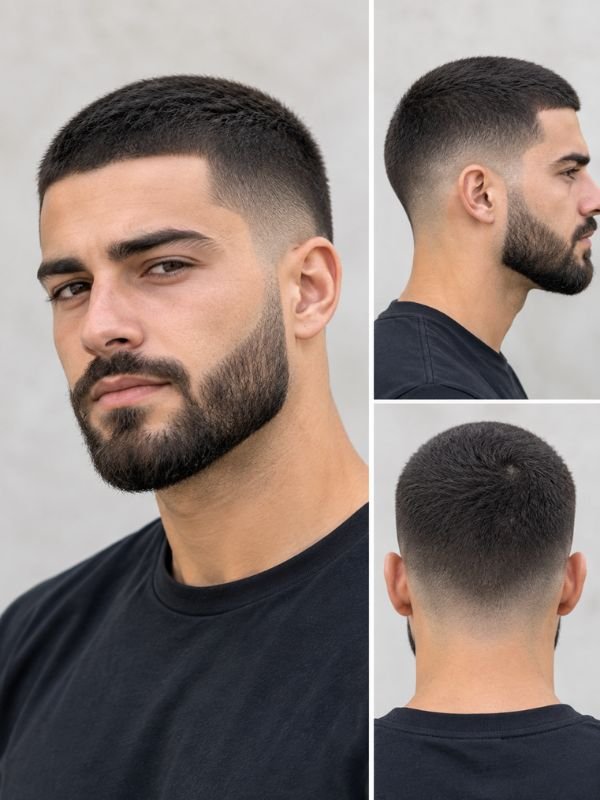
A buzz cut and a beard pair well because the beard supplies the fullness the haircut removes. The taper is the bridge between them. A good barber tapers the sideburns down into the beard so there’s no abrupt break. The result looks like one continuous shape rather than two separate grooming decisions.
If you’re bearded, mention it when you sit down. The taper should follow the beard line, not fight it.
Low Taper Buzz Cut With Textured Top
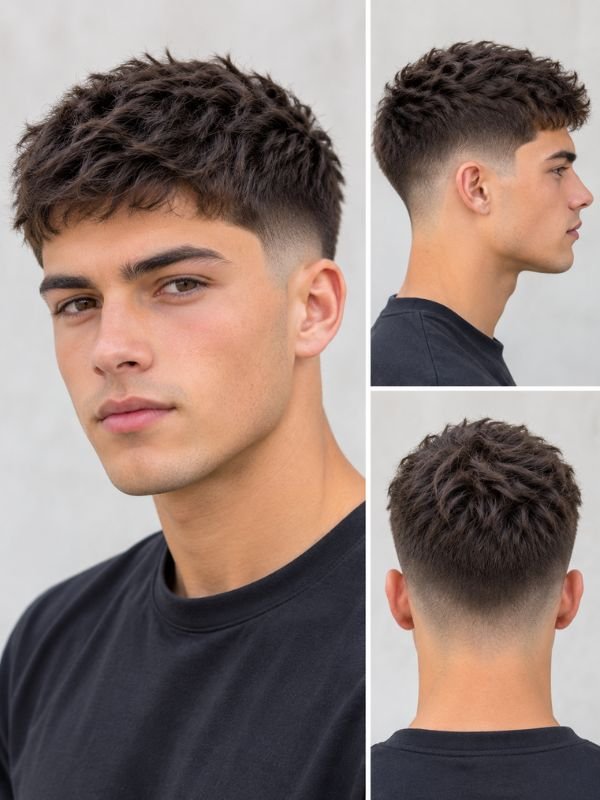
Not every buzz has to be flat. A #3 or #4 guards with a little point-cutting or scissor work on top adds subtle texture, so the hair moves instead of lying like felt. It’s the smart choice if you have some wave or curl and don’t want to fight it. For a similar look with a bit more length, see this collection of textured crop with a low taper fade idea. It shows how the same low taper works with more top length.
Choosing Your Buzz Cut Length: Clipper Guard Guide
Length is the biggest decision you’ll make, and it’s simple once you know the numbers. Clipper guards are measured in eighths of an inch, so a higher number means longer hair.
Here’s how the four most common guards compare:
| Guard | Approx. Length | Look | Best For |
| #1 | 1/8″ (3 mm) | Very close, almost shaved | Sharp, minimal, military-style |
| #2 | 1/4″ (6 mm) | Short but with visible hair | The safest all-round choice |
| #3 | 3/8″ (10 mm) | Soft, slightly plush | Thicker hair, first-timers |
| #4 | 1/2″ (13 mm) | Short crop with real body | Growing out, textured looks |
Guard sizes can vary slightly between clipper brands, so treat these as close estimates. Barbers often blend guards or use the clipper lever to fine-tune length.
Buzz Cut #1 With Low Taper
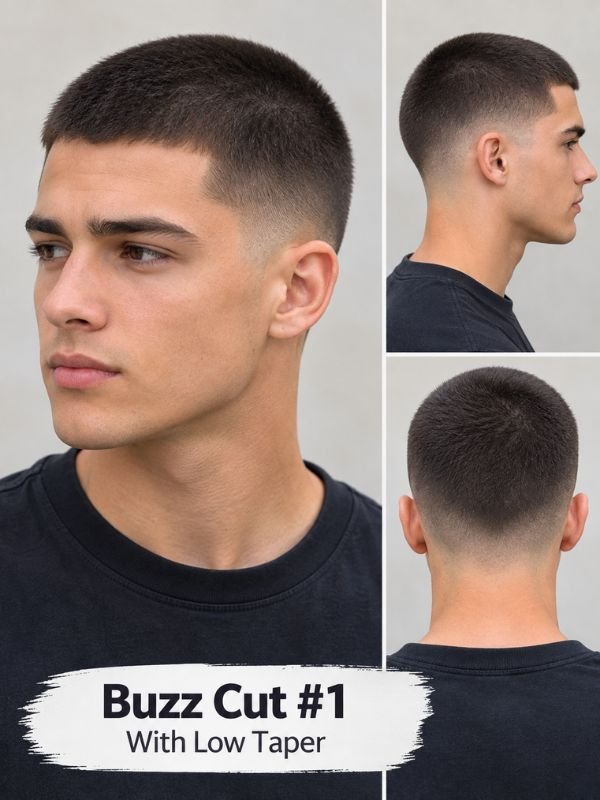
The #1 is the shortest guard most people wear on top. Combined with a low taper, it produces a very clean, high-contrast result, since the taper often drops to skin at the very edges.
It works well if you have thick, dense hair and want minimal upkeep day to day. It’s less forgiving if you have a patchy hairline, scars, or an uneven head shape, because there’s nowhere for anything to hide.
Buzz Cut #2 With Low Taper
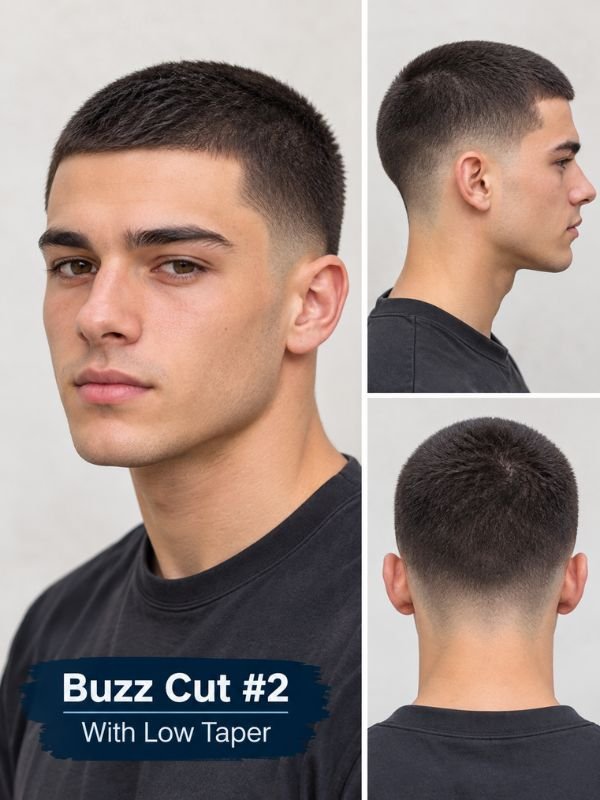
The #2 is the sweet spot for many people. It’s short enough to look crisp and long enough to soften your features and cover minor scalp imperfections.
If you’re unsure, ask for a #2 on top with a low taper. It’s the most common request for a reason, and it photographs well.
Buzz Cut #3 With Low Taper
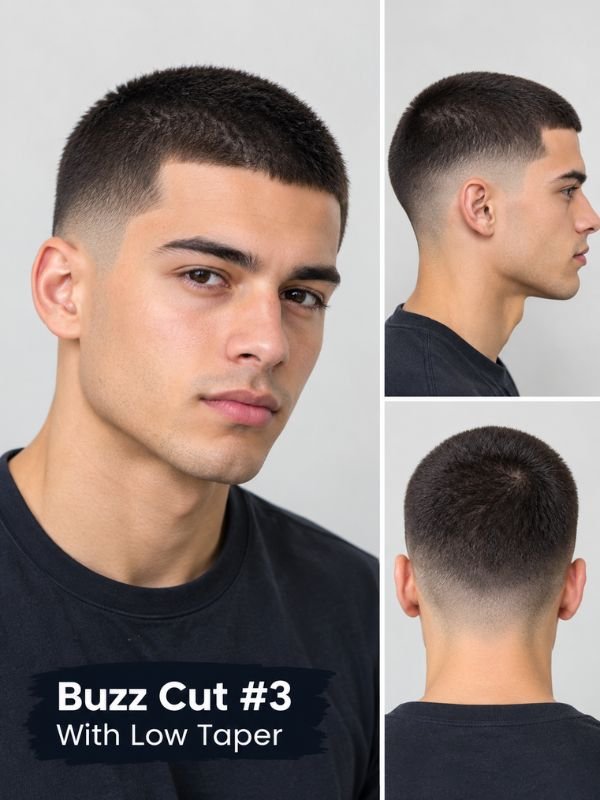
At #3, you get a fuller, slightly softer buzz. The taper contrasts more noticeably against the top, which makes the fade itself more of a feature.
This length is friendly to wavy and curly hair, which tends to look patchy when cut too close. It also grows out more gracefully between appointments.
Buzz Cut #4 With Low Taper
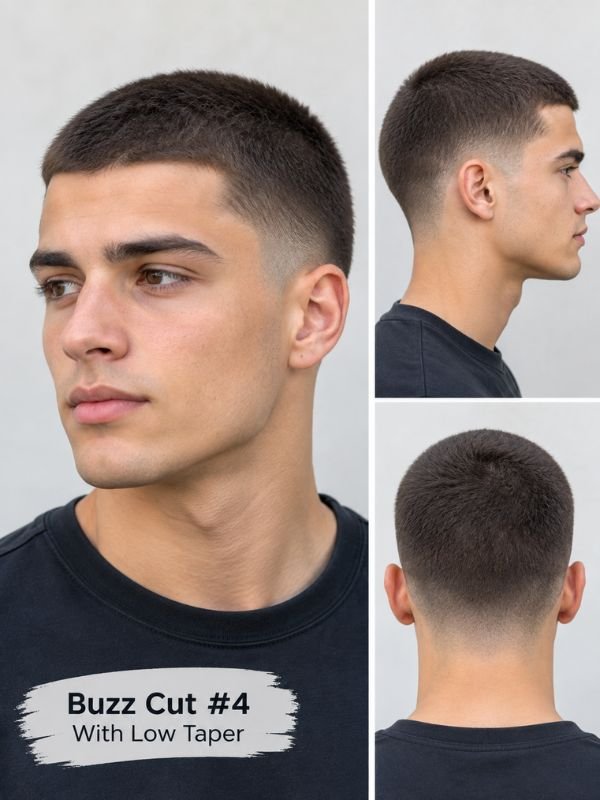
The #4 sits right on the border between a buzz cut and a short crop. There’s enough length to feel like real hair, and you can add a little texture with a matte product if you like.
Pair it with a low taper and the cut looks tidy and current rather than severe. It’s a solid pick if you work somewhere with a conservative dress code or you simply aren’t ready to commit to a shorter buzz.
Low Taper Fade Buzz Cut for Different Hair Types
Hair texture affects how a buzz cut looks more than most people expect. The same #2 guard can look flat and even on straight hair, and dense and rounded on curly hair. Adjust the guard and the taper to fit what you’ve got.
Low Taper Buzz Cut for Straight Hair
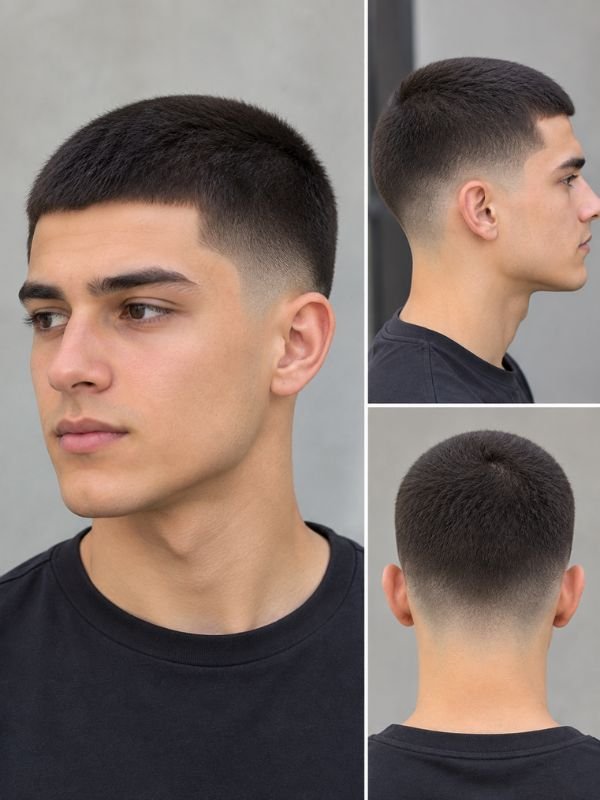
Straight hair shows everything. It lies flat against the scalp, so the buzz looks uniform and the taper is very visible.
That’s good news if you like a sharp result. The one watch-out is thinning or a receding hairline, which becomes more obvious at short lengths. If that’s a concern, choose a #3 or #4 rather than a #1.
Straight hair can also grow in a stubborn direction at the crown. A skilled barber will clip against those cowlicks so they don’t stick up.
Low Taper Buzz Cut for Wavy Hair
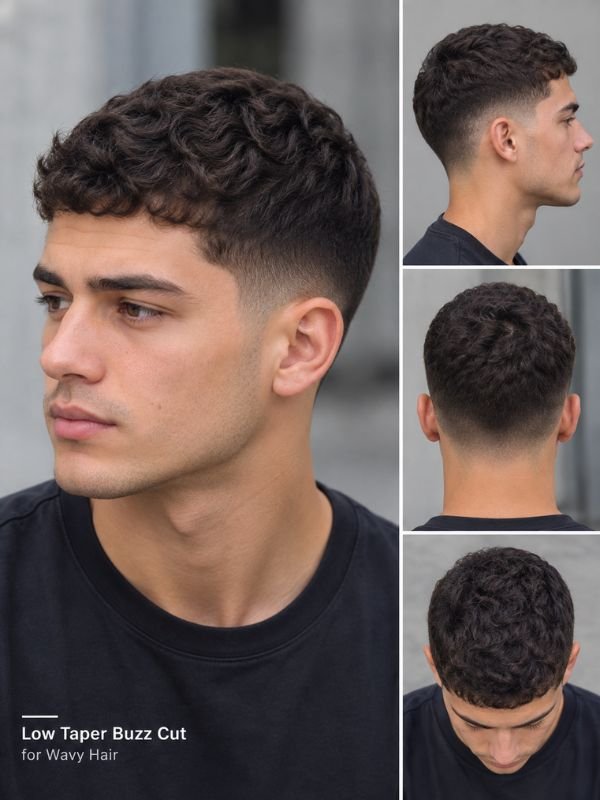
Wavy hair adds movement even when it’s short. At #3 or #4, you’ll see a little bit of pattern and volume instead of a flat surface. Go too short and you lose that texture, though the result is still clean. Go slightly longer and the waves make the cut look fuller and more relaxed.
Wavy hair can also puff up at the sides as it grows. The low taper keeps that in check, which is why the two work so well together.
Low Taper Buzz Cut for Curly Hair
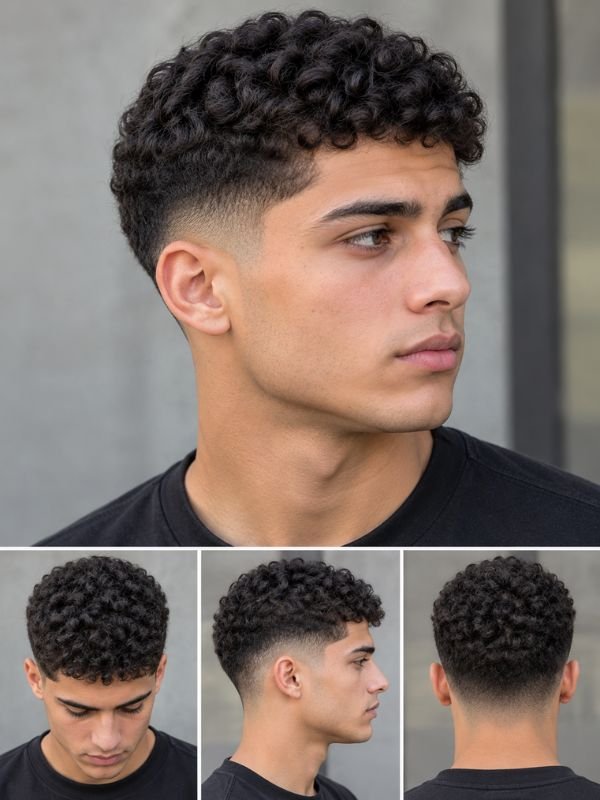
Curly hair shrinks when cut short, so a #2 can look shorter than it does on straight hair. Tight curls sit close to the head and create a dense, textured surface.
A #2 or #3 with a low taper gives curly hair a neat, uniform finish. Brush the top regularly to keep the curl pattern even and to lift any flattened areas.
Curly hair can also dry out at short lengths because the scalp’s natural oils don’t travel as easily. A light moisturizer helps.
Low Taper Buzz Cut for Coily Hair
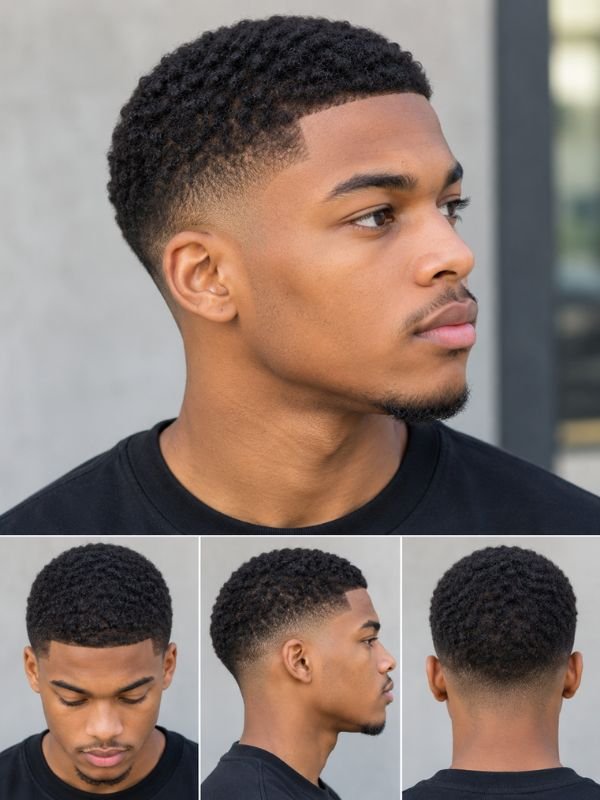
Coily hair holds a taper exceptionally well. The tight texture creates crisp contrast between the buzzed top and the faded edges, and it holds a line-up cleanly.
Many people with coily hair pair the buzz with a wave brush to train a wave pattern, or keep it at #2 to #3 for a smooth, even look. If you’d like to see how the taper works with more natural length on top, these low taper fade afro styles show the range.
One practical note: coily hair is more prone to razor bumps and ingrown hairs along the neckline. Ask your barber to use a light touch there, and avoid shaving the nape too close to the skin.
Best Low Taper Fade Buzz Cut for Your Face Shape
A buzz cut puts your head shape front and center, so it pays to match the cut to your face. The taper gives you a subtle way to add or reduce visual width and height.
Here’s a quick comparison before we go through each shape:
| Face Shape | Best Guard on Top | Taper Tip | Add-On That Helps |
| Round | #3 or #4 | Keep it low and tight | Sharp line-up |
| Oval | #1 to #4 | Any low taper works | Optional beard |
| Square | #1 to #3 | Clean and close | Light stubble |
| Long | #3 to #4 | Keep the taper very low | Fuller beard |
Low Taper Buzz Cut for Round Face
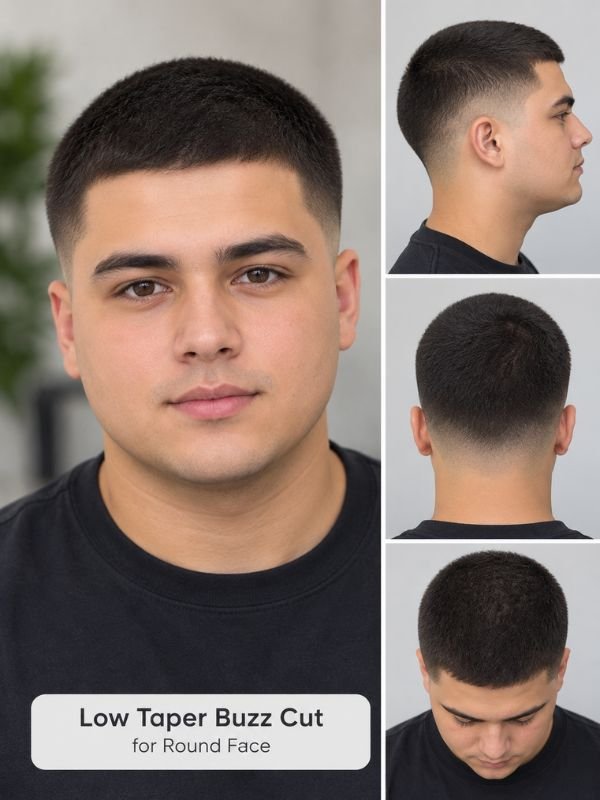
A round face has softer angles and fuller cheeks. You want to add structure, not width.
Choose a #3 or #4 so there’s a little height on top, and keep the taper low and tight at the sides. A crisp line-up adds angles the face doesn’t naturally have.
Avoid very short, even buzzes with no taper, since they can emphasize roundness.
Low Taper Buzz Cut for Oval Face
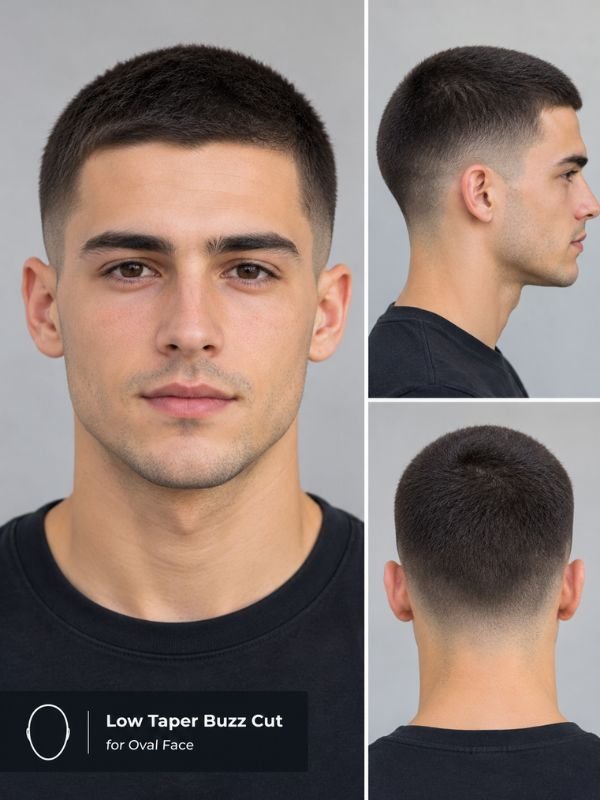
Oval faces are the most flexible. The proportions are already balanced, so nearly any guard length works. Pick your length based on lifestyle and hair type rather than face shape. You can go as short as a #1 without worrying about throwing off your proportions.
This is the face shape where experimenting costs you the least.
Low Taper Buzz Cut for Square Face
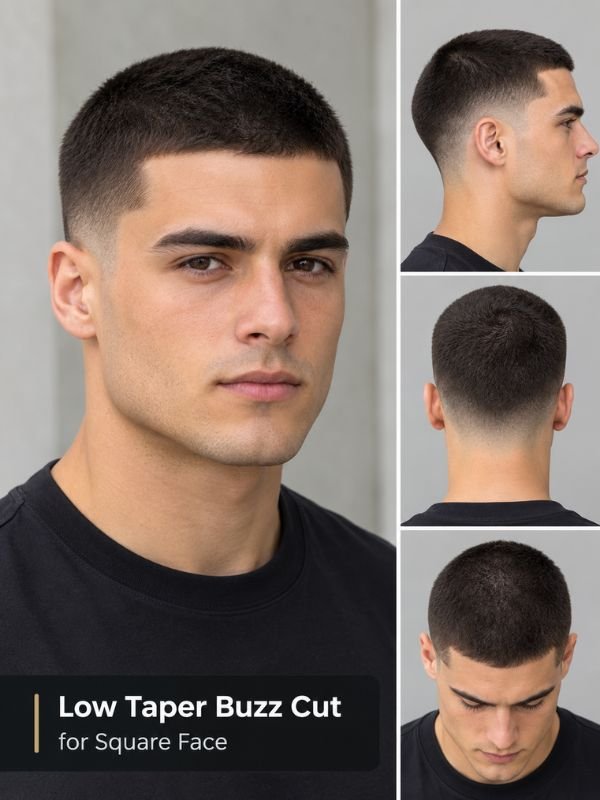
A square face has a strong jaw and a broad forehead. A short buzz highlights those features rather than hiding them. A #1 to #3 with a clean, close taper looks confident and masculine. Stubble or a short beard can reinforce the jawline even more.
If you’d like to soften the angles, go slightly longer with a #3 or #4.
Low Taper Buzz Cut for Long Face
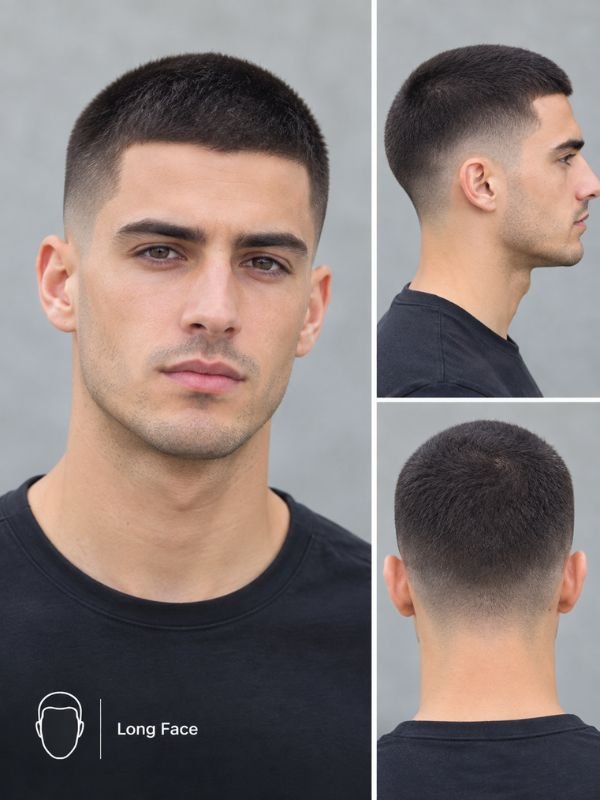
A long face benefits from less height and more balance. Avoid very short sides that stretch the face further. Keep the taper low, and choose a #3 or #4 on top so the head doesn’t look narrow. A fuller beard can add width at the jaw and help even out the proportions.
Skip anything that adds vertical lift, like a tall textured top.
Line-Ups and Shape-Ups: Getting the Edges Right
The line-up is what makes a buzz cut look professional. It defines the hairline across the forehead and along the temples, and it can be straight, slightly curved, or a natural shape depending on your hairline.
A few rules keep it looking good:
- Follow your natural hairline. A line-up should tidy the edge, not move it. Pushing it too far back makes the forehead look bigger and gives the cut an unnatural, cartoonish look.
- Keep the corners clean, not extreme. Sharp, squared corners are a style choice. Rounded or natural corners look softer and age better.
- Match the taper. The temple taper and the neckline should feel like part of the same design.
Line-ups grow out faster than the rest of the cut. By week two, stray hairs appear along the forehead and around the ears.
A quick tidy between full appointments keeps things fresh. Many barbers offer a cheaper edge-up service for exactly this reason.
How to Ask Your Barber for a Low Taper Fade Buzz Cut
Barbers use slightly different terms depending on where they trained, so being specific saves you from a bad surprise. Here’s a simple script:
- State the top length. Say “a #2 on top” or give the length in inches or millimeters.
- Name the taper. Ask for a “low taper” and say you want it to start just above the ears.
- Decide how close to the skin. Say whether you want the taper to end at skin or stay slightly longer.
- Mention the line-up. Say yes or no, and describe how sharp you want it.
- Mention your beard. If you have one, ask the barber to blend the sides into it.
- Bring a photo. A picture removes any guesswork.
If you’re nervous, ask for a slightly longer top than you think you want. It’s easy to go shorter at the end of the appointment, and impossible to go back.
Low Taper vs Mid Taper vs Skin Fade
These three terms get mixed up constantly. The difference comes down to where the shortening starts and how far down it goes.
| Feature | Low Taper | Mid Taper | Skin Fade |
| Starts at | Just above the ears | Around the temples | Varies (low, mid, or high) |
| Goes to | Short stubble or skin at the edge | Short stubble or skin | Bare skin |
| Contrast | Subtle | Moderate | High |
| Best for | Conservative, clean looks | Balanced modern looks | Bold, sharp looks |
| Upkeep | Moderate | Moderate | Higher |
A taper generally leaves some length at the edge and blends gradually. A skin fade goes all the way to bare skin, which gives a stronger contrast and needs more frequent touch-ups. Some barbers use the words loosely, and you’ll hear “low fade” and “low taper” used interchangeably. That’s another reason to describe what you want in plain terms, or bring a photo.
If you want a subtle finish that stays polished at the office, the low taper is the safest choice. If you want a bold, graphic contrast, ask for a skin fade.
How to Maintain a Low Taper Fade Buzz Cut
The buzz cut is low maintenance when it comes to styling. The upkeep is all about keeping the edges crisp, which is where most of the visual impact lives.
How Often Should You Get a Low Taper Buzz Cut?
Short answer: every two to three weeks for a sharp look, and every three to four weeks for a more relaxed one.
The exact timing depends on how short you go and how fast your hair grows. The shorter the top and the closer the taper, the sooner it looks grown out. A #1 with a skin-close taper needs more frequent visits than a #4 with a longer taper.
This rough schedule works for most people:
| Style | Recommended Frequency |
| #1 top with tight taper | Every 2 weeks |
| #2 to #3 top with low taper | Every 2 to 3 weeks |
| #4 top with soft taper | Every 3 to 4 weeks |
| Line-up only touch-up | Every 1 to 2 weeks |
You’ll know it’s time when the taper starts to look fuzzy around the ears and neckline. That’s usually the first sign.
How to Maintain the Taper and Line-Up
A few small habits keep the cut looking fresh between appointments:
- Wash and moisturize. A short haircut still needs a healthy scalp. Use a gentle shampoo and a light moisturizer or scalp oil if your skin gets dry.
- Brush it. A soft brush keeps the top even, especially on curly or coily hair. It also helps hair lie in one direction.
- Use a trimmer carefully. If you touch up at home, only clean stray hairs around the neckline and ears. Leave the taper itself to the barber.
- Protect your scalp. A buzz cut exposes more skin. Wear sunscreen or a hat in strong sun.
- Avoid over-shaving the neckline. Cutting too close increases the risk of razor bumps and ingrown hairs, especially on textured hair.
- Skip heavy products. Heavy pomades add weight and shine that a buzz doesn’t need. If you want texture, use a small amount of matte clay or a light oil.
If your barber does a good job, tell them. Booking the same person consistently is the easiest way to get a taper that’s blended the same way every time.
The Bottom Line
The low taper fade buzz cut works because it’s simple. One even length on top, a soft taper around the ears and neckline, and you’re done.
Start with a #2 or #3 if you’re unsure. Add a line-up for sharpness, a beard blend for balance, or a textured top for movement. Match the length to your hair type and face shape, and book a fresh cut every two to three weeks to keep the edges crisp.
Get the details right, and this haircut takes almost no effort to wear well.