

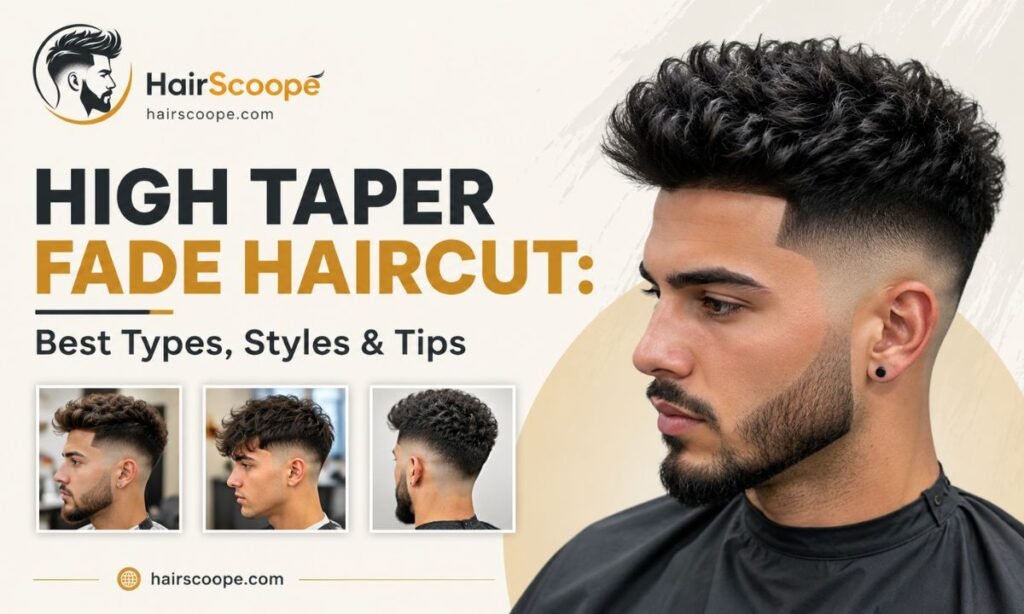
If you want a haircut that turns heads without any extra effort, the high taper fade is it. It’s sharp, it’s clean, and it works with almost any hair type or face shape you throw at it.
This guide breaks down every high taper fade haircut variation worth knowing, how it compares to low and mid fades, and exactly how to keep it looking fresh between barber visits.
What Is a High Taper Fade Haircut?
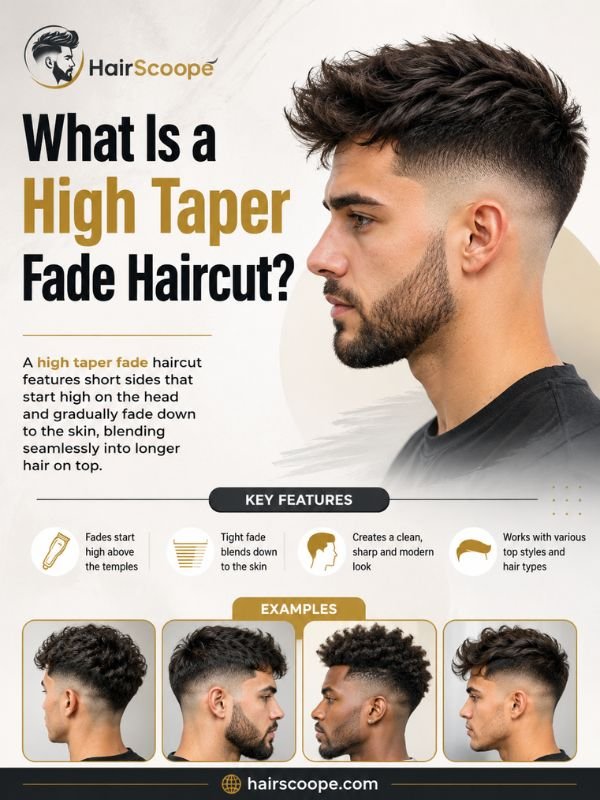
A high taper fade is a men’s haircut where the hair shortens dramatically starting near the top of the head, well above the ears, before blending down into the skin or a very short length near the neckline.
Unlike a low fade, which keeps most of the length and only tapers near the hairline, a high fade covers more surface area. That means more contrast between the long hair on top and the closely cropped sides.
Barbers love this cut because it’s easy to customize. You can pair it with a pompadour, a crop, curls, waves, or a beard, and it still reads as clean and intentional.
Key features of a high taper fade:
- Fade begins above the temple, often near the parietal ridge
- Creates strong contrast between top and sides
- Works on straight, wavy, curly, and coily hair
- Low maintenance between trims, but needs regular upkeep to stay sharp
High Taper Fade Styles
There isn’t just one way to wear a high taper fade. The base cut stays the same, but the styling on top is where you get to have fun. Here are the most popular variations barbers are cutting right now.
Classic High Taper Fade Haircut
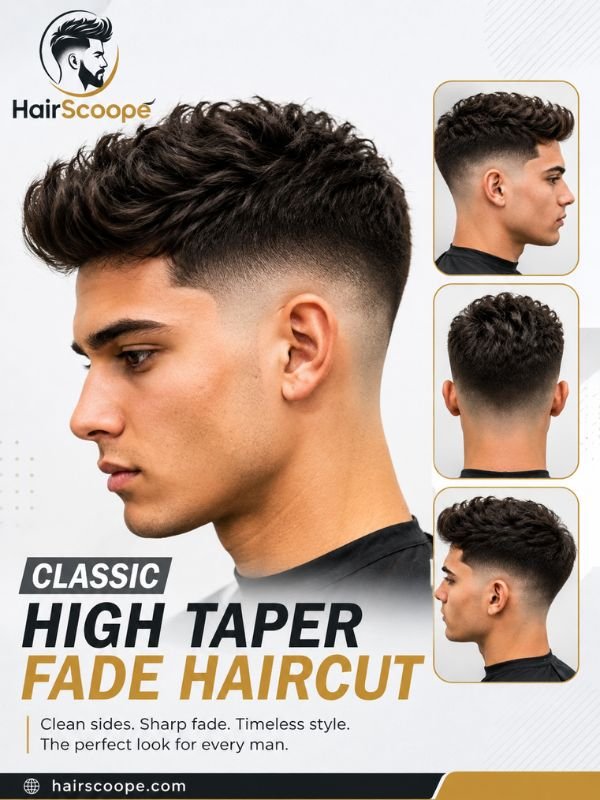
This is the no-frills version: short, tapered sides that fade high into a slightly longer top, usually styled straight back or with a light side part. It’s the safest choice for office jobs, interviews, or anyone who wants sharp without being flashy.
High Taper Fade With Beard
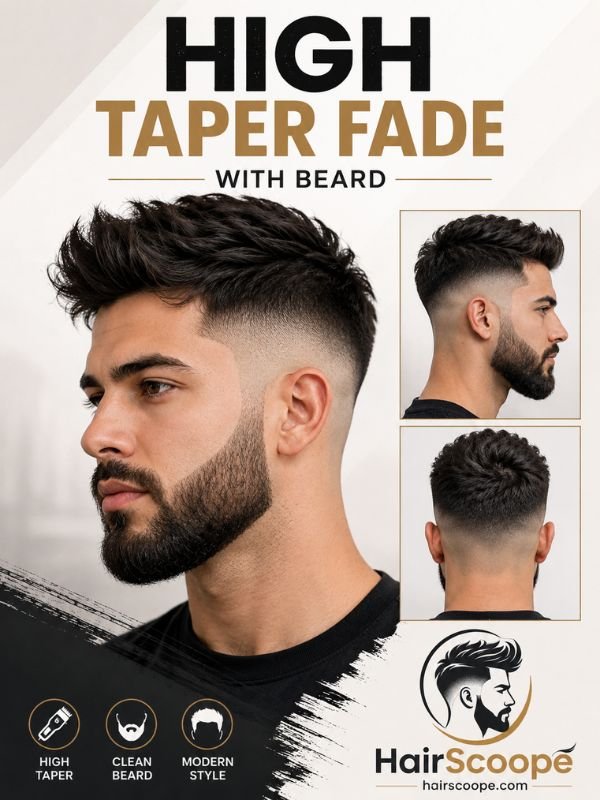
Pairing a high taper fade with a well-groomed beard balances out the sharpness of the cut with some facial fullness. This combo works especially well for square, oval, and diamond face shapes, since the beard softens strong jawlines while the fade keeps things tidy up top.
Short Hair High Taper Fade
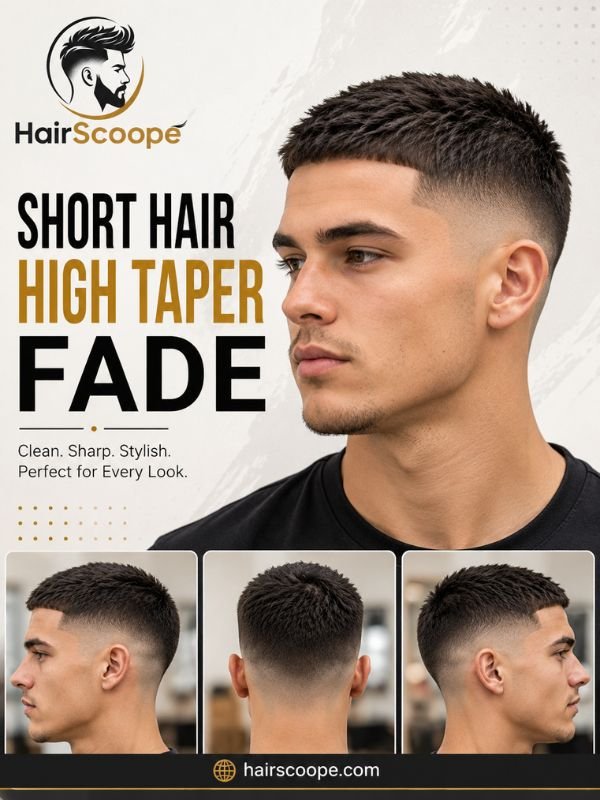
For guys who don’t want to deal with styling products every morning, a short high taper fade keeps the top length minimal, usually a number 2 or 3 guard while the fade does all the visual work. It’s the lowest-maintenance version on this list.
High Taper Fade With Curly Hair
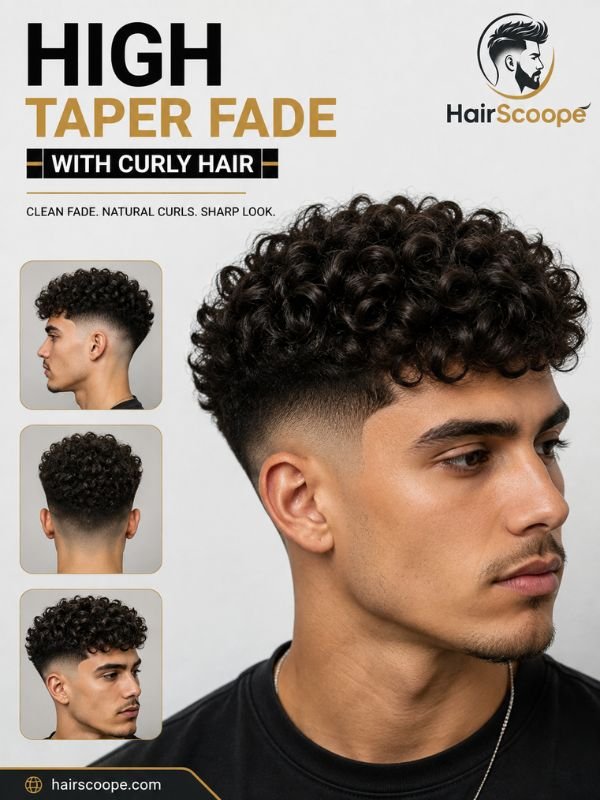
Curls and high fades are a natural match. The tight sides make the curl pattern on top look bigger and more defined by contrast. If you want more inspiration for this exact combination, this roundup of high taper fade curly hairstyles breaks down several ways to wear it, from tapered curls to voluminous curly crops.
High Taper Fade With Afro
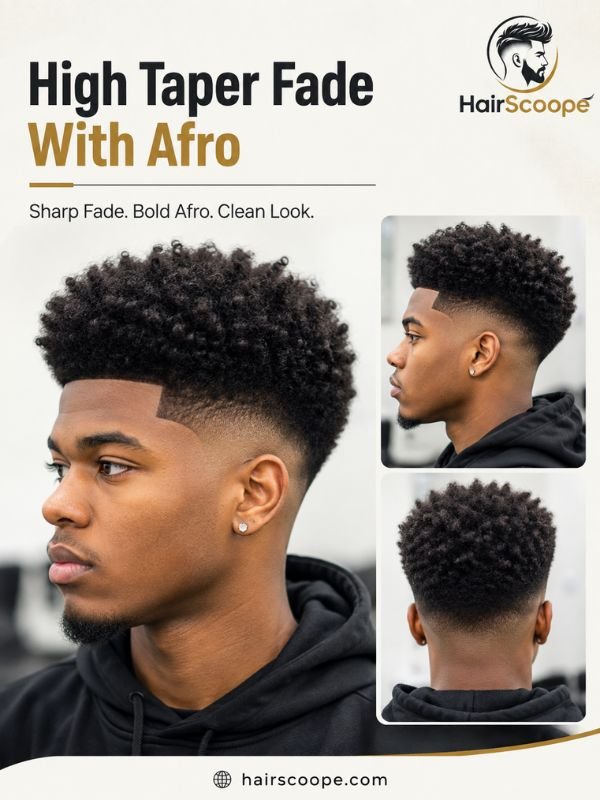
An afro high taper fade keeps natural coily hair full and rounded on top while tightening everything below it into a crisp fade. This style highlights natural texture instead of hiding it, and it holds shape well between trims.
High Taper Fade With Waves
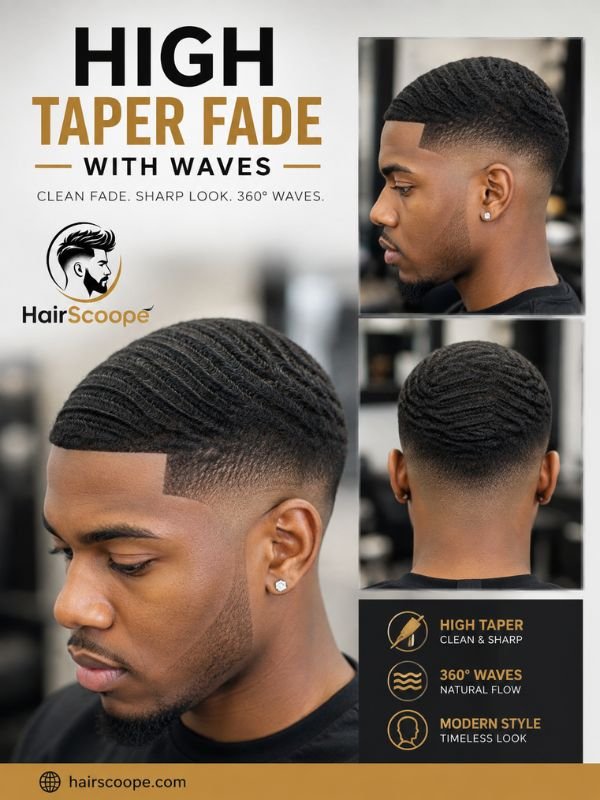
If you already have a wave pattern (or you’re building one with brushing and a durag), a high fade makes those waves pop. The short sides give your eyes nothing else to focus on except the ripple pattern on top.
High Taper Fade for Black Men
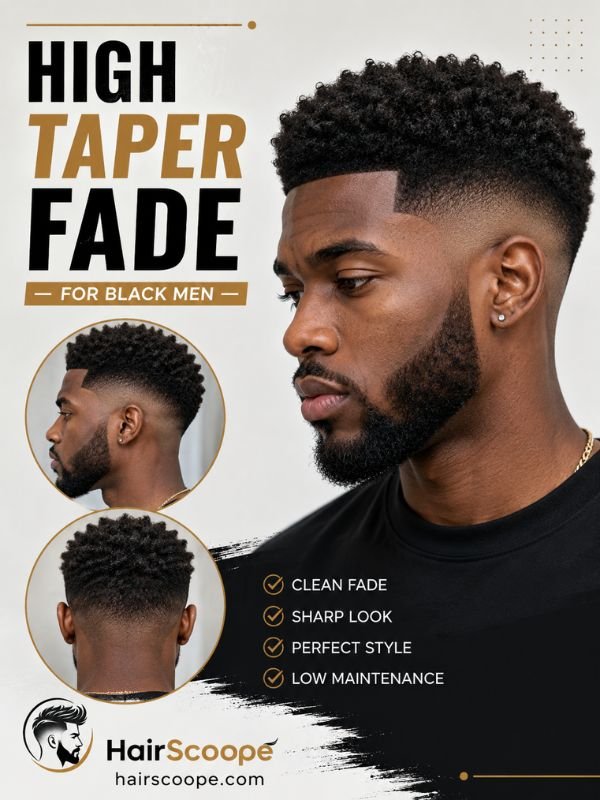
This style is popular because it adapts so well to coily and tightly curled textures. Barbers usually pair it with a sharp part, a design line, or a fade into a low buzz on top for a bold, defined look.
High Taper Fade for Black Hair
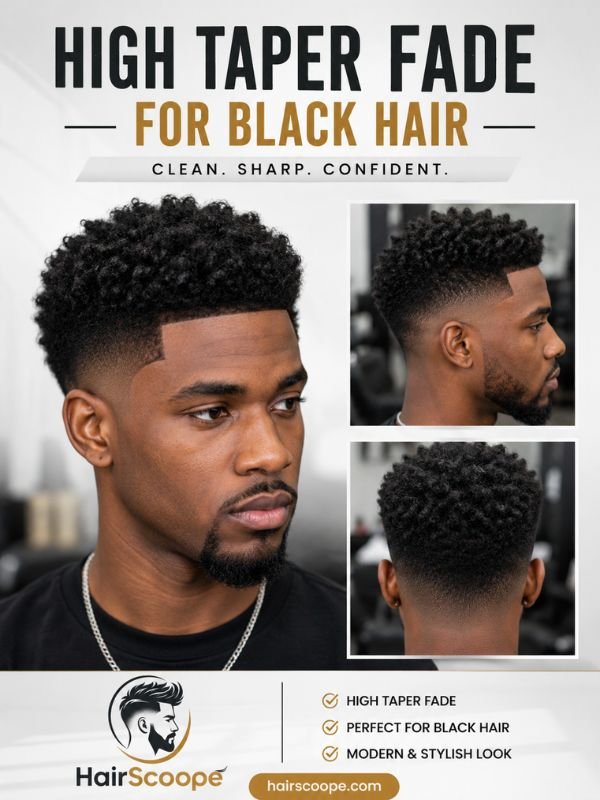
Similar to the above, but this version leans into styling versatility twist-outs, sponge curls, or a defined afro on top, all supported by a tight, high fade underneath. Coily and tightly coiled hair tends to shrink more than other textures, so barbers often leave a bit of extra length on top to account for it.
High Taper Fade With Textured Hair
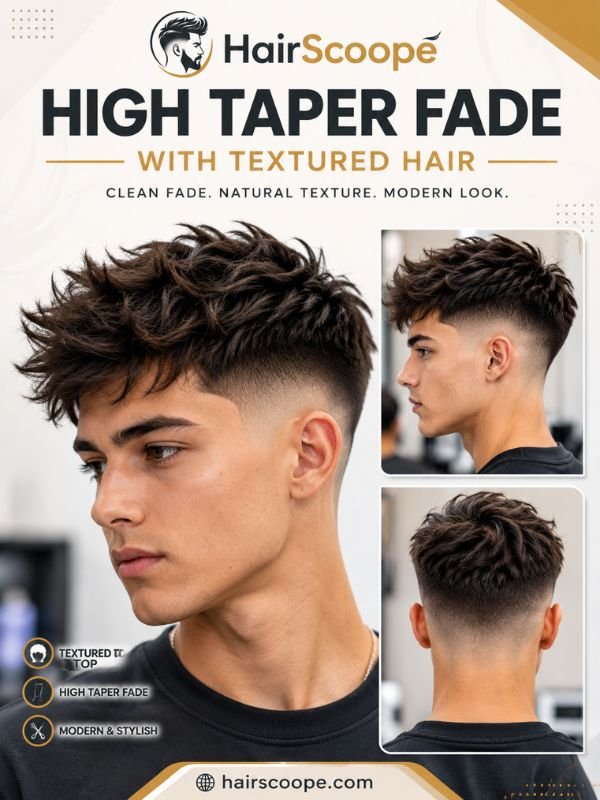
Adding texture through a texturizing spray, matte clay, or a scissor-textured crop gives the top a lived-in, effortless look that contrasts nicely with the crisp fade beneath it.
High Taper Fade With Quiff
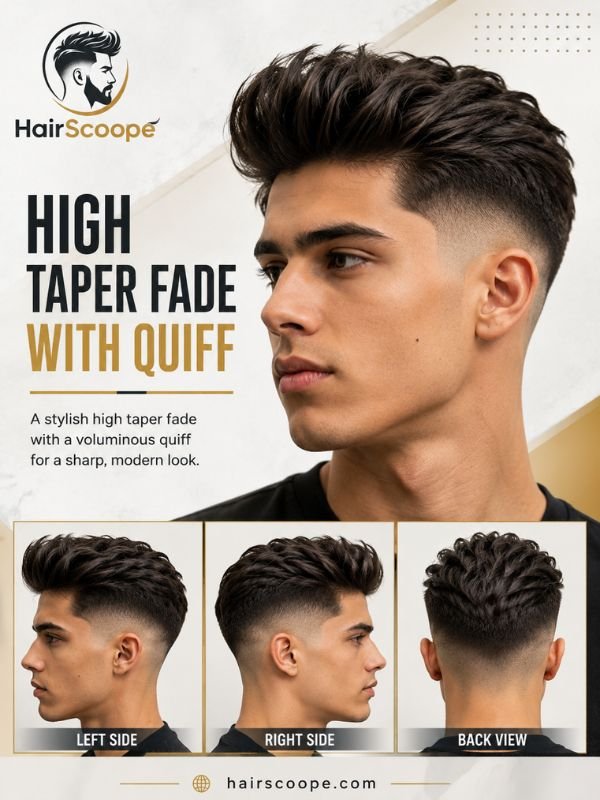
The quiff adds volume and height at the front, swept upward and back. Combined with a high fade, it creates a strong vertical line that elongates rounder face shapes.
High Taper Fade With Fringe
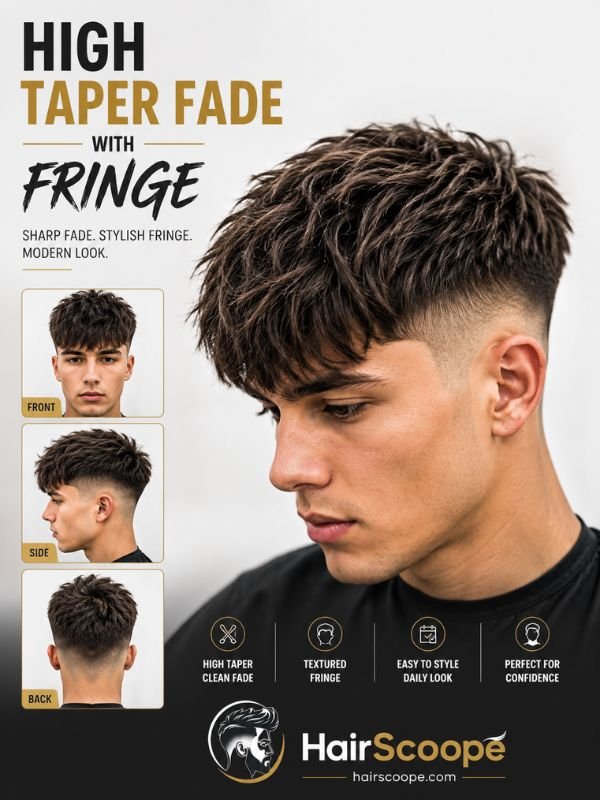
A fringe brought forward over the forehead softens the face and adds a modern, slightly edgy feel. This works especially well on thick or wavy hair, where the fringe holds its shape without much product.
High Taper Fade Vs Low Taper Fade
The main difference comes down to where the fade starts and how much contrast it creates.
| Feature | High Taper Fade | Low Taper Fade |
| Fade starting point | Above the temple | Near the ears and neckline |
| Contrast level | High | Subtle |
| Best for | Bold, statement looks | Conservative, professional settings |
| Maintenance frequency | Every 2–3 weeks | Every 3–5 weeks |
| Face shape suited | Round, oval | Any face shape |
If you’re drawn to a softer, more understated version of this cut, it’s worth browsing these blonde low taper fade hairstyles for a look at how much lower contrast can still make a statement, especially when paired with a color change.
High Taper Fade vs Mid Taper Fade
A mid taper fade splits the difference between high and low. It starts roughly midway up the side of the head, giving you noticeable contrast without going as bold as a high fade.
| Feature | High Taper Fade | Mid Taper Fade |
| Fade starting point | Above the temple | Mid-way up the side |
| Contrast level | High | Moderate |
| Versatility | Best with shorter or curly tops | Works with almost any top length |
| Growing-out friendliness | Needs frequent trims | More forgiving between cuts |
If you’re unsure which one to choose, a mid taper fade is generally the safer starting point, while a high taper fade is better once you know you want that sharper contrast.
How to Get a High Taper Fade Cut
Getting a clean result starts with communicating clearly with your barber. Here’s what to bring to the chair:
- Reference photos: Show 2–3 images from angles that include the back and sides, not just the front.
- Specify the fade height: Tell your barber you want the fade to start above the temple, not at the ears.
- Decide on the finish: Skin fade (bald), or a soft fade that stops at a short guard length.
- Discuss the top length: Longer tops need more maintenance but offer more styling options.
- Mention your hair type: Curly, coily, or wavy hair may need extra length on top to account for shrinkage.
How to Do a High Taper Fade at Home
Cutting your own high taper fade takes patience, but it’s doable with the right tools and a mirror setup that lets you see the back of your head clearly.
- Start with clean, dry hair so you can see the natural fall and texture.
- Use clipper guards in descending order begin with a longer guard on top and work down to a shorter one near the fade zone.
- Blend gradually by using clipper-over-comb technique or a lower guard with light, upward flicking motions.
- Work the fade zone last, using no guard or the shortest one for the transition into skin, moving in small, feathering strokes.
- Check both sides in a mirror frequently to keep symmetry.
- Clean up the neckline and edges with a trimmer for sharp lines.
If this is your first time, it’s smart to leave more length than you think you need. You can always go shorter, but you can’t add hair back.
Recommended Products
The right products make styling faster and help the fade stay crisp longer.
- Matte clay or paste: Ideal for textured, low-shine finishes on crops and quiffs.
- Pomade (water-based): Best for slicked-back or classic styles with shine.
- Curl cream or defining gel: Essential for curly or coily tops to lock in a curl pattern.
- Texturizing spray: Adds grip and volume to fine or straight hair.
- Beard oil: Pairs naturally with high taper fade and beard combinations.
- Edge control or line-up balm: Keeps hairlines and fade edges sharp between barber visits.
Quick Morning Styling Routine
A high taper fade shouldn’t eat up your morning. Here’s a routine that takes under five minutes:
- Rinse or lightly dampen hair no need for a full wash daily.
- Apply a dime-sized amount of product suited to your hair type.
- Work product through with fingers, focusing on the top section only.
- Shape with a comb or fingers depending on your desired finish.
- Touch up edges with a small amount of edge control if needed.
How Often Should You Get a High Taper Fade?
Because the fade sits higher up the head, regrowth is more noticeable than with a low fade. Most barbers recommend a touch-up every 2 to 3 weeks to keep the contrast sharp.
If you have a busy schedule, ask your barber about a slightly softer fade line that grows out more gracefully, buying you closer to 4 weeks between full cuts.
Who Does a High Taper Fade Suit Best?
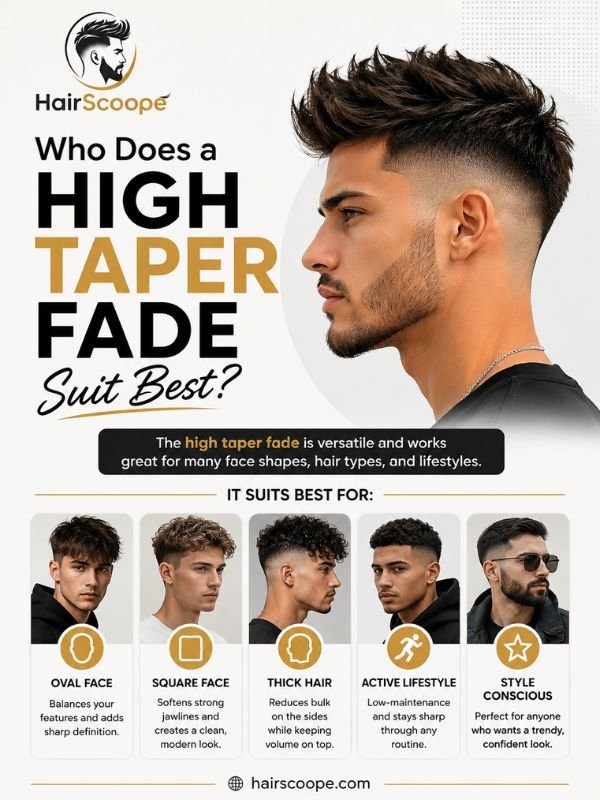
This cut is genuinely one of the more versatile options out there, but it does have its sweet spots.
- Round or oval face shapes benefit most, since the high contrast adds visual length.
- Curly, coily, and wavy hair types all work well because the tight sides let natural texture stand out on top.
- Anyone who wants a low-maintenance daily routine but doesn’t mind more frequent barber visits.
- Professionals and casual dressers alike, since the top styling can be dialed up or down depending on the occasion.
Understanding your natural hair type and curl pattern can also help you and your barber decide how much length to leave on top, especially if you have coily or tightly curled hair that shrinks noticeably once cut.
Conclusion
The high taper fade earns its popularity honestly. It’s sharp, adaptable, and works across nearly every hair type and face shape, from a classic clean cut to bold curly or textured versions.
Whether you’re booking your first high fade or switching things up from a low or mid taper, the key is clear communication with your barber and a realistic maintenance routine. Get that right, and this cut will carry you through every season looking effortlessly put together.