
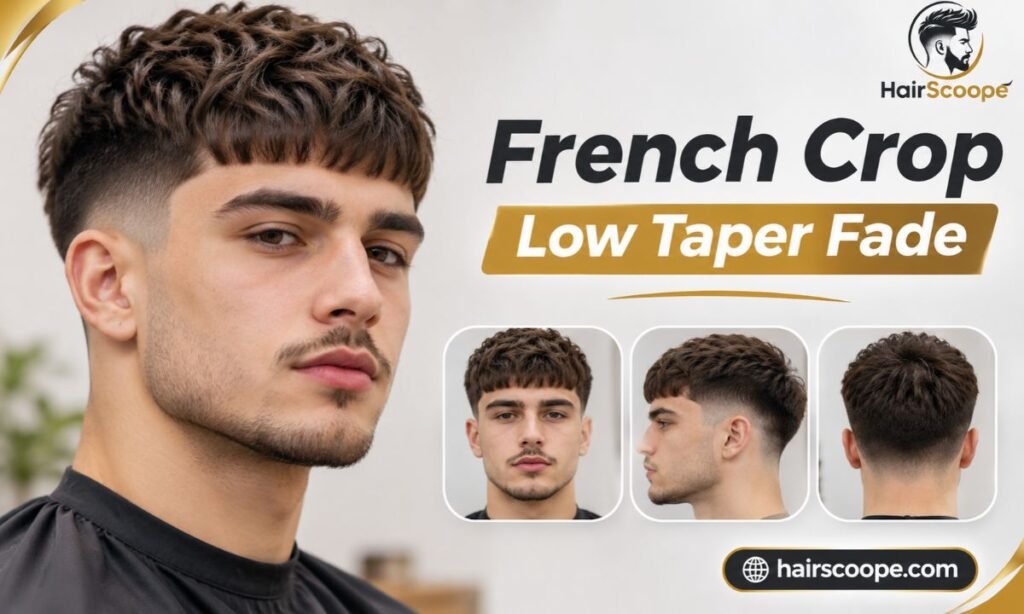
A French crop low taper fade pairs a short, forward-styled fringe with sides that blend down gently around the ears and neckline. It looks neat without looking severe, it adapts to most hair types, and it’s easy to describe to a barber once you know which details matter.
This guide covers what the cut is, how it differs from similar styles, the variations worth considering, who it suits, what to say in the chair, and how to style and maintain it. There’s no single “correct” version, so the goal is to help you pick yours.
What Is a French Crop Low Taper Fade?

A French crop low taper fade is a short-to-medium top, pushed forward into a fringe, over back and sides that are tapered or faded starting low, near the ears and nape. The top carries the personality. The sides stay clean and contained.
It helps to think of it as two separate decisions. The top decides how the cut looks from the front. The taper decides how the sides and back finish. You can change either one without touching the other, which is why so many variations exist.
The French-Crop Top and Fringe
The French crop top is cut short to medium and directed toward the forehead. The fringe can be blunt and straight across, soft and piecey, point-cut for a feathered edge, or choppy with visible texture. Length changes the whole mood. A fringe cut above the brow reads sharp and graphic, while one that drapes lower looks relaxed and gives extra forehead coverage.
The top can be styled smooth or textured, usually brushed forward with fingers or a wide-tooth comb. The fringe should follow your growth pattern instead of fighting it, so it doesn’t split unevenly as it dries.
What Makes the Taper Fade Low?
A tapered cut changes length more gradually than a fade, and it typically leaves more hair on the sides. A fade pushes the transition further toward bare skin. “Low” describes where the blend sits: it starts near the ears and sideburns, curves down behind the ear, and finishes at the neckline without climbing toward the temples.
Because the blend stays low, more length remains on the sides, little scalp shows, and the contrast is subtle. Barbers and clients often use “low taper” and “low fade” interchangeably, so it’s worth specifying where the blend starts and how short it finishes.
Key Characteristics of a French Crop Low Taper Fade
- Top: short to medium, longer than the sides, directed forward
- Fringe: the defining feature, from blunt to choppy
- Sides and back: tapered, faded, or clipped tight, with the blend kept low
- Finish: flat and neat, textured, or slightly messy
- Effort: low to moderate styling, plus regular barber visits
- Silhouette: short and structured, with clean sides and length on top
Movement and fringe direction are what separate it from a generic short cut. Its closest sibling is the textured fringe crop, covered in the comparisons below.
Why Is the French Crop Low Taper Fade So Popular?
There’s no reliable figure for how often it’s requested, so the better question is why it appeals. The reasons are practical: it’s adaptable, quick to style, and easy to dress up or down.
Versatility for Different Hair Types
The cut can be adapted to straight, fine, wavy, thick, curly, and coily hair.
- Fine hair: weight stays on top and the fringe is softer and less blunt.
- Thick hair: internal bulk is removed so the fringe doesn’t expand as it dries.
- Curly and coily hair: extra length allows for shrinkage, and the fringe follows the curl pattern.
Density and growth pattern change the details, but the structure of short sides and a forward top carries across.
Easy Maintenance and Everyday Styling
Most days take about five minutes: slightly damp hair, a small amount of product, and a forward push. A soft, natural taper tolerates weeks of growth. The cut still needs regular trims, which the maintenance section covers.
Modern, Face-Flattering Appearance
The fringe adds angles to rounder faces, the textured top adds visual height, and the clean sides keep the outline tidy. It isn’t flattering on every face by default. Adjusting fringe softness and top height lets it work across a wide range of face shapes.
A Timeless Style for Work, School and Casual Wear
The crop has military-style roots, and that tidy foundation is why it passes in offices and classrooms. A natural taper, a shorter or softer fringe, and a plainer neckline keep it conservative. A heavily textured top, skin finish, or sharp line-up pushes it bolder. The same haircut can move from workday to weekend with styling changes alone.
23 Best French Crop Low Taper Fade Styles to Try
The variations below differ through three choices: fringe cut (blunt, soft, or choppy), top texture (smooth, textured, or messy), and taper finish (natural, shadow, or skin-close). Combining them creates distinct styles. None suits everyone, so choose by hair type, face shape, fringe preference, and how often you’ll visit a barber.
Classic French Crop Low Taper

A short, blunt fringe cut straight across above the brow, with neatly clipped sides tapered low. The top is flat and smooth, and the silhouette is traditional. It needs minimal styling and works best on straight or slightly wavy hair. Ask for a blunt fringe above the brow and a low taper that finishes naturally.
French Crop Low Taper Fade
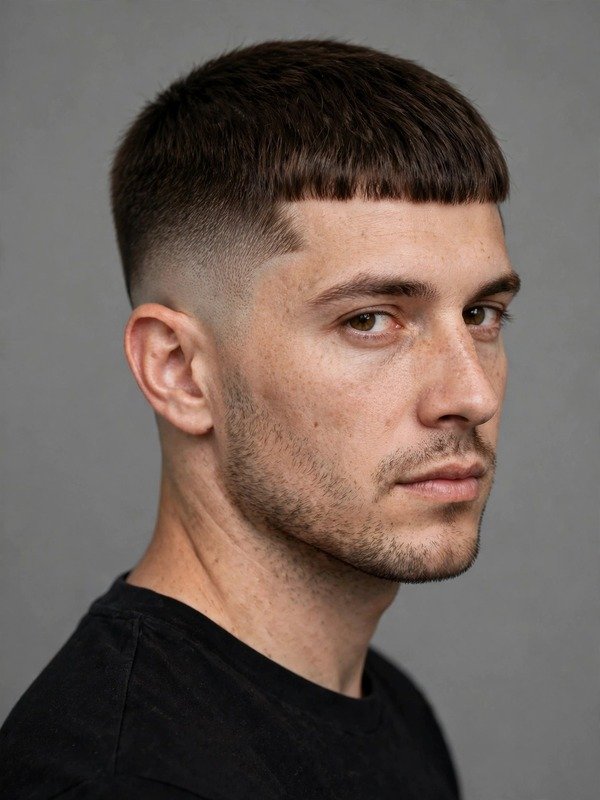
This is the sharper-sided version. The sides are faded tight and low around the ears and neckline, so the outline is more defined than a classic taper. The top is slightly longer, with a straight or lightly textured fringe. The blend is smooth and the contrast stays subtle. It’s a solid starting point if you want clean sides without going high.
Textured French Crop Low Taper Fade

The difference here is cutting, not just styling. Point-cutting and thinning through the crown and fringe create choppy, piecey texture that separates into sections. It suits wavy, thick, and straight hair, and matte clay helps hold the shape. Choose it if you want movement more than polish.
Messy French Crop Low Taper Fade

Deliberately tousled, with a less uniform fringe and an undone finish. Build it on damp hair, tousle with fingers, and add sea-salt spray if you want grip. It’s forgiving because small irregularities read as intentional, and it can be refreshed on day two with a light spray.
Short French Crop Low Taper

The fringe is shorter and sits higher, with tight texturing and minimal top weight. It sits close to a Caesar-style short crop but keeps a little more texture. Styling is very quick. It works on straight or wavy hair and tight curls, and suits round and oval faces.
Long French Crop Low Taper

A looser, longer top with a fringe that drapes lower over the forehead. It gives extra coverage and a relaxed silhouette, but it dries and styles more slowly. It works on straight and wavy hair, and the added length can suit oval, diamond, and long faces. Ask for a soft fringe edge.
Straight French Crop Low Taper

Straight hair shows every cut line, so this version relies on a controlled, defined fringe with cut texture rather than product. Keep an inch or two on top so the scalp doesn’t show through, and avoid over-thinning. Comb it slightly forward with lightweight matte paste or texture powder. Straight hair can look rounded at the edges sooner as it grows, so fringe trims may come earlier.
Wavy French Crop Low Taper

The cut works with the wave. The natural bend becomes the top’s texture, and the fringe is cut so it won’t split unevenly as it dries. Air-drying or a light diffuser pass, plus matte clay or sea-salt spray, defines it. Wavy hair also hides regrowth longer than straight hair.
Curly French Crop Low Taper

The barber leaves extra length to allow for shrinkage and cuts the curls in their natural, unstretched state. The fringe follows the curl pattern instead of forming a razor-straight line. Use curl cream or a light defining product, scrunch it in, and don’t comb through dry curls. A soft taper or low-mid fade keeps the sides tidy.
Thick French Crop Low Taper
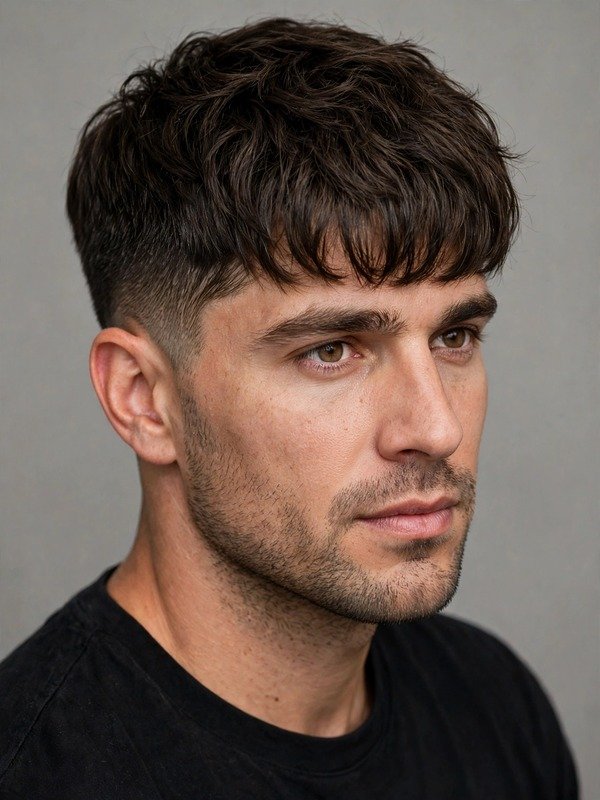
The barber removes internal bulk so the top stays controlled and the fringe doesn’t puff outward as it dries. The sides are tapered close, and the top keeps enough length to hold weight. Matte clay gives hold. Expect longer drying time and slightly more styling effort than finer hair.
French Crop Top with Low Taper
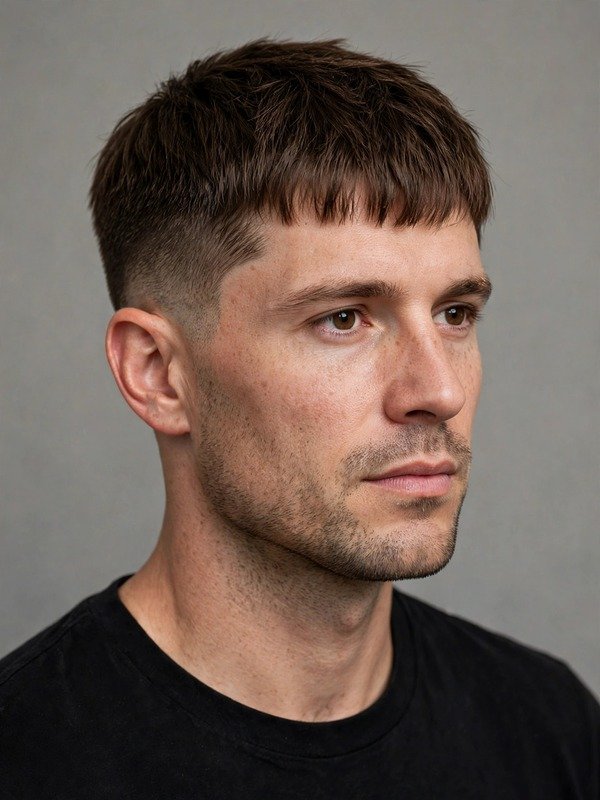
This one is about the top’s relationship to the sides. The taper is softer and the top is deliberately left longer, so it falls forward over the tapered sides with a gradual, clean transition. Compared with the faded version above, the sides do less work and the top does more. It adapts to straight, wavy, curly, thick, and fine hair.
French Crop Low Taper with Textured Fringe

The fringe edge is point-cut, thinned, or choppy rather than blunt. That softens the temple area and makes everyday wear forgiving. It’s a good fit if you want movement at the front but a calmer overall top. A natural or shadow taper keeps the look relaxed. For a deeper dive, our complete low taper fade with textured fringe guide covers styling and upkeep in more detail.
Low Taper Mullet French Crop

A French crop front with a longer nape. The fringe stays short and forward, the sides taper low, and the back is left longer and often textured, with a curve down behind the ear. It’s a hybrid for people who want mullet shape without a dramatic fade. Tell the barber exactly how long the back should be.
Modern French Crop Low Taper

A wearable, current-looking version with a textured top, clean sides, and a matte finish from clay, light pomade, or wax. It’s the middle-of-the-road option: polished, but not demanding.
Contemporary French Crop Low Taper

This goes further than modern. Think dramatic texture, bold contrast, a skin-close finish, a disconnected undercut option, graphic outlines, and an exaggerated fringe. It’s a statement cut, strongest on thick, wavy, or textured hair, and it takes more upkeep. The practical difference from the modern version is contrast and commitment.
French Crop Low Taper with Beard
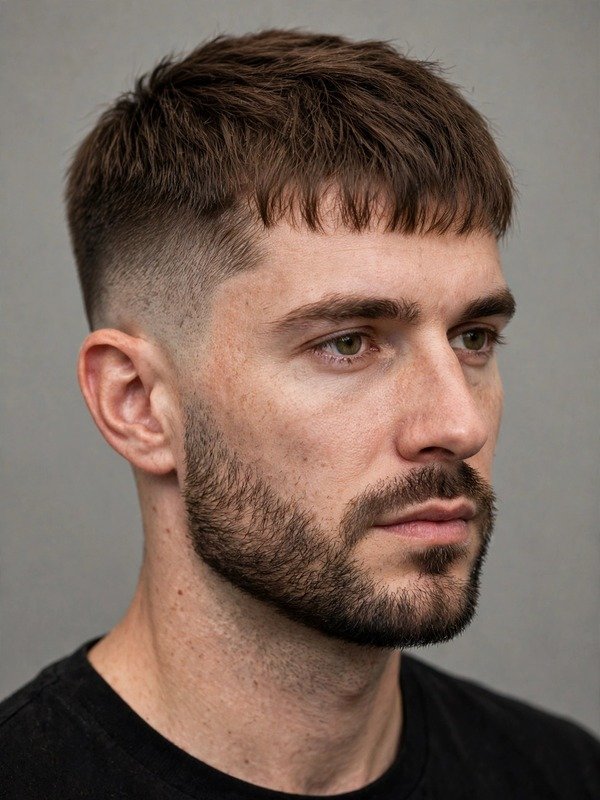
The taper blends into the sideburns and beard so there’s no abrupt break. Discuss the sideburn transition and neckline shape with your barber. The beard can add jawline definition, and the crop’s clean sides keep the whole look tidy. It works with any top texture.
French Crop Low Taper for Round Faces
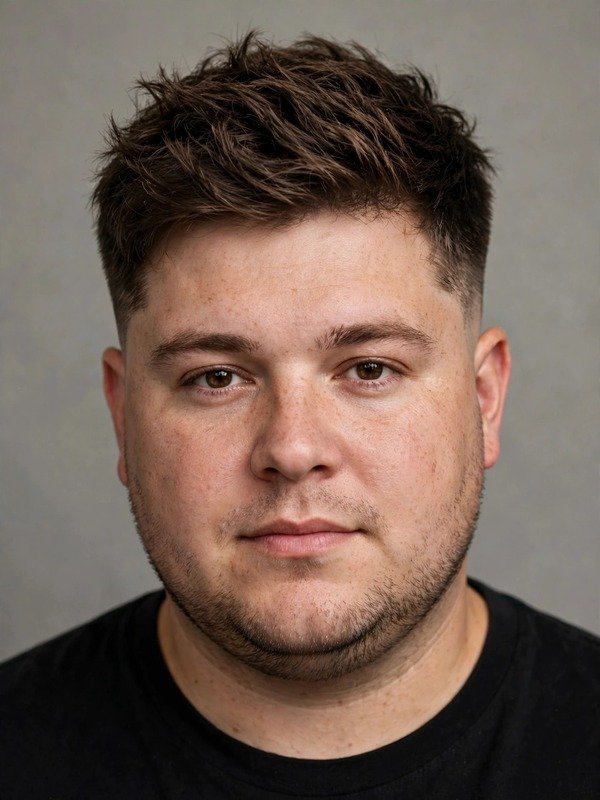
A forward fringe adds angles and contrast, while moderate textured height creates vertical balance. Keep side weight light and the sides tight, because bulk at the sides emphasizes width. A defined or choppy fringe helps sharpen the shape.
French Crop Low Taper with Skin Fade
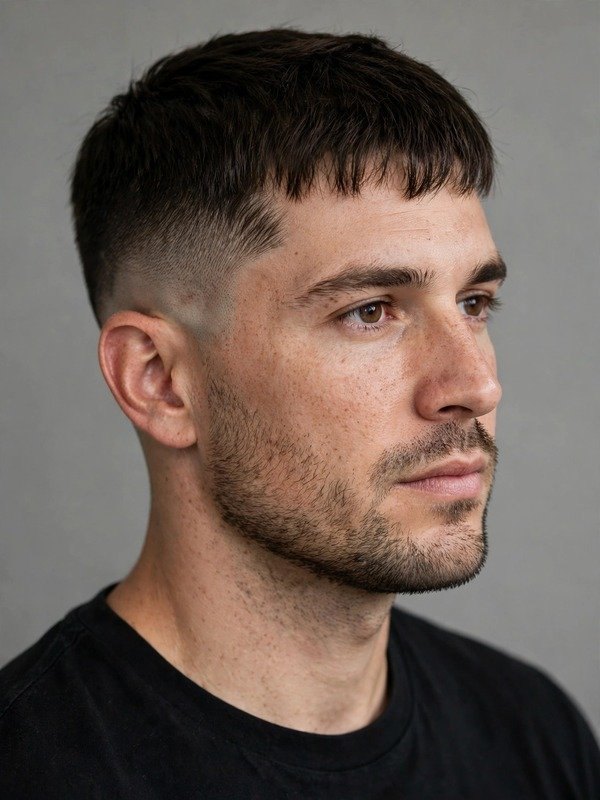
The blend is pushed to bare skin at its lowest point. Contrast is the sharpest in this group, but the refresh window is also the shortest. Many people find it needs attention every two to three weeks to stay crisp. It can irritate sensitive necklines, and a shadow taper is a gentler alternative.
French Crop Low Taper with Line Up

A crisp, straight border at the hairline, temples, and sideburns. It looks very sharp but needs frequent upkeep, while a natural hairline grows out far more gradually. Decide up front which one you’re willing to maintain.
French Crop Low Taper for Receding Hairline
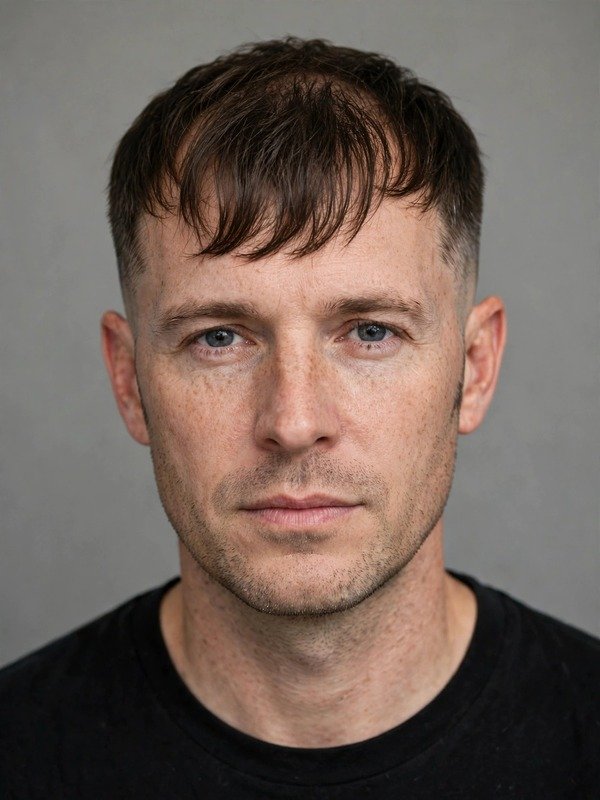
A forward, textured fringe softens temple contrast and covers some forehead. A short blunt fringe or a soft textured fringe can both work, and extra top height is best avoided. It won’t reverse recession, fully hide established recession, or conceal crown thinning, but it can make the hairline less prominent.
French Crop Low Taper with Design
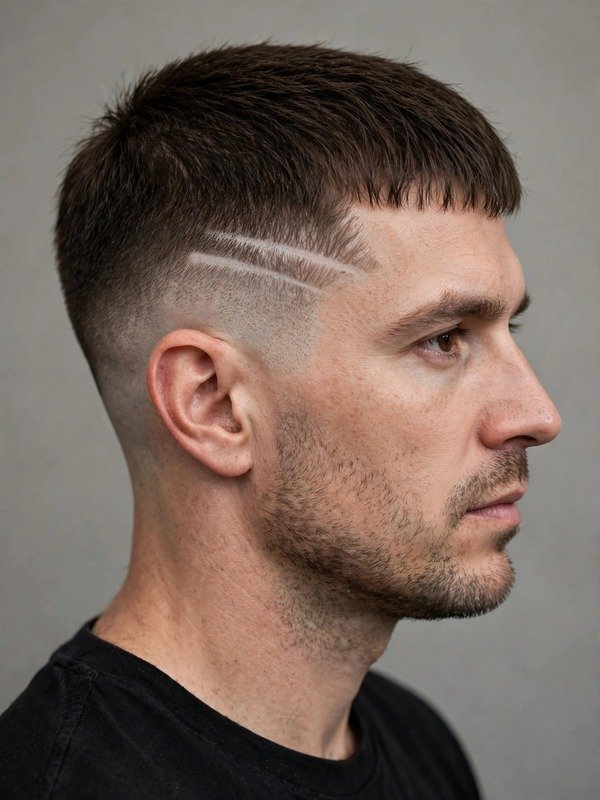
A shaved line, pattern, or graphic detail in the sides, over a low taper, shadow taper, or skin base. The design draws attention to the sides, so it needs a clean base and frequent refreshes. Bring a reference photo and confirm placement before the clippers start.
Coily French Crop with Low Taper

Cut in the hair’s natural, unstretched state, with extra length for shrinkage and a fringe that follows the coil pattern. A soft taper avoids a hard line against dense curls. Define with curl cream or a light leave-in, and keep the neckline tapered and clean.
French Crop Low Taper with Hard Part
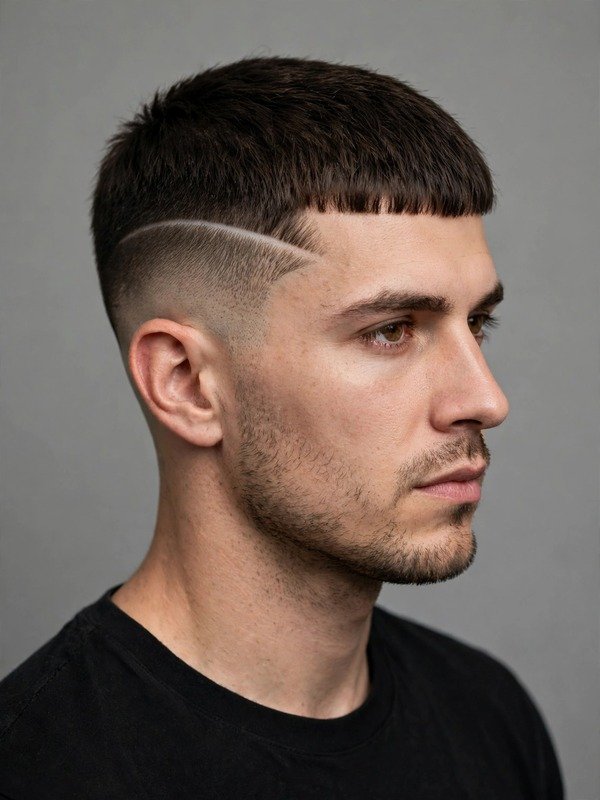
A razor-defined parting line shaved into the top, with the crop falling forward or to one side. It pairs a graphic detail with a low taper and suits a bolder, more structured look than a messy crop. The line needs regular barber maintenance to stay crisp.
Low, Mid and High Taper Fade Explained
Taper height is where the blend begins and how much scalp it exposes. Lower is subtler and slower to grow out. Higher is bolder and needs touch-ups more often.
| Low taper | Mid taper | High taper | |
| Blend starts | Near the ears | Around the temples | At or above the temples |
| Scalp visible | Minimal | Some | Most |
| Contrast | Subtle | Moderate | Sharpest |
| Grow-out | Slowest to look undone | Moderate | Quickest to look undone |
| Touch-ups | Least often | Regular | Most frequent |
Low Taper Fade
A low taper fade starts near the ears and sideburns, curves down behind the ear, and stays contained near the neckline. It leaves more length above the blend, creates the least visible line, and holds its shape longest. It’s the easiest to maintain and the most workplace-friendly. The trade-off is that it’s the least dramatic.
Mid Taper Fade
A mid taper begins slightly higher, around the temples. More scalp shows, contrast is moderate, and the structure looks more defined. It’s bolder than a low taper and softer than a high one, and it needs touch-ups a bit more often.
High Taper Fade
A high taper pushes the blend to the temples or above. It shows the most scalp, creates the strongest contrast, and has the shortest refresh window. It’s a clear statement with the highest upkeep. Pair it with a French crop only if you want that bolder look.
Natural, Shadow and Skin-Close Taper Finishes
The finish describes how short the bottom of the blend goes:
- Natural taper: keeps visible length at the bottom. It’s the softest and most forgiving.
- Shadow taper: a zero-guard pass or half-grade finish that leaves faint stubble. It’s a middle path.
- Skin-close taper: bare skin at the lowest point, with the sharpest contrast and shortest refresh window.
A natural finish holds its shape longer than a skin finish, which looks undone sooner.
What Are the Different Types of Low Taper Fades?
Common versions include the natural low taper, shadow taper, skin-close taper, zero taper, low temple taper, and low drop fade, which curves down behind the ear. They also combine with other cuts, such as a low taper mullet or a textured crop with a low taper. In practice, they differ mainly by where the blend starts and how close it finishes.
French Crop Low Taper Fade Comparisons
Low Taper vs Low Fade
Both start low near the ears. A taper is a softer, more localized blend that keeps more length and shows less scalp. A fade has a fuller transition pushed toward bare skin, so it looks sharper. Because the terms get swapped at the chair, specify the blend location and how short it finishes. For a fuller breakdown, our guide to low fade vs low taper explains how the two differ and which to choose.
Low Taper vs Mid Taper vs High Taper
Low is subtle, mid is moderate, and high is bold. The table above summarizes scalp visibility, contrast, and touch-up frequency. Choose low for easiest upkeep, mid for more definition, and high only if you want the sharpest sides and don’t mind frequent visits.
French Crop vs Textured Crop
The two are close, with similar lengths and plenty of texture. The French crop has a more fixed forward direction and a defined fringe. The textured crop is movement-first, with less fixed direction. The French crop is usually more structured, and the textured crop is messier and more lived-in. Wavy hair often blurs the line.
French Crop vs Caesar Cut vs Crew Cut
| French crop | Caesar cut | Crew cut | |
| Fringe | Forward, blunt to choppy | Short, blunt, uniform | No forward fringe |
| Top | Varied length, textured | All one length | Short, brushed up |
| Styling | Low to moderate | Very low | Low |
| Texture | High | Minimal | Minimal |
The Caesar is more uniform and can suit receding hairlines or finer density. The crew cut has no forward fringe, so the top is brushed up. The French crop is the messier, more textured option. Naming isn’t consistent everywhere, though. Some barbering sources use “French crop” and “Caesar cut” as the same thing. If your barber uses both terms, describe the fringe and texture you want instead of relying on the name.
French Crop vs Low Taper Fade: What’s the Difference?
A French crop describes the top. A low taper fade describes the sides. A “French crop low taper fade” is the combined haircut. You can have a French crop with a high fade, or a low taper under a completely different top.
Who Does a French Crop Low Taper Fade Suit?
It suits many people, but the details change with growth pattern, density, how much contrast you want, face shape, forehead, hairline, cowlicks, crown thinning, and skin sensitivity.
Suitability by Hair Type and Density
Straight, fine, wavy, thick, curly, and coily hair can all wear this cut. What changes is the plan. Fine or straight hair needs weight kept on top to avoid scalp show-through. Thick hair needs internal bulk removed. Curls need shrinkage allowance. Density and growth pattern decide how long the top stays and how the fringe is cut.
French Crop Low Taper Fade for Straight or Fine Hair
Keep weight on top and avoid over-thinning so the scalp doesn’t show through. Choose a softer, less blunt fringe. Lightweight texture powder or matte paste adds root lift without flattening, while heavy clay can make fine hair look coated.
French Crop Low Taper Fade for Wavy or Thick Hair
Wavy hair brings built-in texture, so the barber cuts with the wave and keeps the fringe controlled so it doesn’t split unevenly. Thick hair benefits from internal bulk removal and heavier internal texturing. A matte clay or paste keeps it controlled. The goal is movement without expansion.
French Crop Low Taper Fade for Curly or Coily Hair
It works well. Ask for extra length for shrinkage, a fringe that follows your curl pattern, and a soft taper so there’s no hard line against dense curls. Style with curl cream or a light defining product.
Best Face Shapes for a French Crop Low Taper Fade
Face shape is a styling consideration, not a rule.
- Round: the fringe adds angles and contrast. Keep top height moderate and avoid heavy side weight.
- Oval and square: broad flexibility. The crop can soften a square jaw.
- Heart and triangle: a fuller fringe balances a narrower chin.
- Diamond and long/oblong: a longer crop or a fringe that drapes lower can work. Avoid extra top height on oblong faces.
Fringe softness lets you dial the look from sharp to relaxed.
Forehead and Hairline Considerations
A forward fringe creates a horizontal break across a high forehead and gives coverage. A longer fringe covers more. With a receding hairline, a forward textured fringe softens temple contrast. A natural hairline grows out more gradually than a sharp line-up, so choose based on how much upkeep you want.
Cowlicks, Crown Thinning and Sensitive Skin
A strong front cowlick means the fringe should be cut to follow the growth pattern rather than fight it. A fringe only affects the front, so it won’t hide crown thinning. For sensitive skin, a very close skin-level taper can irritate the neckline, and a longer transition with a less skin-close finish helps. Persistent bumps, itching, or ingrown hairs, especially with coarse, tightly curled hair, are worth showing a dermatologist instead of guessing.
How to Ask Your Barber for a French Crop Low Taper Fade
Don’t rely on the name alone. Barbers interpret “French crop” and “low taper” differently, so specifics matter.
The Barber Consultation Checklist
- Top length and weight: how much to leave
- Fringe: above the brow or longer; blunt, soft, or choppy
- Taper: contained to temples and nape, or a fuller low fade
- Finish: natural, shadow, or skin-close
- Edges: natural hairline or sharp line-up
- Neckline shape
- Beard connection, if it applies
A Copyable Barber Script
“I’d like a French crop with length left on top, styled forward. Fringe cut [above the brow / slightly longer], [blunt / soft / textured]. Low taper around the temples and nape, full lower perimeter, finishing at [natural / shadow / skin]. Keep weight above the taper. Hairline natural, not sharp. I’ve brought a photo.”
For curls, add: “Leave extra length for shrinkage and shape the fringe with the curl.” For fine hair, add: “Please don’t over-thin the top. I don’t want my scalp showing through.”
How to Use Reference Photos Without Getting the Wrong Cut
Bring two or three images showing the front, side, and back, and point out what you like in each. Include one “not this” image. Ask whether the model’s density or growth pattern differs from yours. Skip filtered or AI-generated images, which can show results real hair can’t achieve. Have the barber confirm the plan out loud before cutting.
Discussing Fringe, Top Texture and Length
Be specific. Say whether you want the fringe above the brow or longer, blunt or soft, and how much texture on top. A short blunt fringe is graphic and tidy. A soft point-cut fringe is a forgiving everyday option. A choppy, messier crop needs heavier internal texturing. A longer, heavier crop gives more coverage but takes longer to dry and style.
Choosing Your Preferred Taper and Fade Finish
Say where the taper starts and finishes. Choose natural for longer grow-out and easier upkeep, shadow as a middle option, or skin-close for the sharpest contrast and the most frequent touch-ups. With sensitive skin, a natural or shadow finish is usually more comfortable.
How to Style a French Crop Low Taper Fade at Home
Direct damp hair forward, build texture through the top, and finish the fringe with product.
A Five-Minute Everyday Styling Routine
- Start with clean, slightly damp hair.
- Direct the top and fringe forward with fingers or a wide-tooth comb.
- Blow-dry on low-to-medium heat, working from the crown toward the fringe.
- Emulsify a small amount of product between your palms and work it through the crown, moving forward.
- Finish the fringe last. Pinch and separate sections to break up flat spots.
- Check your side profile and adjust the fringe edge. Stop before your hair looks coated.
For curly hair, skip the blow-dry, air-dry or use a diffuser, scrunch product in, and don’t comb through dry curls.
Which Styling Product Should You Use?
| Product | Best for |
| Matte clay (medium hold) | Straight to wavy hair needing texture |
| Matte paste (light-medium hold) | Fine or straight hair, low-shine finish |
| Texture powder | Root lift and volume on fine hair |
| Sea-salt spray | Undone texture and second-day refresh |
| Curl cream | Defined, frizz-controlled curls |
| Light pomade or wax | Everyday finish with a little sheen |
Start with a pea-sized amount.
How to Style Straight Hair Properly
Comb the top slightly forward with a wide-tooth comb or fingers, keeping weight on top. Use a low-shine matte paste and a touch of lightweight powder for root lift. Heavy clay tends to flatten straight hair. Keep the fringe length controlled and a little textured so it doesn’t look flat or too blunt.
How to Work With Your Natural Curls
Define the curls instead of flattening them. Use curl cream or a light defining product, scrunch it in, and let hair air-dry or diffuse. Brushing dry curls causes frizz. A fringe that follows the curl pattern looks more natural than one forced straight.
Creating a Relaxed, Messy Look
Direct damp hair forward, then tousle the top with your fingers for an undone finish. Sea-salt spray adds texture, and a light spritz brings it back on day two. The fringe should look slightly irregular, with a piecey edge. Small imperfections read as intentional.
Styling Mistakes and Weather Adjustments
Common mistakes include too much clay or paste (which flattens fine hair), product on the fringe alone (which looks disconnected), and brushing dry curls. In humid weather, use a light-hold spray and finger-style instead of brushing. In cold, dry weather, a light cream pass can reduce static and flyaways. Keep amounts small.
Maintenance, Grow-Out and Scalp Care
Upkeep depends mostly on your taper finish. A soft natural taper tolerates weeks of growth, and a skin-close finish looks undone sooner. Wash and condition normally. If you wear a close finish, keep an eye on the neckline skin.
How Often Should You Trim a French Crop Low Taper Fade?
As a rough guide, natural finishes often hold up for four to six weeks, while skin-close or zero tapers tend to look best with a refresh every two to three weeks. Straight hair can look rounded at the edges sooner, and wavy or curly hair hides regrowth longer. A fringe-only trim is a useful in-between step. Your growth rate and tolerance matter more than any fixed schedule.
Keeping the Cut Presentable Between Visits
Reset the fringe daily with water or low heat, and avoid pushing it back repeatedly. You can tidy stray neckline hairs and sideburns with clippers, but leave the taper blend to the barber, since re-blending at home usually looks uneven.
Managing the Fringe and Top During Grow-Out
As the fringe grows, it covers more forehead and may expand as it dries or splits unevenly. Keep it controlled with a trim and forward styling. Longer tops take more drying and styling time, and extra top height is best avoided while growing out. A longer, heavier crop is a natural destination if you let it go.
Close-Cut Irritation and When to Reconsider a Skin Finish
Bumps, itching, or ingrown hairs at the neckline suggest the close cut may not suit your skin. Dermatologists explain how razor bumps and ingrown hairs develop when hairs are cut short and coarse, curly hairs curve back into the skin. A skin-close taper also leaves hair very short, so a very close neckline can cause similar problems for some people. If that happens, switch to a softer shadow taper or a natural taper with a longer transition. If symptoms persist, worsen, or leave scarring, see a dermatologist. This is general guidance, not a diagnosis.
Common French Crop Low Taper Fade Mistakes to Avoid
Choosing the Wrong Fringe Length
Too short, and a blunt fringe becomes a harsh graphic line. Too long, and it drapes lower than intended and may cover too much forehead. Match the length to your forehead size, temple contrast, and setting.
Getting a Fade That Sits Too High
If the taper starts at the temples or above, you get a mid or high fade: more scalp, sharper contrast, and more frequent touch-ups. If you want a subtle low taper, say “keep the taper low around the ears” and confirm where it starts.
Removing Too Much Length From the Top
A top cut too short loses weight, texture, and fringe options, and fine hair may show scalp. Tell the barber exactly how much length to preserve, especially for a forward fringe and textured top.
Ignoring Your Natural Hair Texture and Hairline
A fringe cut against the growth pattern, a cowlick ignored, or a sharp line-up chosen without thinking about upkeep all cause trouble. Let the barber adapt the cut to your texture and hairline instead of copying a photo exactly.
Choosing a Style That Is Difficult to Maintain
Skin-close tapers, sharp line-ups, and designs need frequent visits. A high-contrast fringe can need daily styling. Match the cut to your lifestyle, styling time, and barber frequency, and choose a more forgiving version if you won’t commit.
Final Thoughts
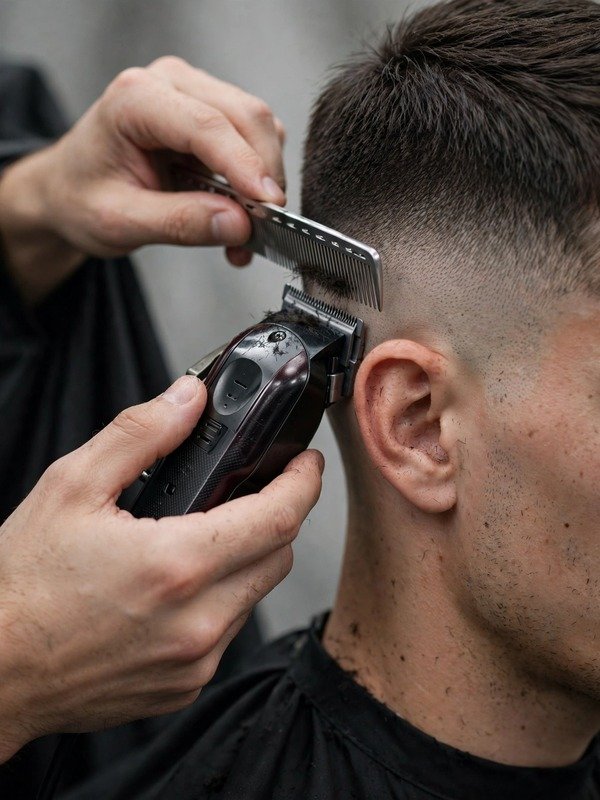
It’s worth considering if you like a forward fringe and a short, structured silhouette, and you don’t mind seeing a barber every few weeks. It works across hair types when adapted, and it can be modified: a longer fringe for more coverage, a softer taper for conservative settings, a plainer neckline, or adjustments for a strong cowlick or sensitive nape.
If it doesn’t fit, a Caesar cut offers uniform length, a crew cut suits hair styled upward, and a longer textured crop gives more movement. Decide after a consultation: bring photos, specify the details, and let the barber adapt the cut to your hair.