
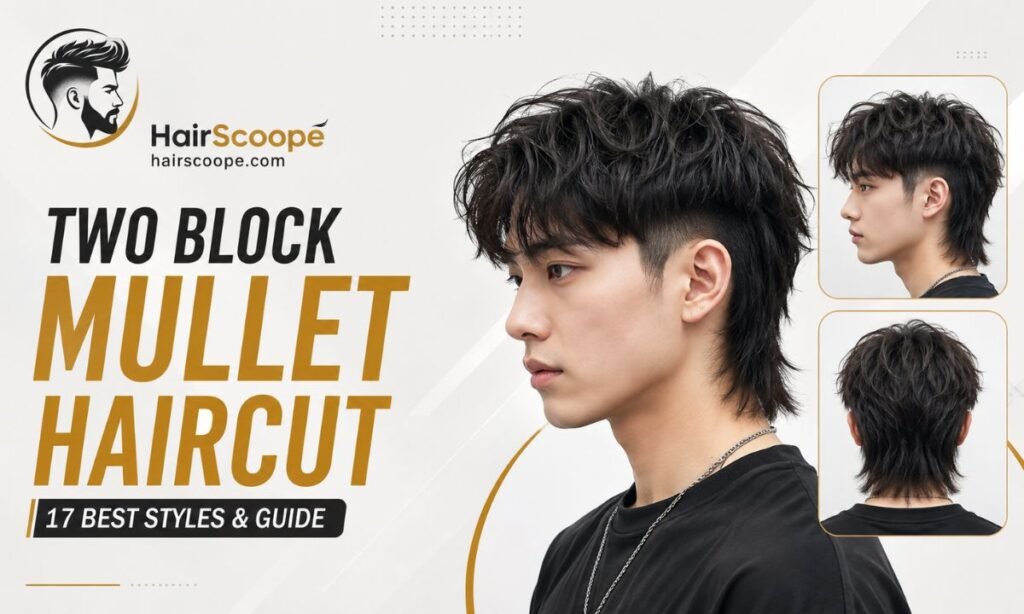
If you want a haircut that turns heads without trying too hard, the two block mullet is the one to book. It’s sharp where it needs to be, loose and expressive everywhere else, and it works just as well in the office as it does at a festival.
Barbershops are fielding more requests for this cut than almost anything else on the floor right now, and it’s easy to see why. It gives you the low-maintenance appeal of short sides without forcing you into a plain, forgettable top. You get structure and personality in the same haircut, which is a rare combination.
This guide breaks down exactly what the cut is, where it came from, 17 of the best variations to try in 2026, which face shapes it flatters, and how to keep it looking sharp between visits. By the end, you’ll know exactly what to ask for and how to style it once you’re home.
What Is a Mullet Two Block Haircut?
A mullet two block haircut blends two distinct cuts into one. The “two block” part comes from Korean barbering and refers to a hard, visible line where short sides meet a much longer top with no gradual blend, just a clean drop in length.
The “mullet” part adds the length dynamic: hair is left noticeably longer at the back and nape while the sides stay cropped tight or faded. Put the two together and you get a cut with short, low-maintenance sides, a full, textured top, and a bit of length trailing at the back for movement.
It reads as edgy but controlled, which is exactly why it’s become one of the most requested men’s cuts this year. Unlike a traditional mullet, which can look dated if it’s not styled carefully, the two block structure keeps the whole thing looking intentional. The sharp line does a lot of the visual work, so even a fairly long back section still reads as a deliberate style choice rather than an overgrown haircut.
What makes it so adaptable is that the “formula” short sides, full top, longer back can be dialed up or down almost infinitely. That’s why there are so many named variations, and why two people with the same base cut can walk out of the barbershop looking completely different.
How the Mullet Two Block Became Popular
From Korean Two Block to Modern Mullet
The two block cut has roots in South Korean barbershops, where it became a staple look thanks to idol culture and K-drama styling. Sides were kept short and disconnected from a longer, fuller top, giving a soft yet structured silhouette that suited straight Asian hair textures particularly well.
For years, the two blocks stayed fairly close to its original form: neat, straight-haired, and polished. It was popular precisely because it looked tidy enough for school or work while still having a distinct silhouette compared to a standard short back and sides.
As the style spread internationally, Western barbers started experimenting. They kept the sharp two block structure but borrowed length from the mullet, extending the back and nape instead of trimming it into a standard fade. The result was a hybrid cut that felt both retro and current at the same time, pulling in mullet fans who wanted more structure and two block fans who wanted a bit more edge.
The 2020s Revival
Mullets never fully disappeared, but they came roaring back once short-form video made bold, easy-to-spot haircuts shareable. Barbers on social media began posting transformations that paired the two block’s clean structure with mullet length, and the combination caught on fast among men who wanted something more distinctive than a standard fade or crop.
Celebrities and athletes experimenting with mullets in the early 2020s helped normalize longer back sections again, and barbers on TikTok and Instagram quickly noticed that pairing that length with a crisp two block line was photographed and filmed exceptionally well. Short-form video rewards clear, distinctive silhouettes, and this cut delivers one from almost any angle.
By 2026, the mullet two block has settled in as a genuine mainstream trend rather than a passing moment, with dozens of variations to suit different hair types, face shapes, and personal styles. It’s no longer confined to one subculture or one hair texture barbers now adapt it for straight, wavy, curly, and coily hair alike, which is a big part of why it has staying power.
17 Best Mullet Two Block Hairstyles for Men in 2026
Here are the top variations barbers are cutting right now, from clean and classic to loose and lived-in.
1. Classic Two Block Mullet Haircut
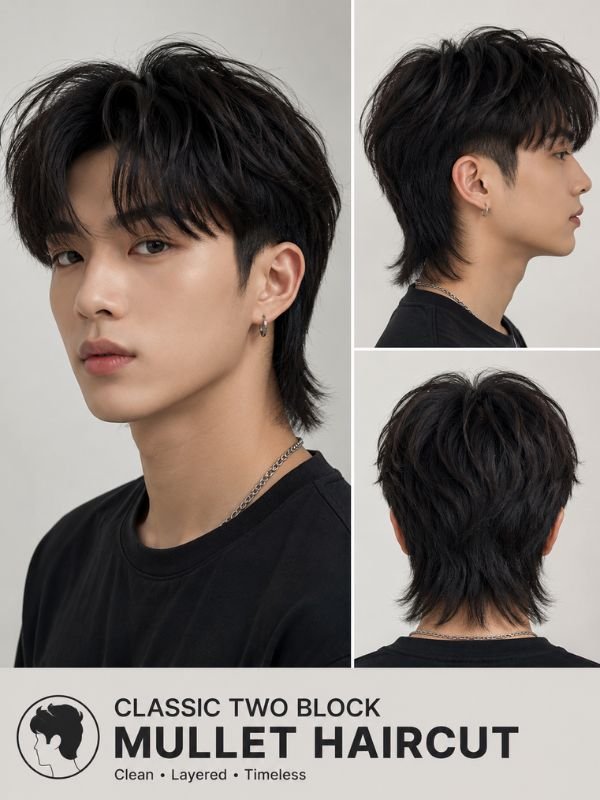
The original template: short, tidy sides with a hard line, a fuller top brushed forward or back, and a moderate length at the back. It’s the easiest version to ask for and the easiest to maintain.
2. Korean Two Block Mullet
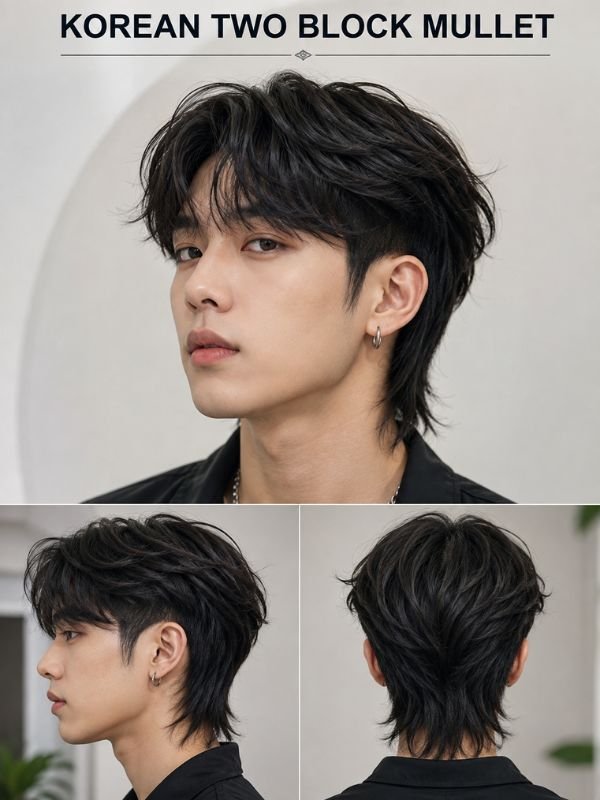
This version stays closest to its roots: straight, glass-like top hair, a sharp block line, and a neat, understated back section. It suits fine-to-medium straight hair best.
3. Short Two Block Mullet
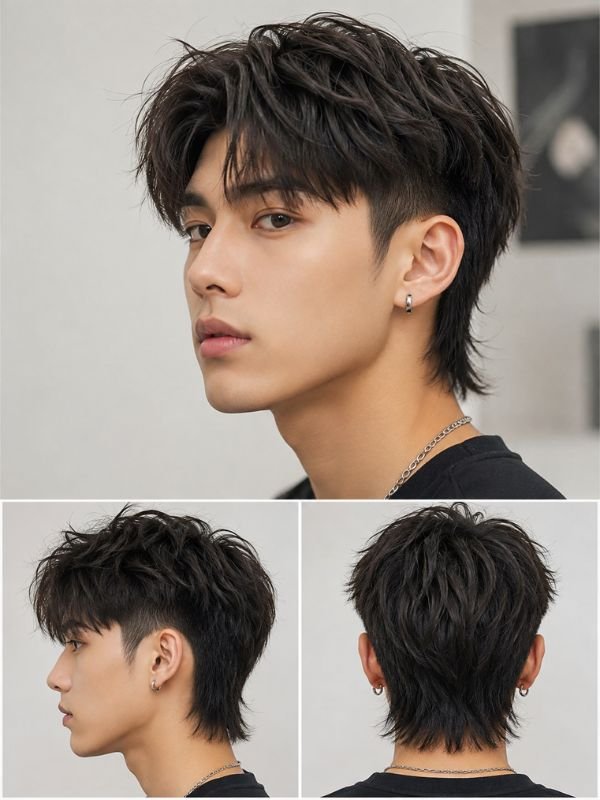
A subtler take for men who aren’t ready to commit to serious length. The back is trimmed just enough to hint at mullet shape without drawing too much attention.
4. Long Two Block Mullet
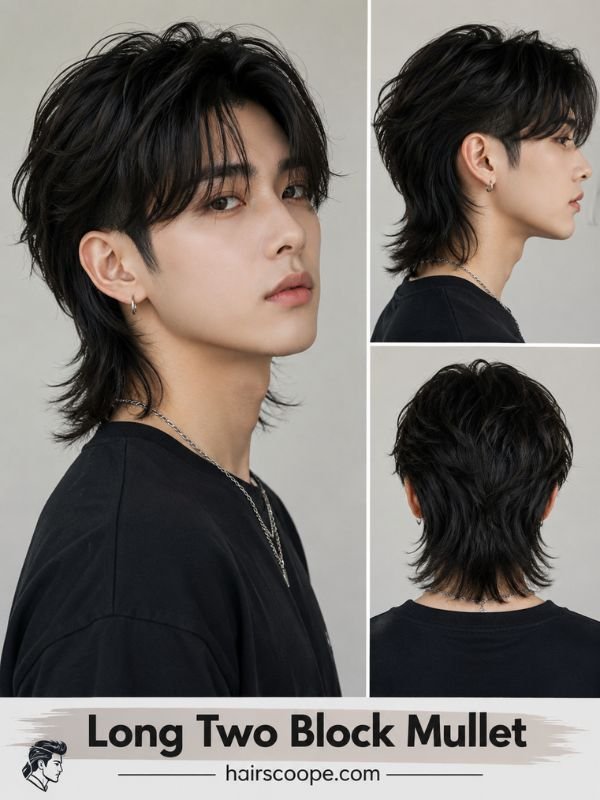
Maximum drama. The top and back are left to grow out fully, creating dramatic contrast against the cropped sides. This one needs regular trims to keep the shape clean as it grows.
5. Messy Two Block Mullet
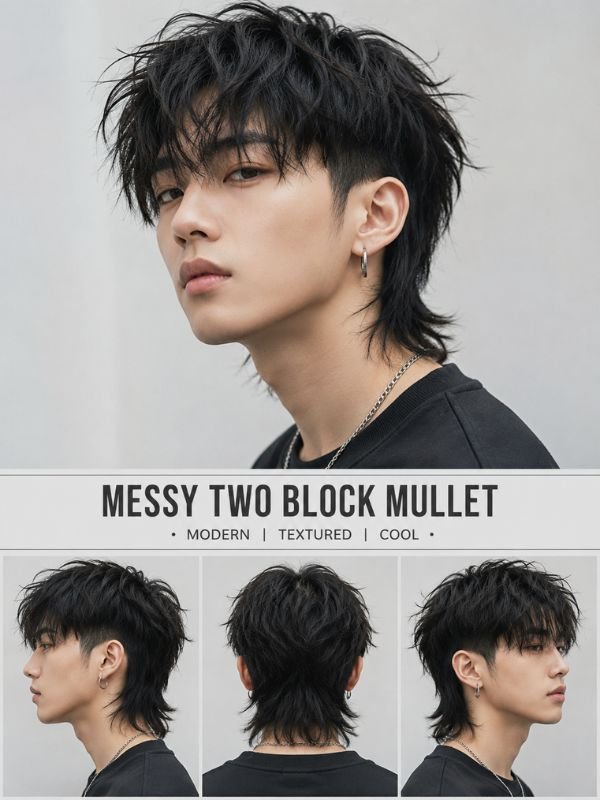
Styled with a matte paste and finger-tousled rather than combed, this version leans into imperfection. It’s low-effort day to day and works well for thick or coarse hair.
6. Curly Two Block Mullet
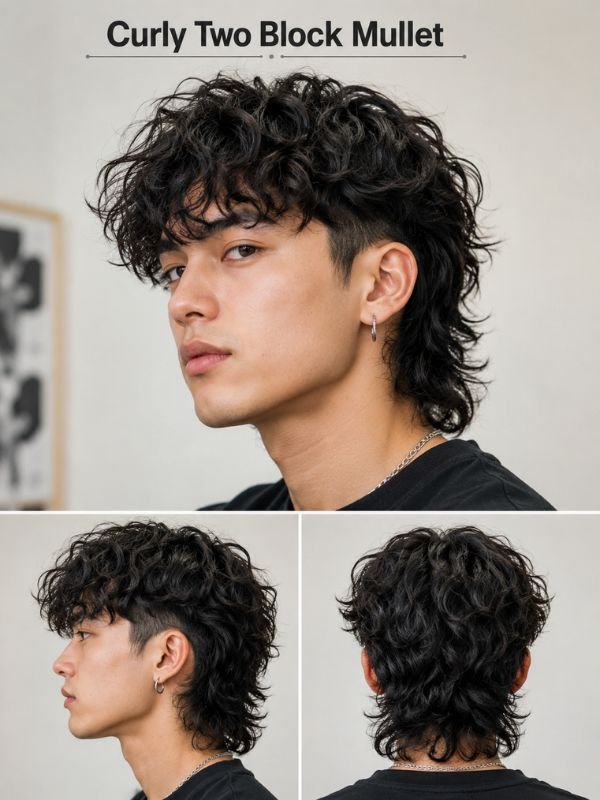
Natural curls add volume on top and spring at the back, making the block line look even sharper by contrast. A curl cream or light gel helps define the pattern without weighing it down.
7. Wavy Two Block Mullet
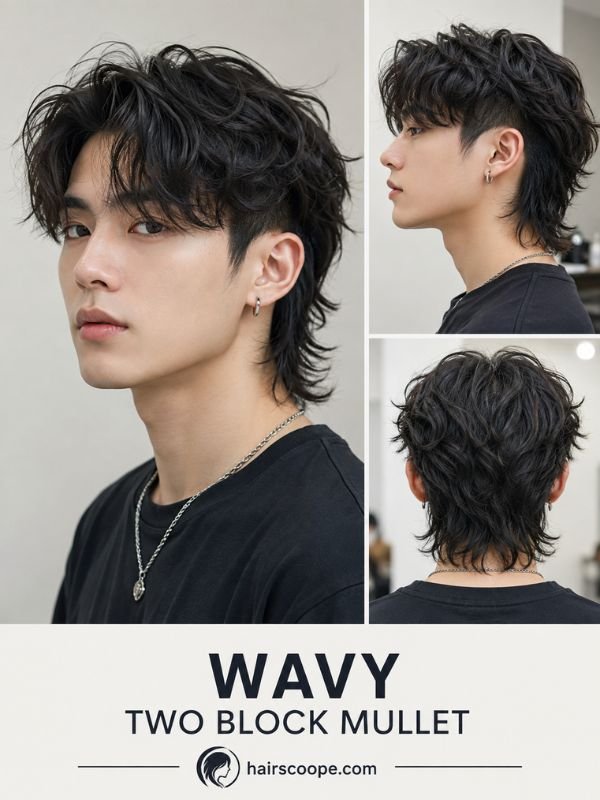
Waves give this cut natural texture and movement, sitting somewhere between the crispness of straight hair and the volume of curls. Sea salt spray brings out the wave pattern nicely.
8. Layered Two Block Mullet
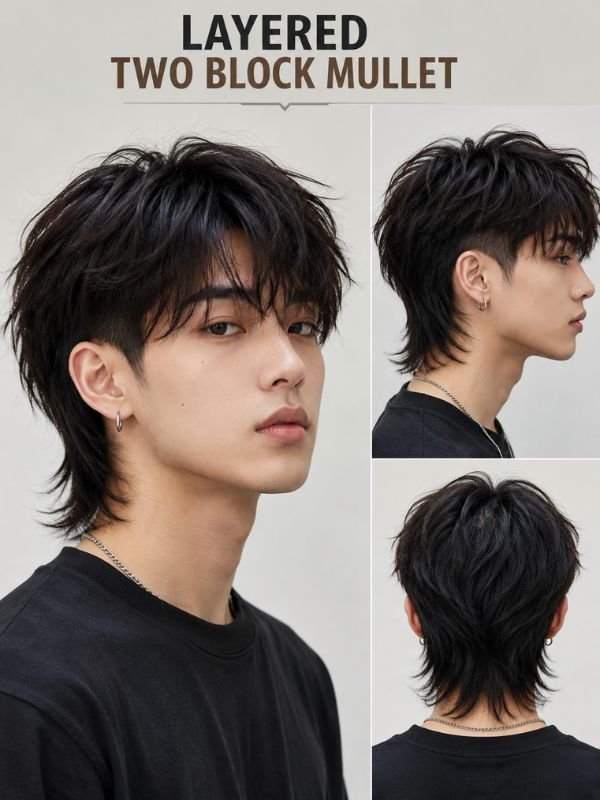
Layering through the top and back removes bulk and adds shape, which is especially useful for thicker hair that would otherwise sit heavy. It also makes the back section flow rather than hang flat.
9. Textured Two Block Mullet
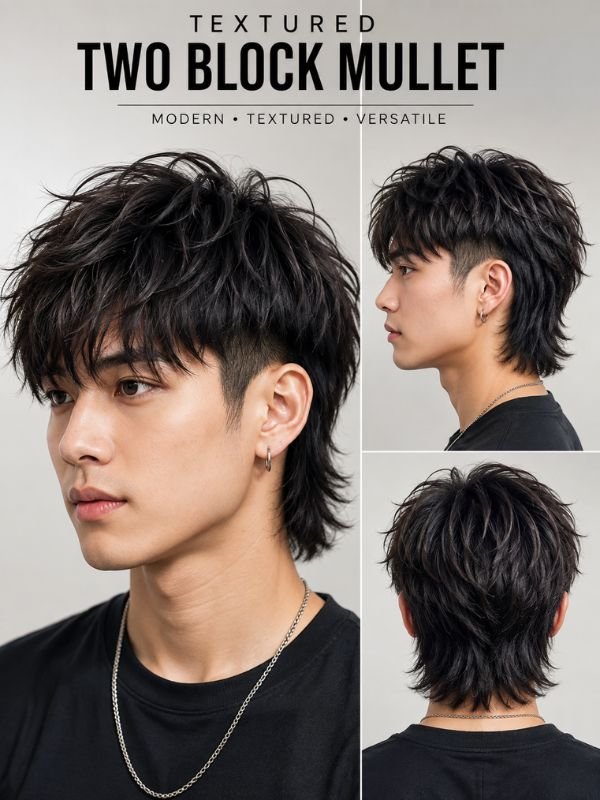
A barber uses point-cutting or texturizing shears through the top to break up the hair’s edges, creating a choppy, dimensional finish that photographs well.
10. Choppy Two Block Mullet
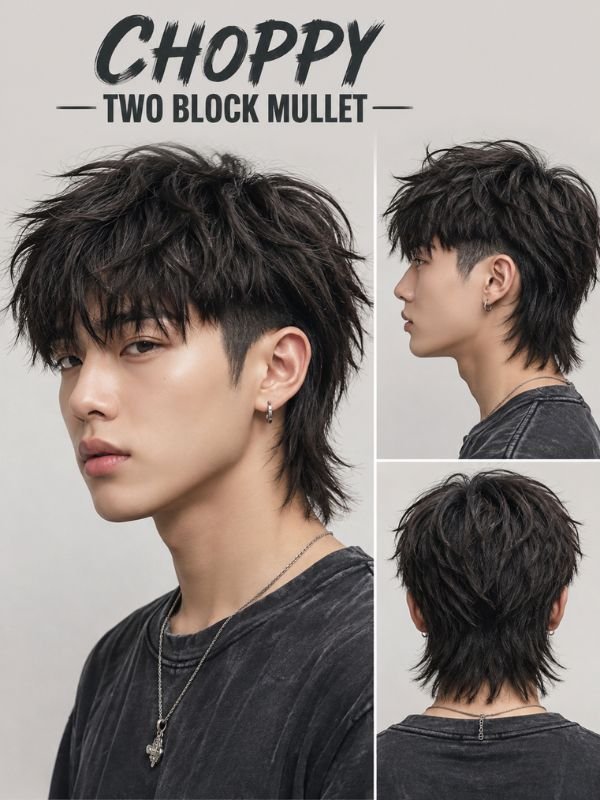
Similar to the textured version but more aggressive, with visible, jagged pieces throughout the top and fringe. It’s a favorite for men chasing a rock-and-roll aesthetic.
11. Shaggy Two Block Mullet
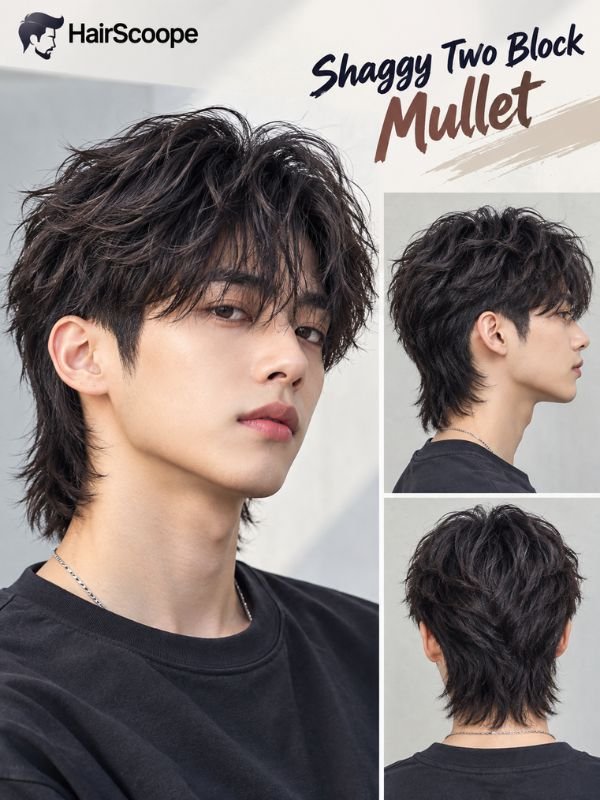
Longer layers throughout, minimal structure, and a deliberately undone finish. It’s the closest the trend gets to a full 70s-inspired shag while still keeping the block contrast.
12. Tousled Two Block Mullet
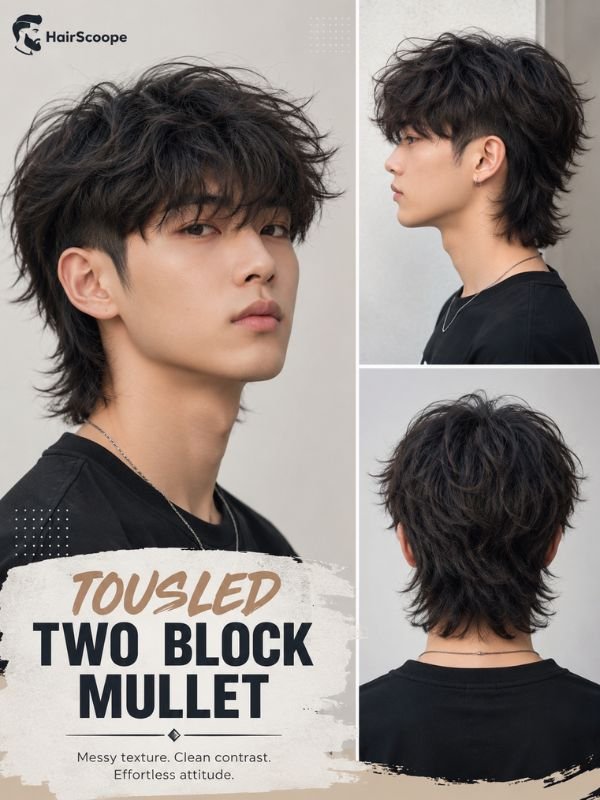
Styled with a light wax and pushed around with fingers rather than a comb, this version looks effortless but still holds its shape through the day.
13. Two Block Mullet Fade
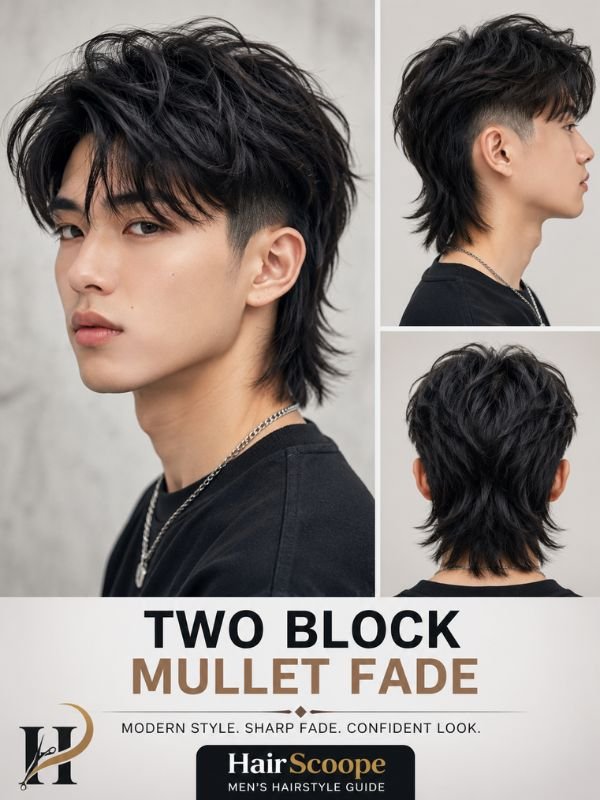
Swapping the sharp block line for a fade softens the transition between short sides and long top, giving a slightly more polished, versatile finish.
14. Two Block Mullet with Low Fade
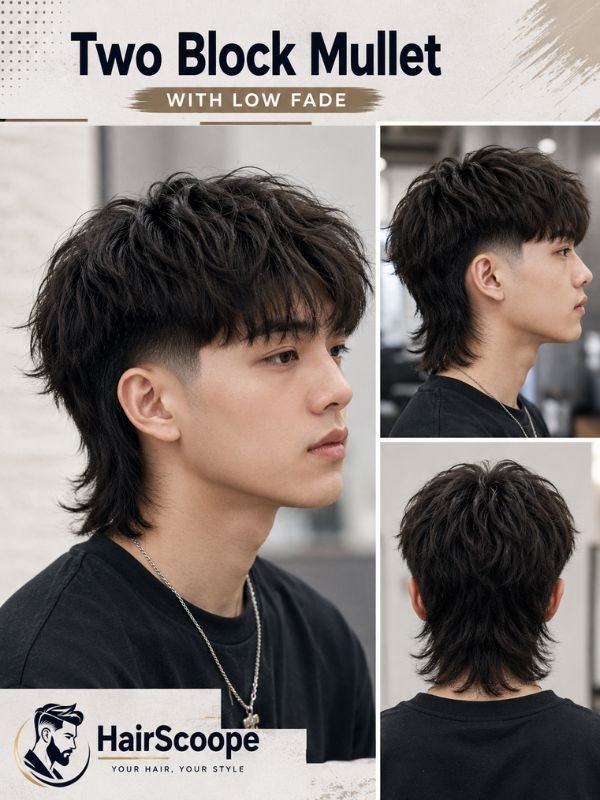
The fade starts close to the ear rather than higher up the head, keeping more length and coverage on the sides. It’s a good middle ground for men easing into the trend.
15. Two Block Mullet with Taper Fade
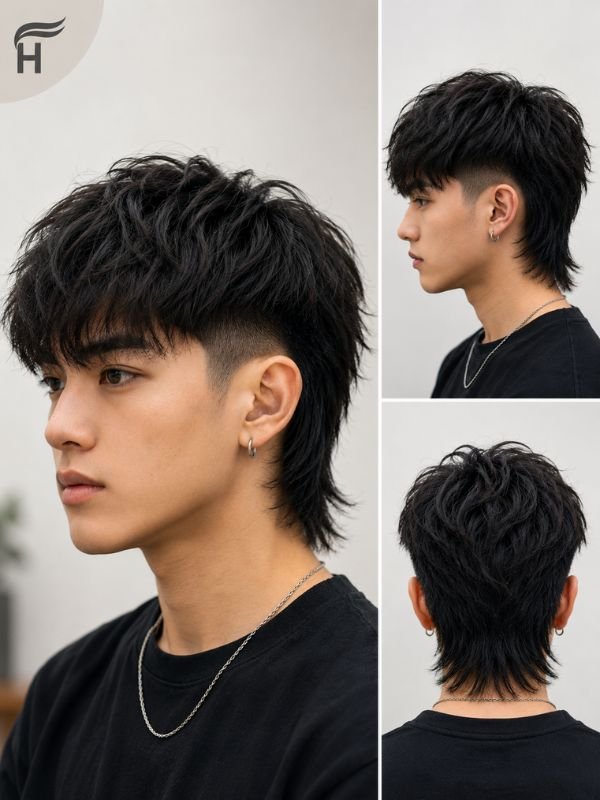
A tighter taper along the hairline with a gradual fade upward gives this version a cleaner, more professional look while still keeping the mullet length intact at the back.
16. Two Block Mullet Undercut
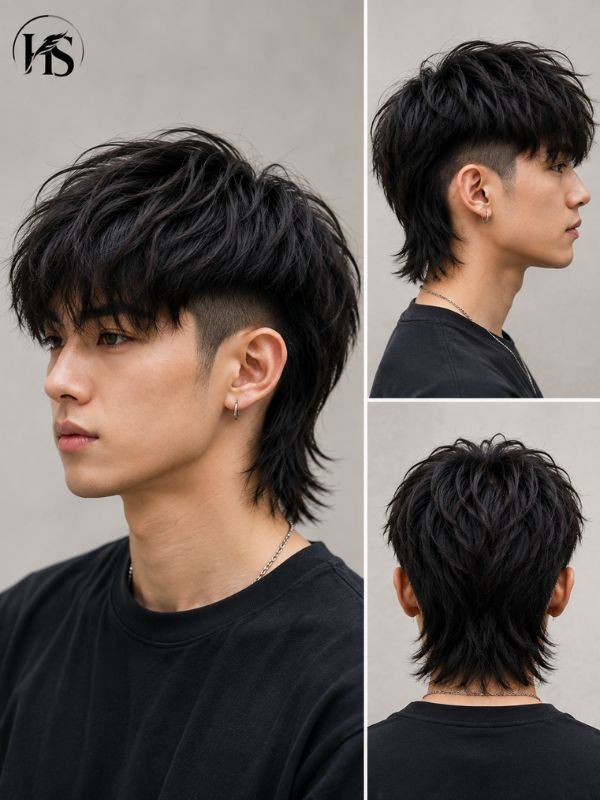
The sides are shaved much closer, almost disconnected entirely from the top, for maximum contrast. This is the boldest sides-to-top ratio on the list.
17. Two Block Mullet for Straight Hair
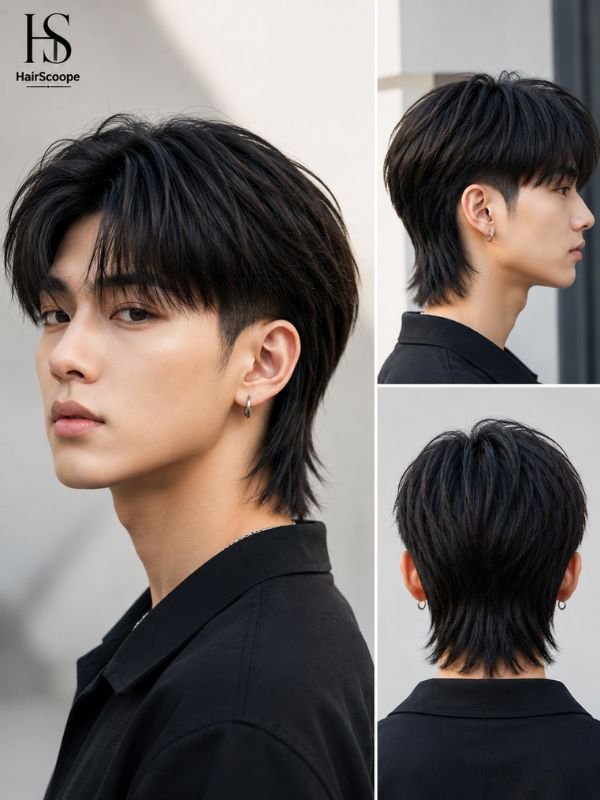
Straight hair lets the block line sit at its sharpest and the top lie flat and glossy, which is why this pairing is often what people picture first when they hear “two block mullet.”
| Style | Best For | Maintenance Level |
| Classic Two Block Mullet | First-timers | Low |
| Korean Two Block Mullet | Straight, fine hair | Low |
| Curly Two Block Mullet | Curly hair types | Medium |
| Long Two Block Mullet | Growing out hair | High |
| Two Block Mullet Fade | Office-friendly looks | Medium |
| Two Block Mullet Undercut | Bold, statement styles | Medium |
Mullet Two Block Haircut for Boys
The mullet two block translates well for younger clients, though most barbers scale it back a little. A shorter back section, a slightly less dramatic block line, and a lower-maintenance top keep it school-appropriate while still giving boys a cut that feels current.
Parents often ask for a softer fade instead of a hard block line at this age, since it grows out more gracefully between appointments and needs fewer touch-ups. It’s also a practical choice for active kids. The sides stay out of the way during sports, while the slightly longer top and back give room for personality without needing daily styling effort.
Most barbers recommend a trim every four to six weeks for boys wearing this cut, mainly to keep the sides from getting shaggy rather than to maintain a precise line.
How to Style a Mullet Two Block Haircut
Step 1: Start With Clean, Towel-Dried Hair
Wash with a lightweight shampoo and towel-dry until hair is damp, not dripping. The product applies more evenly on damp hair than on soaking wet strands, and it gives you more control over where the volume builds.
Step 2: Apply a Light Styling Product
Work a small amount of matte paste, clay, or light gel through the top section, focusing on the roots first and working outward. Start with less than you think you need. You can always add more, but it’s hard to remove excess product without rewashing.
Step 3: Blow-Dry for Volume
Use a round brush and blow-dry the top section upward at the roots to build lift. Aim the airflow away from your face and work in small sections, moving the brush from root to tip to encourage the hair to sit the way you want it to hold.
Step 4: Shape Your Desired Look
Use your fingers or a comb to push the top forward, back, or to the side, depending on the specific variation you’re going for. The back section usually needs less shaping, just a light comb-through or a quick pass with your fingers to keep it from looking flat.
Step 5: Set With Light Hairspray
A flexible-hold hairspray locks the shape in place without leaving hair stiff or crunchy. Hold the can at least eight inches away for even coverage, and give it a few seconds to set before touching your hair again.
Best Face Shapes for a Mullet Two Block
Most face shapes can pull off some version of this cut, but a few adjustments help it sit better:
- Oval faces: Nearly every variation works well; there’s little to correct for.
- Round faces: Choose versions with more height on top and a sharper block line to add length visually.
- Square faces: Softer, textured tops and a fade instead of a hard block line help balance strong jaw angles.
- Long faces: Keep the top shorter and add fringe or side volume rather than height, which can exaggerate length.
- Heart-shaped faces: A fuller top with a slightly longer back balances a narrower chin nicely.
None of these are hard rules; they’re starting points a good barber will adjust based on how your hair actually behaves and how you want to style it day to day. A skilled barber will often look at your hairline, forehead shape, and hair density together before recommending one variation over another.
Hair type matters just as much as face shape when picking a variation, since curl pattern changes how the top section falls and how sharp the block line reads. Curl pattern is largely genetic and comes down to the shape of your hair follicle, which is worth keeping in mind before asking for a style that fights your natural texture. You can read more about how different curl patterns respond to styling at the Healthline hair type guide .
What to Tell Your Barber
Walking in with the right words saves time and avoids a cut that misses the mark. Try this checklist:
- Ask for a “two block” specifically not just a fade so the barber knows to leave a visible line rather than blending.
- Specify how much length you want left at the back: subtle, moderate, or full mullet length.
- Mention your hair type (straight, wavy, curly) so they can adjust the top’s shape accordingly.
- Bring a reference photo close to your own hair texture, not just any photo you like.
- Ask whether a fade or a hard block line suits your face shape and hair density better.
If you’re also considering a fade-heavy version of this cut, it’s worth looking at how barbers approach a similar taper on other styles; a high taper fade haircut uses many of the same blending principles that work well on a two block mullet fade.
How to Maintain a Mullet Two Block
- Trim the sides every 2–3 weeks to keep the block line or fade crisp, since short hair grows out visibly fast.
- Trim the back every 6–8 weeks, just enough to maintain shape without losing the length that defines the mullet.
- Wash 2–3 times a week rather than daily, to avoid stripping natural oils that help the top hold texture.
- Use a light, non-greasy product for daily styling, saving heavier pastes for special occasions.
- Book a barber who’s comfortable with the two block technique specifically, since a standard fade barber may default to blending the line away.
If your top section leans toward texture and movement rather than a slick finish, it’s worth browsing options like a textured fringe styled with a mid taper fade for extra styling inspiration that pairs well with mullet length.
Between appointments, a few small habits go a long way. Sleeping on a satin or silk pillowcase reduces friction on the longer back section, which helps prevent the ends from getting dry or splitting. If you swim or spend a lot of time outdoors, a leave-in conditioner on the back section can offset sun and chlorine damage without weighing down the shorter top.
It’s also worth communicating with your barber about how the cut is growing out between visits. A quick check-in on whether the block line is still sharp, or whether the back is getting heavier than you’d like, helps them fine-tune the next trim rather than starting from scratch each time.
Conclusion
The mullet two block haircut earns its popularity honestly, it’s bold without being high-maintenance, and it adapts to nearly every hair type and face shape with small adjustments. Whether you go classic and straight or curly and choppy, the core formula stays the same: sharp sides, a defined line, and length that gives you room to play.
Bring a clear reference to your next barber visit, be specific about how much length you want at the back, and communicate your hair type honestly rather than just chasing a photo. Do that, and you’ll walk out with a cut that’s genuinely your own one that holds its shape, suits your face, and still gives you plenty of room to experiment as it grows.