
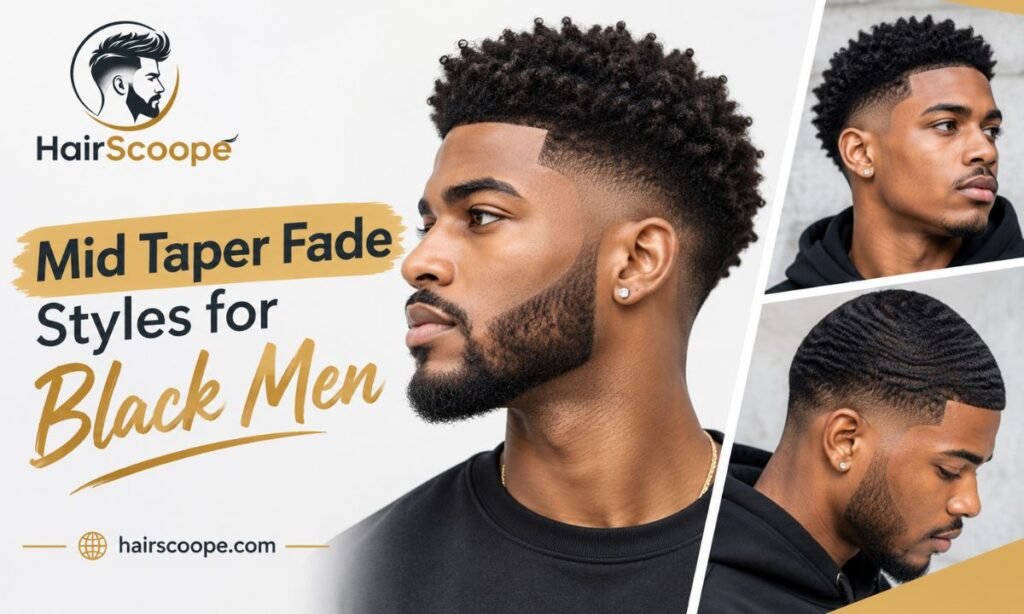
Ask any barber which cut walks through the door the most in 2026, and the mid taper fade will come up almost every time. Some shops and clients call the exact same cut a black taper fade, since the two terms describe the same silhouette. It sits in the sweet spot between a low fade’s subtlety and a high fade’s drama, which is exactly why it works with nearly every texture of Black hair, from tight 4C coils to loose 3C curls.
Part of the appeal is how forgiving the mid taper is. It doesn’t demand a specific hair length, a specific curl pattern, or a specific lifestyle. A student running between classes and a man in a full-time office job can wear the exact same fade and style the top completely differently.
This guide breaks down all 35 of the best mid taper fade styles for Black men, how to pick the right one for your face shape, exactly what to tell your barber, and how to keep the cut looking fresh between visits. By the end, you’ll have a shortlist of styles worth bringing to your next appointment, plus the maintenance routine to keep them looking barbershop-fresh in between.
What Is a Mid Taper Fade for Black Men?
A mid taper fade starts its fade roughly halfway up the side of the head, right around the temple area, and blends the hair down toward the ear and neckline. It’s shorter than a low fade but nowhere near as dramatic as a high fade. If you’ve searched “mid fade black men” and landed on dozens of near-identical results, this is the cut most of them are describing. For Black men, this middle starting point matters. It leaves enough length on the sides to work with denser, curlier hair textures, while still creating a visible line of contrast between the top and the sides.
It also gives barbers more room to work with when blending different textures. A low fade has to compress a lot of blending into a small area near the ear, while a high fade has to travel a long way from the crown to the skin. The mid taper splits that distance more evenly, which tends to produce a smoother, more forgiving blend.
The fade itself can end anywhere from a skin-close zero guard to a soft, barely-there blend, depending on how sharp you want the final look. That flexibility is part of why the style has become a barbershop staple rather than a passing trend.
Unlike a bald fade or a drop fade, a mid taper doesn’t chase one dramatic look. Instead, it acts almost like a frame: quiet enough not to distract from what’s happening on top, but defined enough that the haircut still reads as fresh and deliberate from across the room.
It’s also one of the more forgiving fades to grow out. Because the taper starts higher up the head than a low fade, a couple of extra days between barbershop visits won’t leave you looking noticeably unkempt, which is a big part of why it’s become the default request for men juggling busy schedules.
Mid Taper Fade vs Low Taper vs High Taper
Choosing between a mid, low, or high taper comes down to how much contrast you want and how your hair naturally sits. Here’s how the three compare side by side.
| Fade Type | Starting Point | Best For | Maintenance |
| Low Taper | Just above the ear | Subtle looks, thicker hair, longer afros | Grows out slowly |
| Mid Taper | Mid-temple area | Balanced contrast, most face shapes and hair types | Needs touch-ups every 2–3 weeks |
| High Taper | Above the temple, near the crown | Bold, sharp looks, shorter top styles | Grows out visibly within 1–2 weeks |
A low taper is the safest option if you want your hair to stay looking sharp longer between cuts, since less of the head is faded. A high taper gives the boldest contrast but needs the most frequent upkeep.
The mid taper fade lands right in the middle on every metric, which is exactly why it’s the most requested option for men who want a defined cut without committing to constant barbershop visits. If you like the idea of pairing a fade with natural texture rather than a fully shaved-down look, the low taper fade afro styles for Black men are worth comparing against the mid taper before you settle on one.
There’s no universally “correct” choice between the three. A low taper suits men who want their hair to do most of the talking, a high taper suits men who want the cut itself to be the statement, and a mid taper suits everyone in between who wants a bit of both without leaning too far in either direction.
Why the Mid Taper Fade Works So Well for Black Hair
Black hair textures, whether coily, kinky, or tightly curled, tend to shrink and hold shape differently than straighter hair types. A mid taper fade gives that texture room to be seen rather than shaving it away completely.
Because the fade starts at the mid-temple rather than right at the hairline, it also frames the face without exposing more scalp than necessary. That matters for hair health too: coily and curly strands are naturally more prone to dryness because the oval shape of coily hair follicles slows how quickly natural oils travel down the strand, so keeping length and structure on top helps protect that moisture rather than exposing more scalp to dryness and friction.
Here’s how the mid taper fades pairs with different hair types and textures.
| Hair Type | Texture Description | Best Mid Taper Pairings |
| 3A–3C | Loose to tight spiral curls | Curly pompadour, defined curls, quiff |
| 4A | Springy S-shaped coils | Twist-out, sponge twists, classic afro |
| 4B | Sharp zig-zag coil pattern | High top afro, frohawk, blowout afro |
| 4C | Tightest coil, most shrinkage | Buzz cut, short afro, sponged afro, 360 waves |
No matter which row you fall into, the mid taper gives your barber a clean foundation to work with while your natural texture does the heavy lifting on top.
There’s also a practical grooming reason the mid taper has stuck around: it’s easier for most men to maintain at home between barbershop visits than a low or high fade. The starting point sits in a spot that’s simple to line up in a mirror, which matters if you’re ever touching up the sides yourself between appointments.
And because it pairs with everything from a two-week-old buzz cut to a year of grown-out locs, the mid taper fade tends to be the one haircut men keep coming back to even as the rest of their style changes. It’s less a single trend and more a dependable foundation you can build almost any look on top of.
35 Best Mid Taper Fade Styles for Black Men
These 35 styles are grouped by hair length and type, so you can jump to whichever section fits your current hair length or the direction you want to grow it.
1. Buzz Cut with Mid Taper Fade
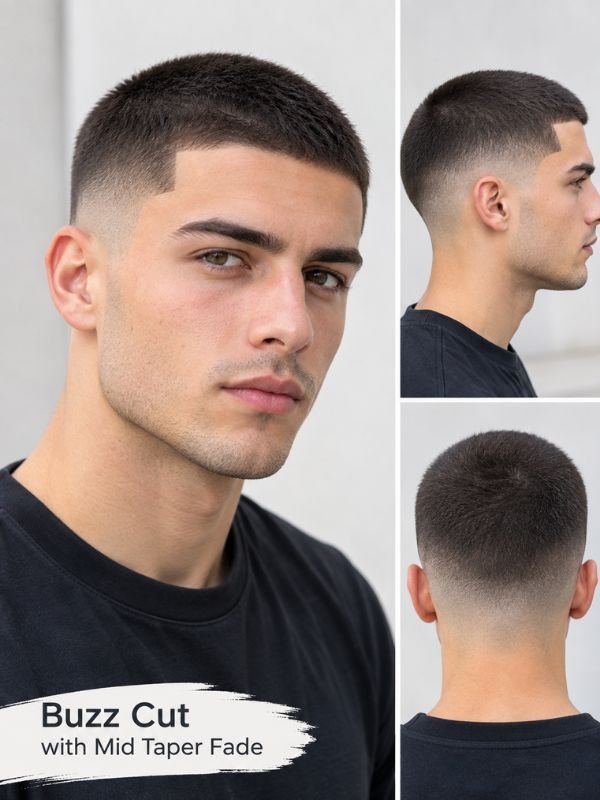
Even length on top, a crisp mid taper on the sides, and almost zero styling time required. This is the cut for men who want sharp without any daily effort, and it’s forgiving enough to wear the same way through a busy work week without a single product.
2. Low Afro with Mid Taper Fade
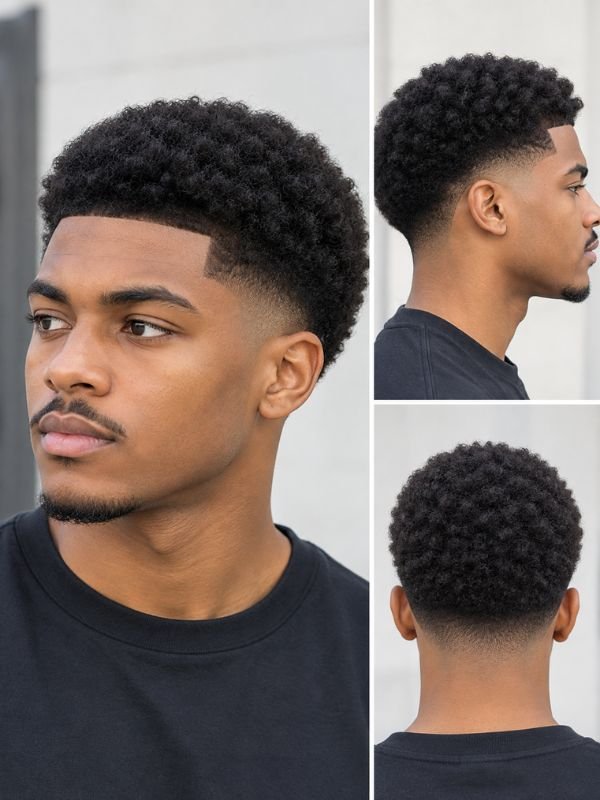
A compact, rounded afro sitting close to the scalp pairs cleanly with a mid taper underneath. It keeps volume in check while still celebrating natural texture, making it a solid middle ground for men who aren’t ready to grow a full-sized afro yet.
3. Textured Crop with Mid Taper Fade
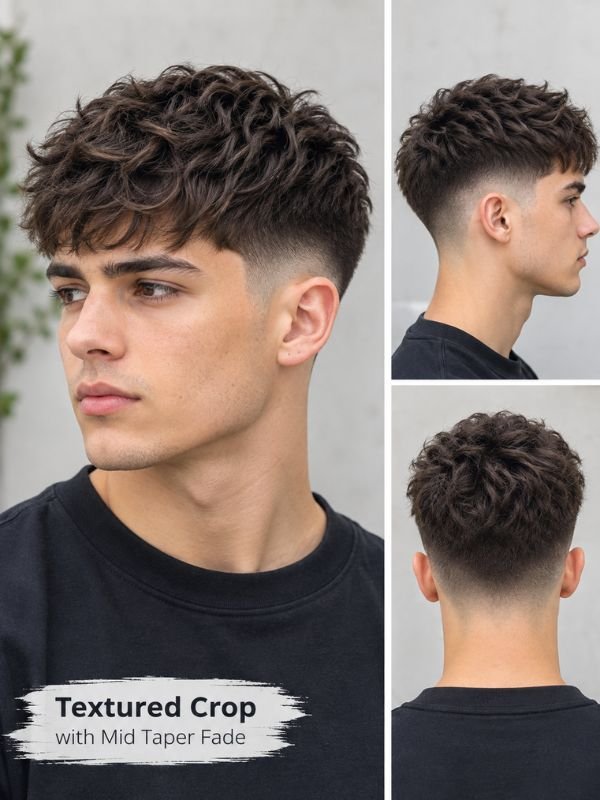
Choppy, textured layers on top add movement above a tight mid taper. It’s a modern update on the classic crop that photographs well from every angle. For more inspiration on pairing textured tops with a lower fade line, the mid taper fade with textured fringe guide covers several variations worth trying.
4. French Crop with Mid Taper Fade
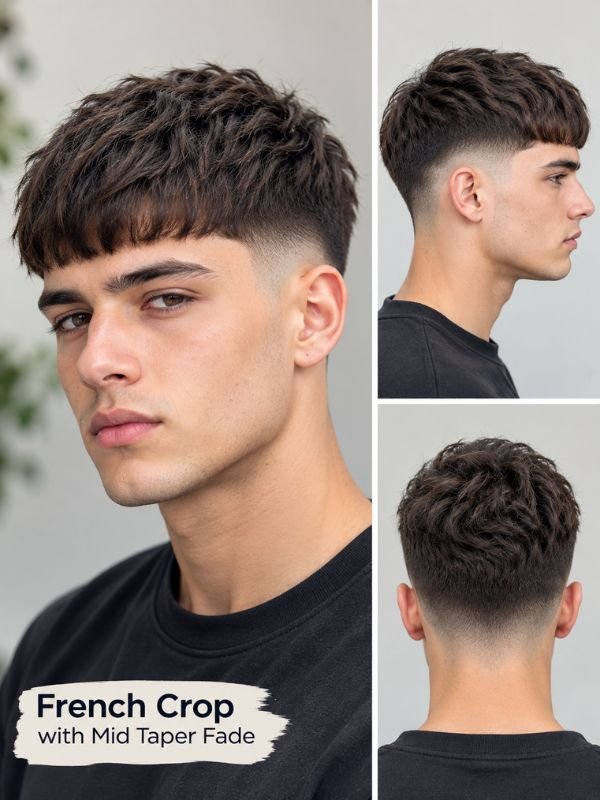
A blunt, straight-across fringe sits above the eyebrows while the mid taper handles the sides. It’s clean, structured, and works especially well with straighter or looser curl patterns, plus it needs very little daily styling beyond a light matte pomade.
5. Caesar Cut with Mid Taper Fade
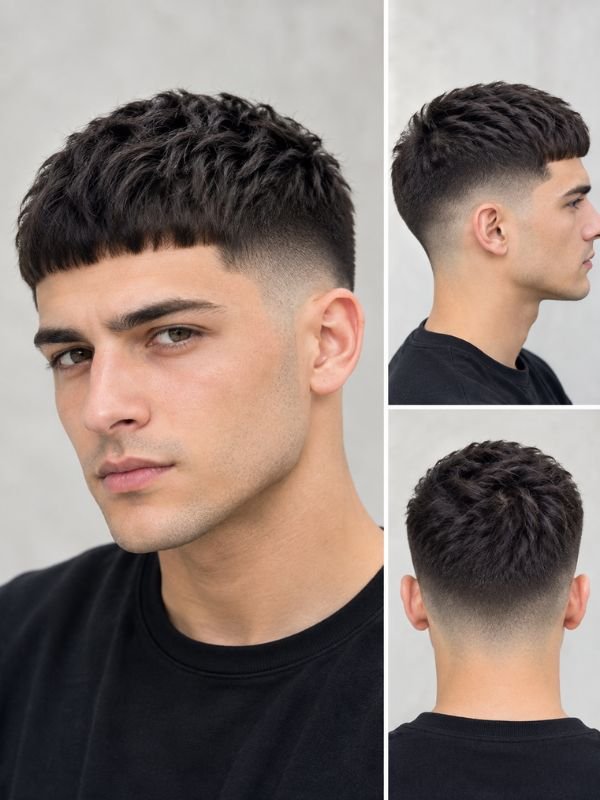
Short, uniform length on top with a horizontal fringe gives the illusion of denser hair. Pairing it with a mid taper keeps the whole look tidy and low-effort, which is exactly why it’s remained a barbershop staple for decades.
6. Crop Top with Mid Taper Fade
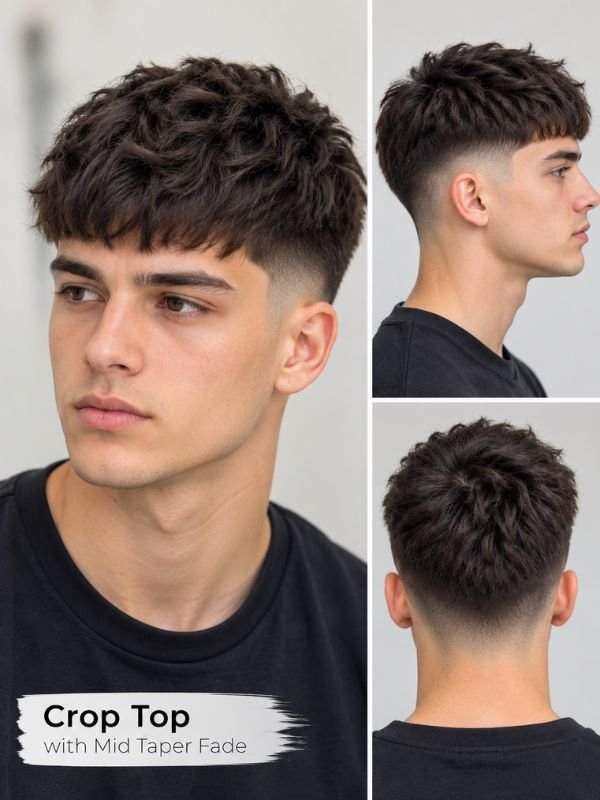
Slightly longer and messier than a French crop, the crop top brings texture and volume up front. The mid taper underneath balances that extra height so the cut doesn’t tip over into looking unstructured.
7. 360 Waves with Mid Taper Fade
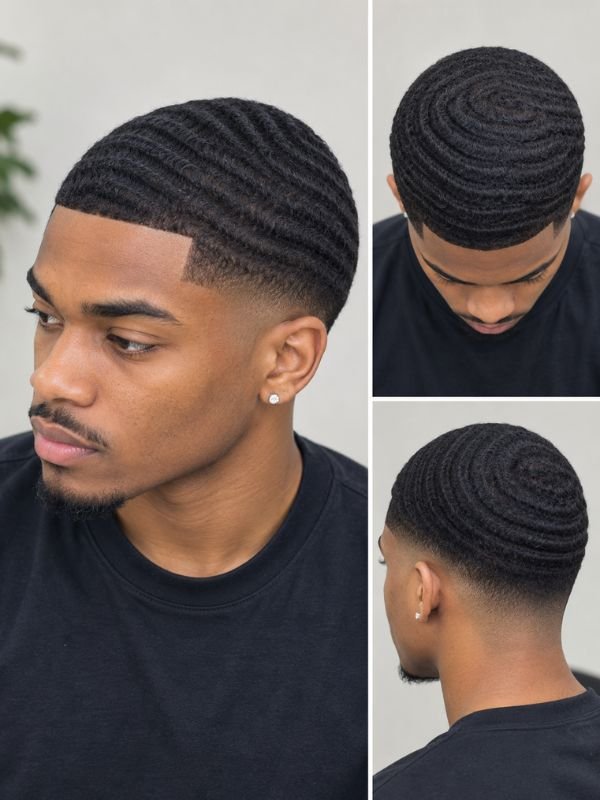
Trained waves spinning out from the crown look sharper against a faded background. Consistent brushing and a rag at night keep the pattern crisp, and the mid taper gives the waves a clean edge to spin into near the temples.
8. Side Part with Mid Taper Fade
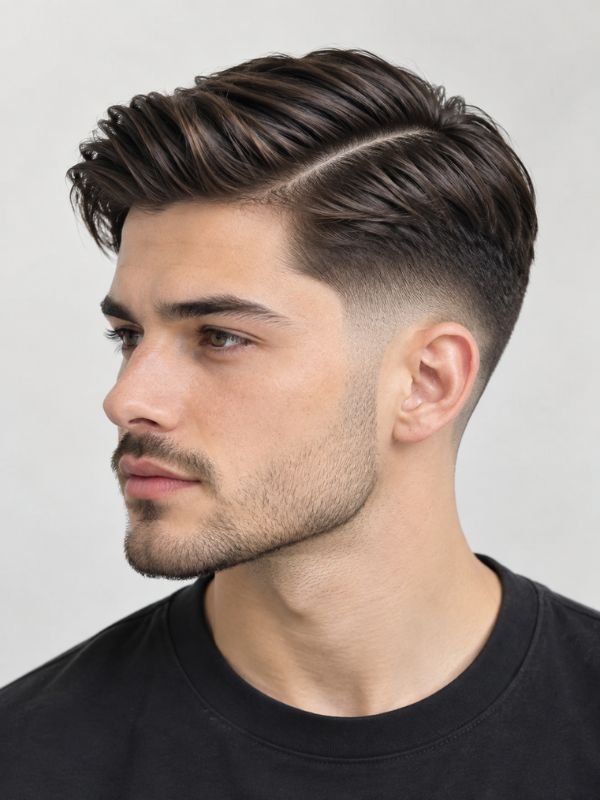
A defined, shaved or combed part line adds a classic, polished edge to the mid taper. It works particularly well for straighter or wavy top textures and looks equally sharp in a barbershop chair or a boardroom.
9. Classic Afro with Mid Taper Fade
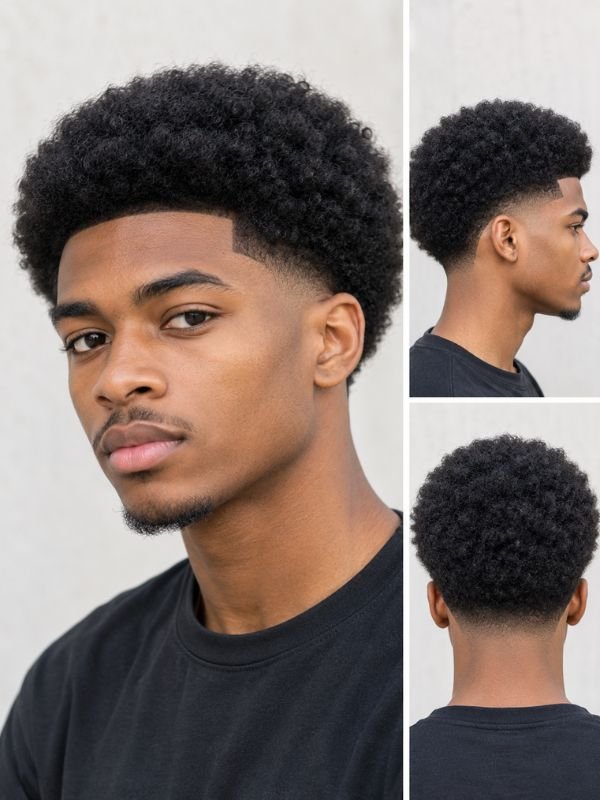
A rounded, natural afro on top with a mid taper underneath is one of the most iconic Black men’s haircut combinations. It celebrates natural texture while still looking barbershop-fresh, and it works for almost every hair density without much shaping needed.
10. High Top Afro with Mid Taper Fade
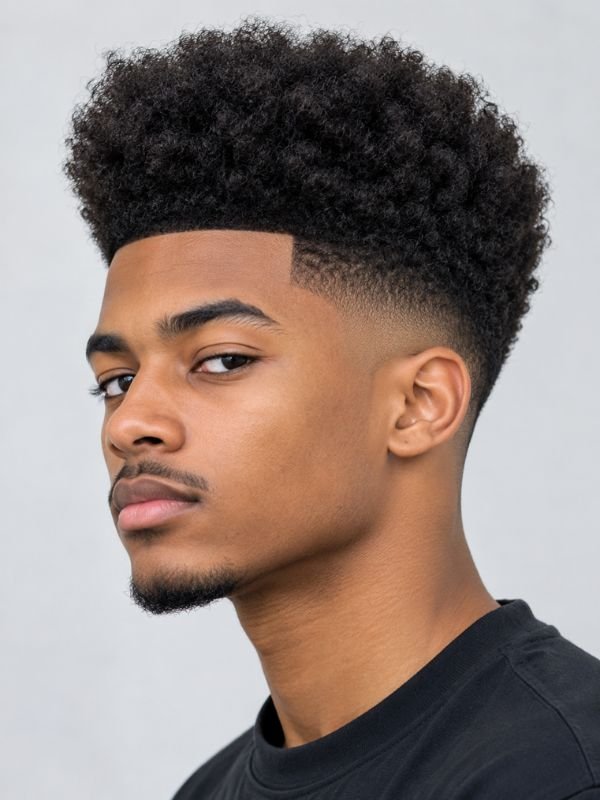
Height replaces width in this bold, vertical take on the afro. The mid taper keeps the sides from competing with all that upward volume, letting the top do all the visual work.
11. Mini Afro with Mid Taper Fade
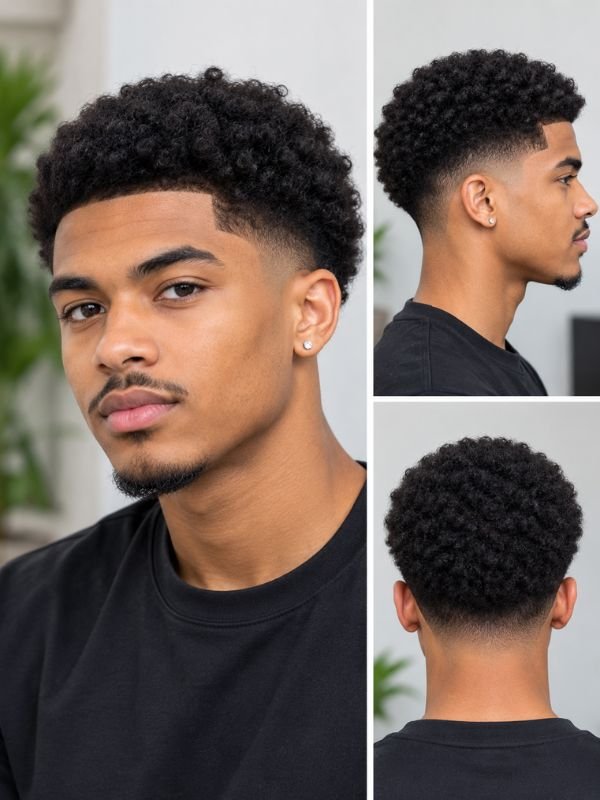
A smaller, tighter afro that sits close to the head is easy to maintain and works well for shorter hair still growing out. The mid taper adds shape without much extra effort, making this a great transitional style.
12. Sponged Afro with Mid Taper Fade
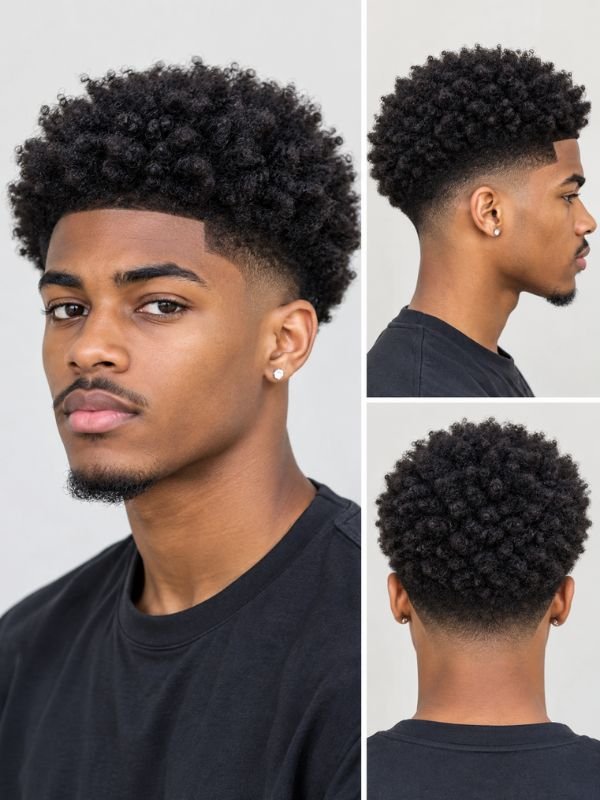
Using a sponge (or “twist sponge”) tool creates uniform, defined curls across the whole afro. It’s a popular technique for 4C hair that wants definition without heat, and it pairs naturally with a mid taper for a tidy finish.
13. Frohawk with Mid Taper Fade
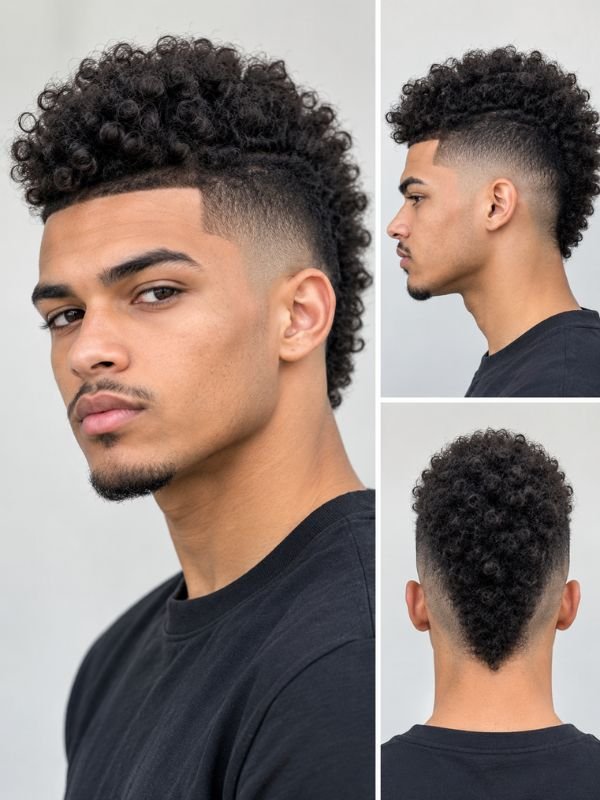
A strip of afro volume runs down the center of the head, mohawk-style, while the sides taper down. It’s one of the boldest options on this list and tends to suit men who already gravitate toward statement haircuts.
14. Blowout Afro with Mid Taper Fade
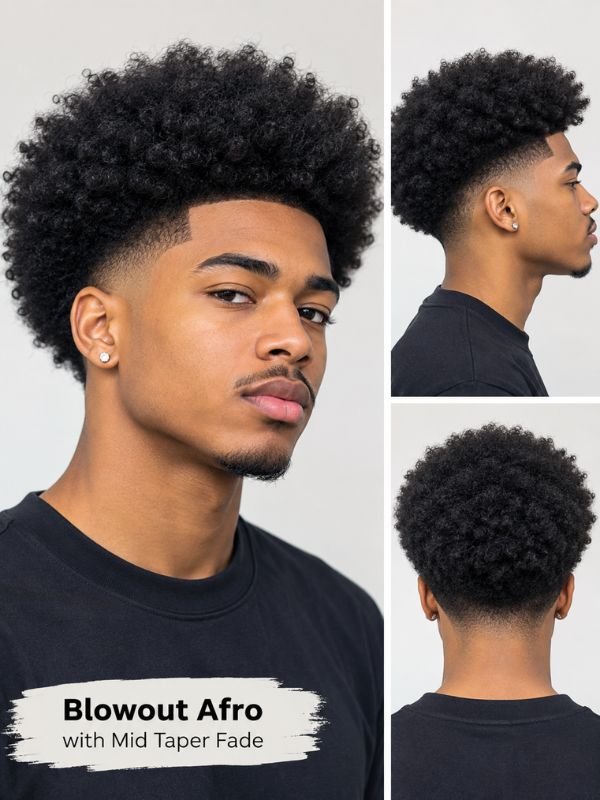
Blow-dried and brushed for extra lift, this style adds dramatic volume up top. A strong hold spray keeps the shape from collapsing during the day, and the mid taper prevents the sides from looking overwhelmed by all that height.
15. Afro with Edge-Up and Mid Taper
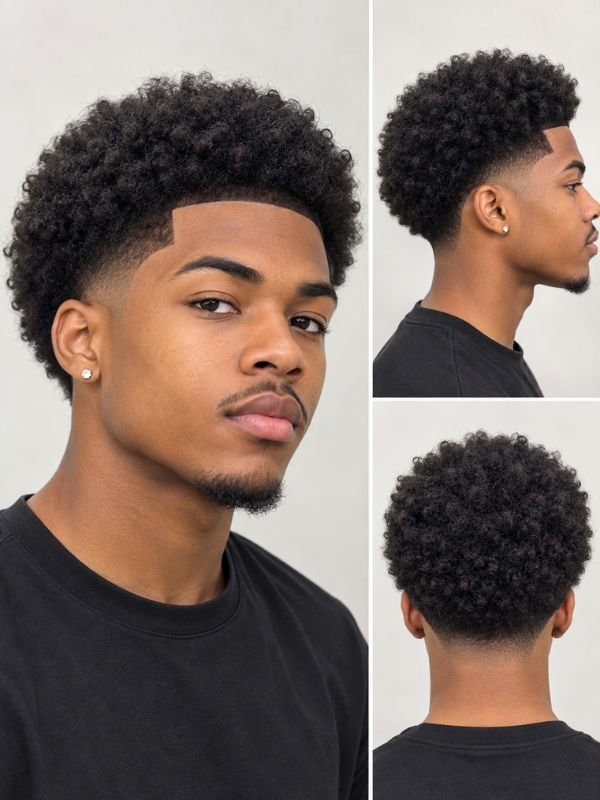
A sharp, straight-line edge-up along the hairline gives this afro combination extra definition. It’s a small detail that makes the whole cut look freshly done, even a week or two after your last barbershop visit.
16. Short Afro with Beard and Mid Taper Fade
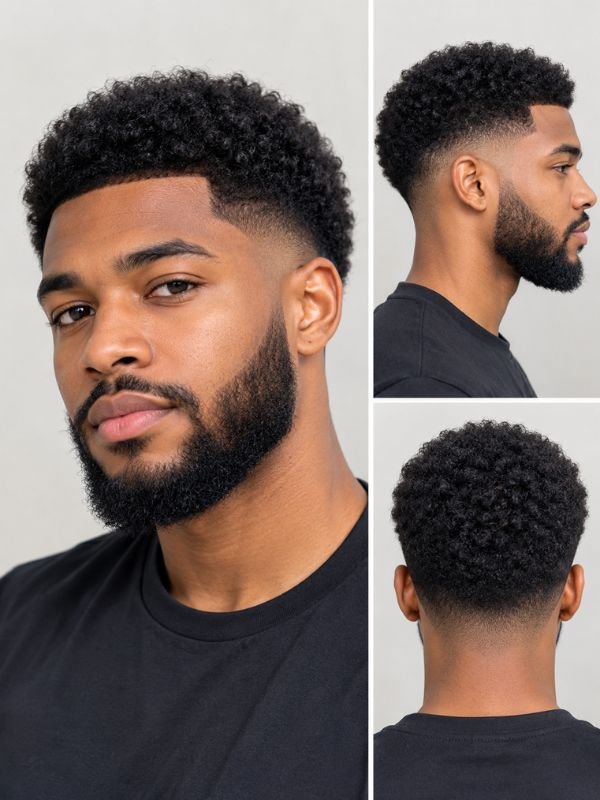
Pairing a compact afro with a well-groomed beard and a mid taper creates a complete, polished look. It’s a go-to combination for a more mature, professional style that still holds onto natural texture.
17. Defined Curls with Mid Taper Fade
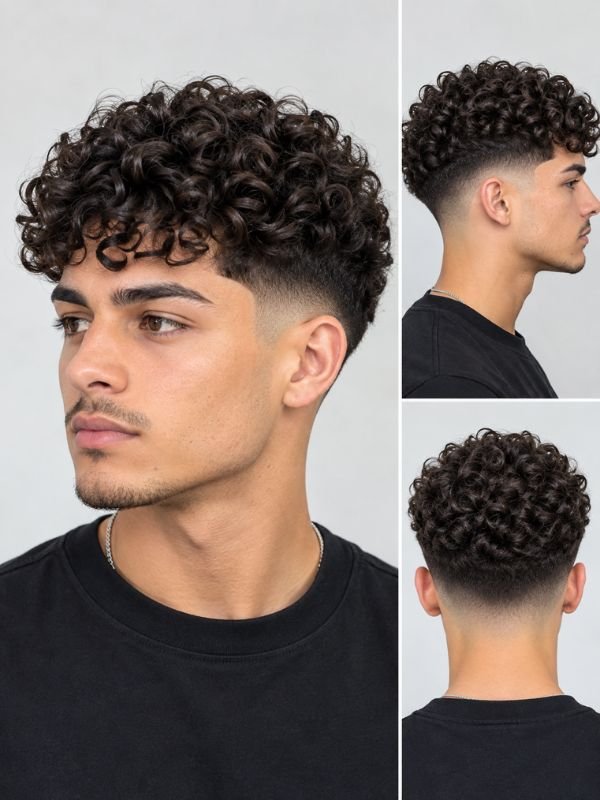
Curl-defining cream and a diffuser bring out individual curl clumps on top. The mid taper gives the curls a clean frame to sit inside, so the texture reads as styled rather than undone.
18. Finger Coils with Mid Taper Fade
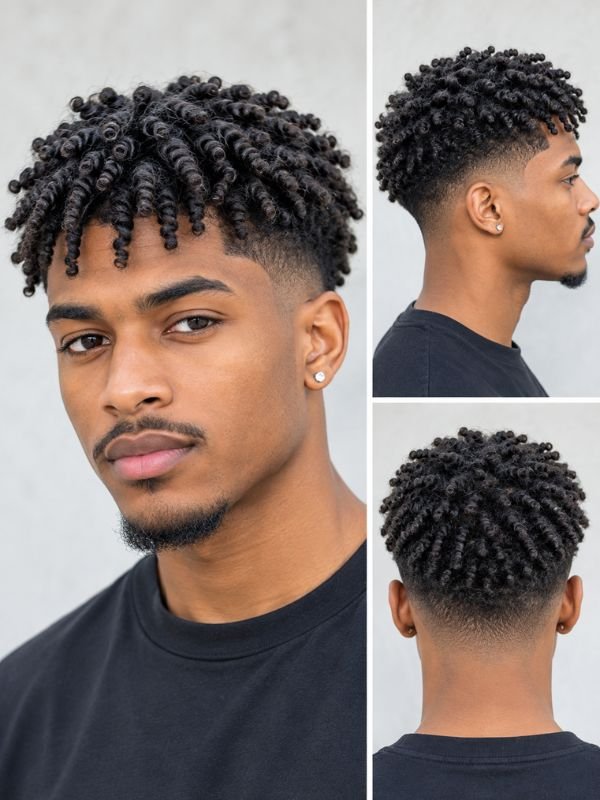
Hand-twisted, uniform coils create a neat, structured top that holds shape for days. It’s a great low-manipulation style for tighter curl patterns and pairs especially well with a skin-tight fade at the bottom.
19. Twist-Out with Mid Taper Fade
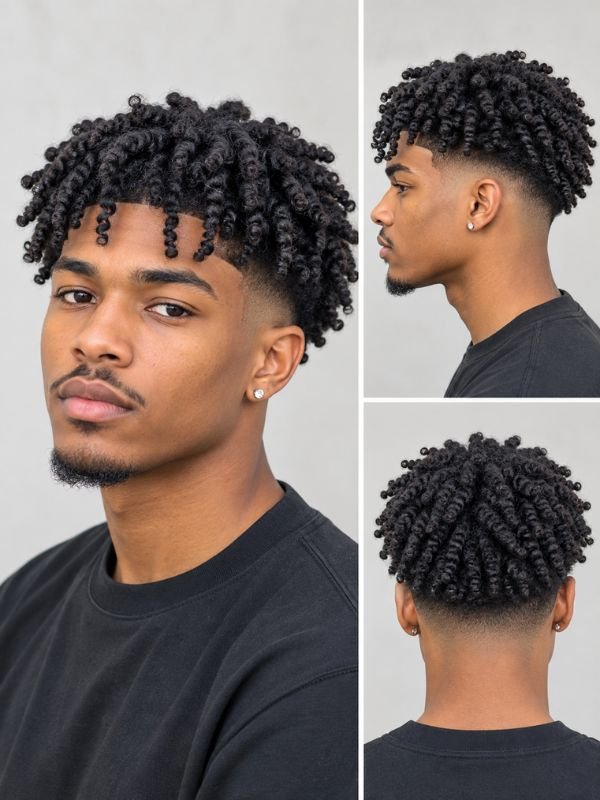
Two-strand twists are set overnight or for a few hours, then unraveled to reveal a soft, voluminous curl pattern. The mid taper keeps the sides from getting lost in all that texture, giving the whole style a defined outline.
20. Curly Pompadour with Mid Taper Fade
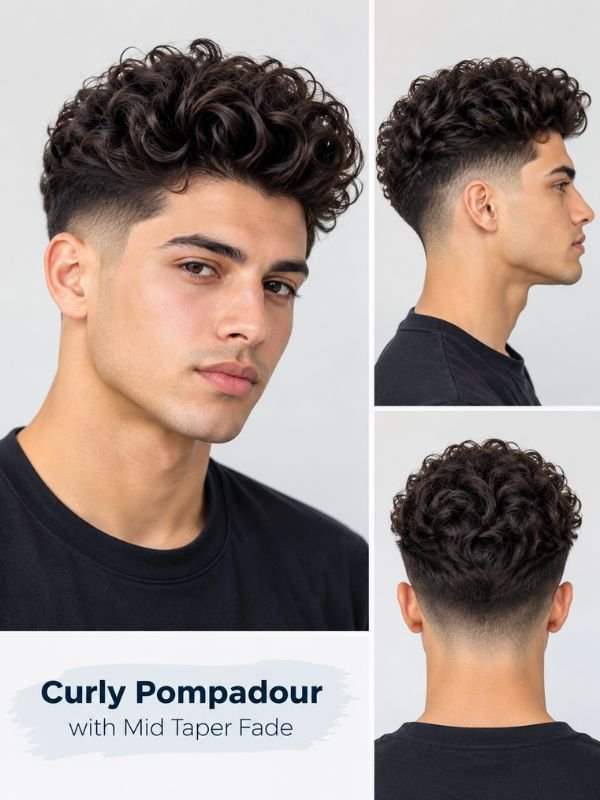
Curls are brushed and lifted up and back for a rounded, voluminous silhouette. It’s a dressier option that still works with fully natural texture, and it transitions easily from daytime to evening wear.
21. Quiff with Mid Taper Fade
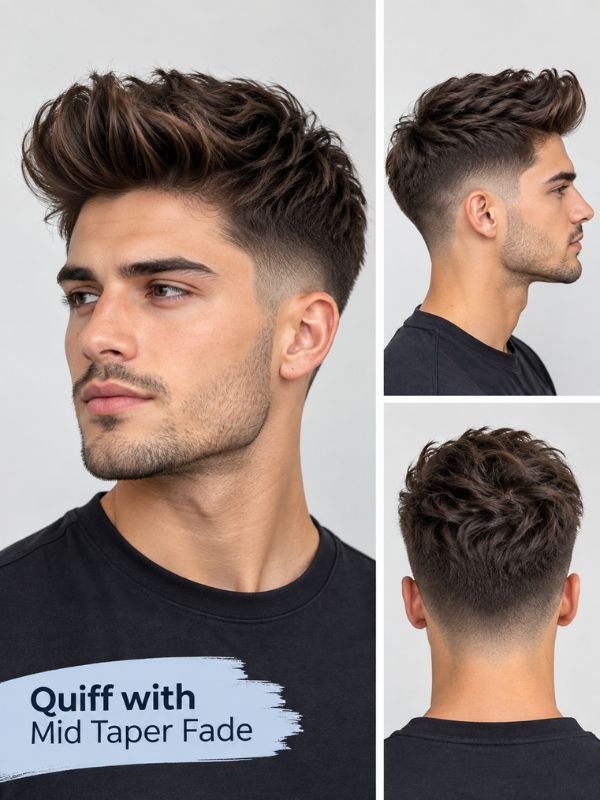
A shorter, more relaxed cousin of the pompadour, the quiff pushes curls up and slightly forward. It’s easier to maintain day to day than a full pompadour and needs only a small amount of curl cream to hold its shape.
22. Sponge Twists with Mid Taper Fade
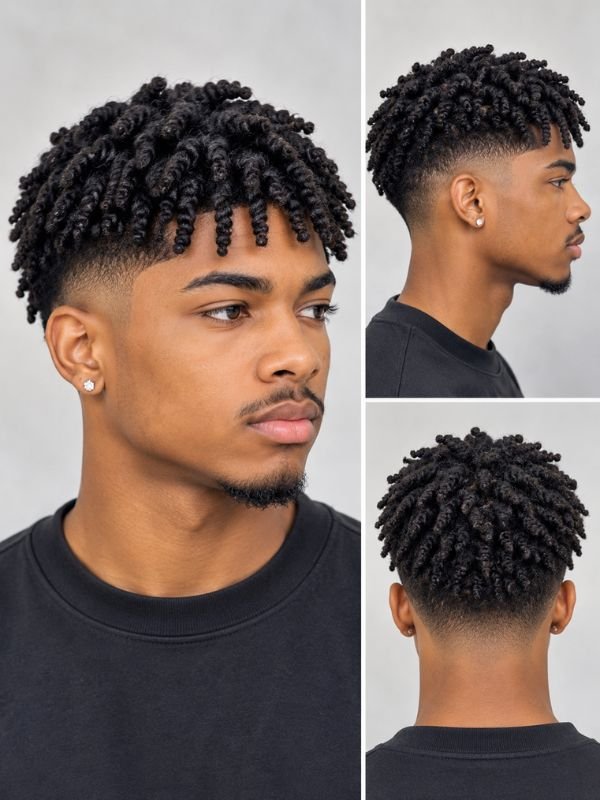
Similar to the sponged afro but styled into more defined, separated twist sections. It gives a textured, dimensional look that suits medium-length hair and holds up well through several days of activity.
23. Dreadlocks with Mid Taper Fade
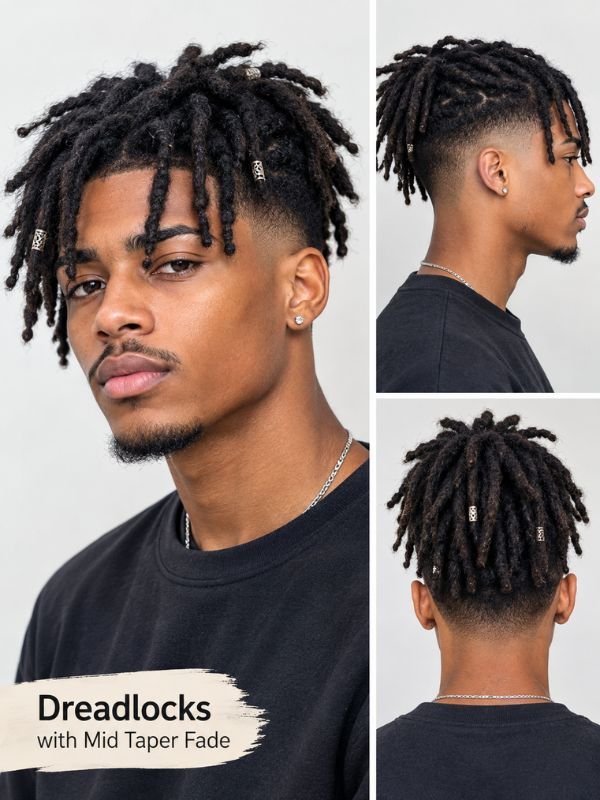
Medium to long locs sitting above a clean mid taper create striking contrast between raw natural texture and precise barbering. It’s one of the most requested loc combinations in barbershops right now, especially among men growing out mature locs.
24. Loc Bun with Mid Taper Fade
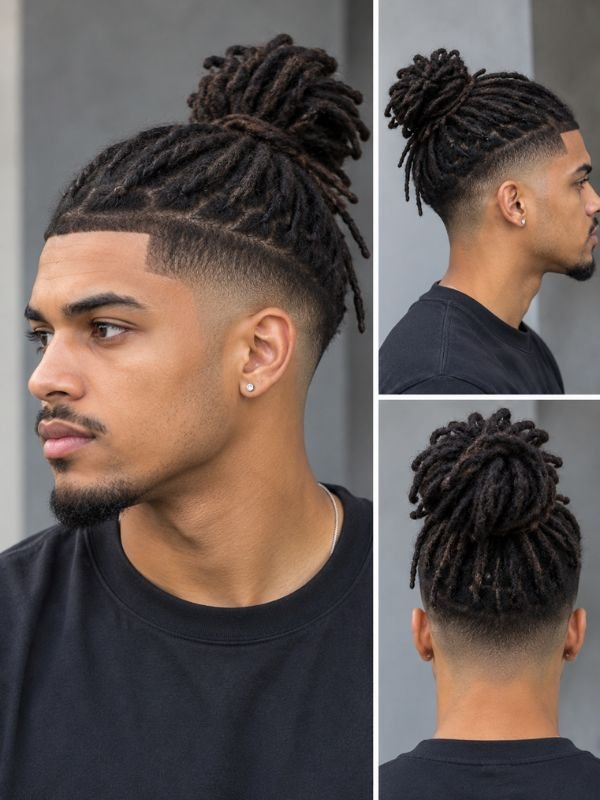
Gathering locs into a bun or half-up style shows off the mid taper underneath while keeping length manageable during workouts or hot weather, without needing to cut or thin the locs themselves.
25. Box Braids with Mid Taper Fade
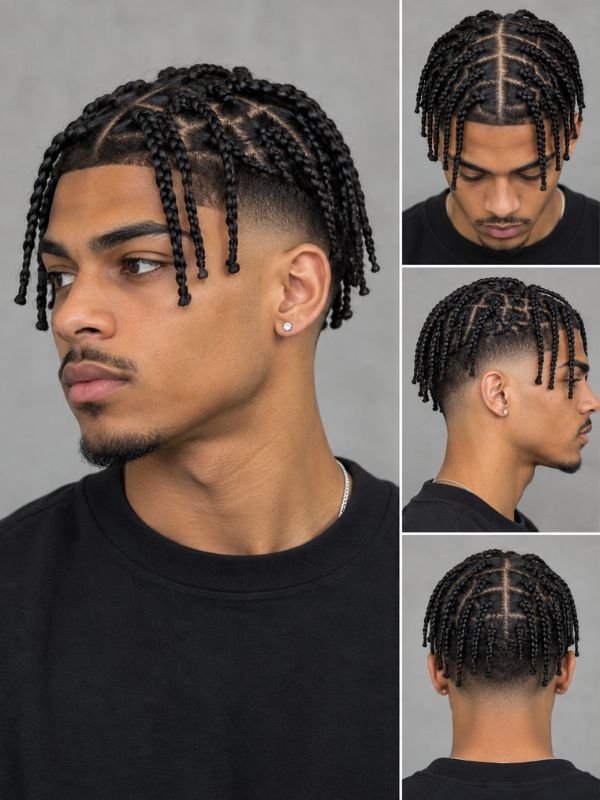
Uniform, medium-thickness braids paired with a tapered side create a protective style that still reads as sharp and intentional rather than purely functional, since the fade keeps the perimeter defined.
26. Feed-In Braids with Mid Taper Fade
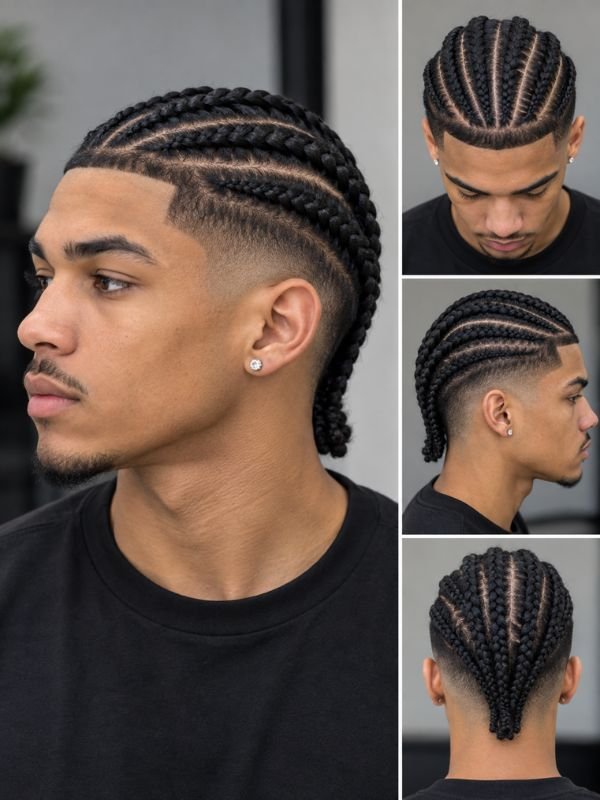
Braids that start flat against the scalp and gradually add hair create a seamless, natural-looking pattern. They pair well with a mid taper for a clean transition at the sides, especially when the braids are kept a uniform width.
27. Cornrows with Mid Taper Fade
Straight-back cornrows keep the top neat and low-maintenance for days at a time. The faded sides prevent the style from looking flat or one-dimensional and add a modern edge to a long-standing classic.
28. Man Bun with Mid Taper Fade
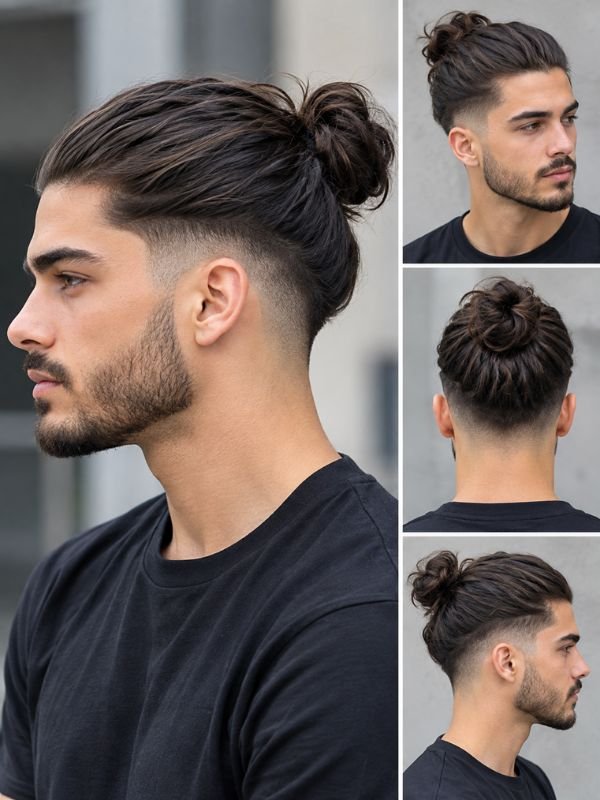
Longer hair gathered into a bun at the crown works surprisingly well over a mid taper, giving an unexpected but sharp contrast between polished sides and relaxed length on top that reads as effortless rather than undone.
29. Rope Twists with Mid Taper Fade
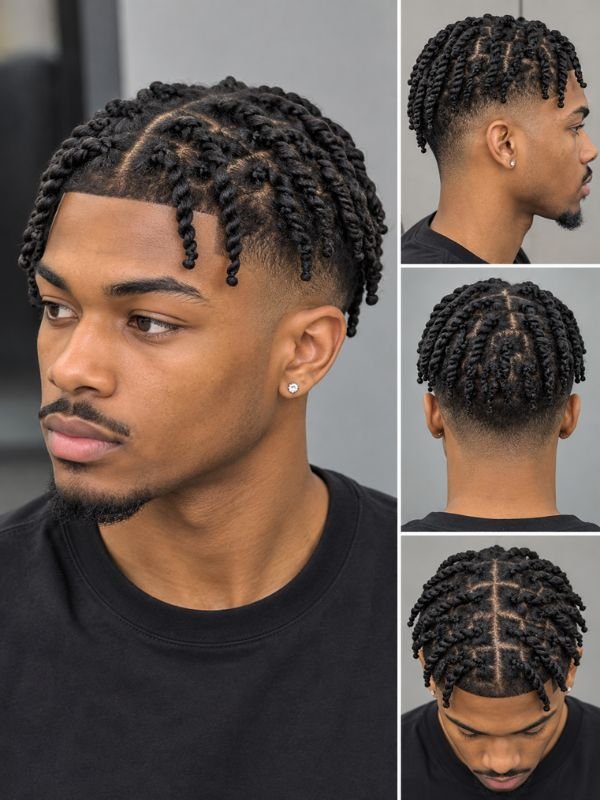
Two sections twisted tightly around each other create a rope-like texture that holds well for weeks. It’s a durable option for men who want length without daily styling, and the mid taper keeps the overall silhouette from looking bulky.
30. Mid Taper Fade with Full Beard
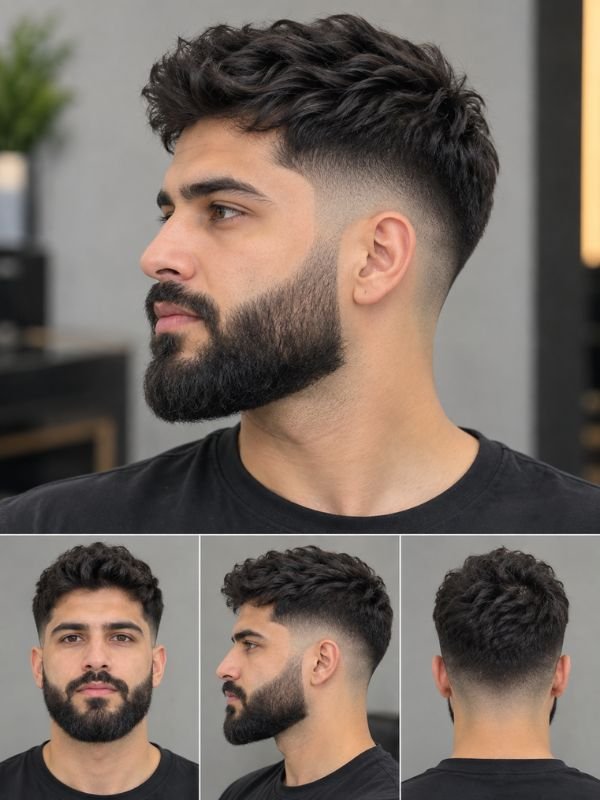
A thick, well-shaped beard connects seamlessly into the fade for a complete, mature look. It works especially well with shorter top styles like the buzz cut or Caesar, and it needs regular beard trims to stay in sync with the fade.
31. Mid Taper Fade with Short Beard or Stubble
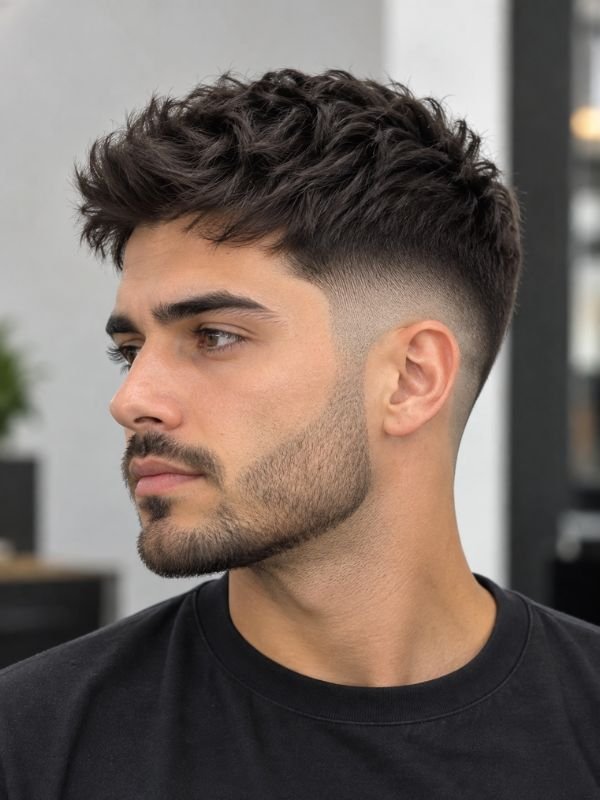
A lighter beard keeps the focus on the haircut itself while still adding definition to the jawline. It’s the lowest-maintenance beard pairing on this list and suits almost any top style without competing for attention.
32. Mid Taper Fade with Angular Beard
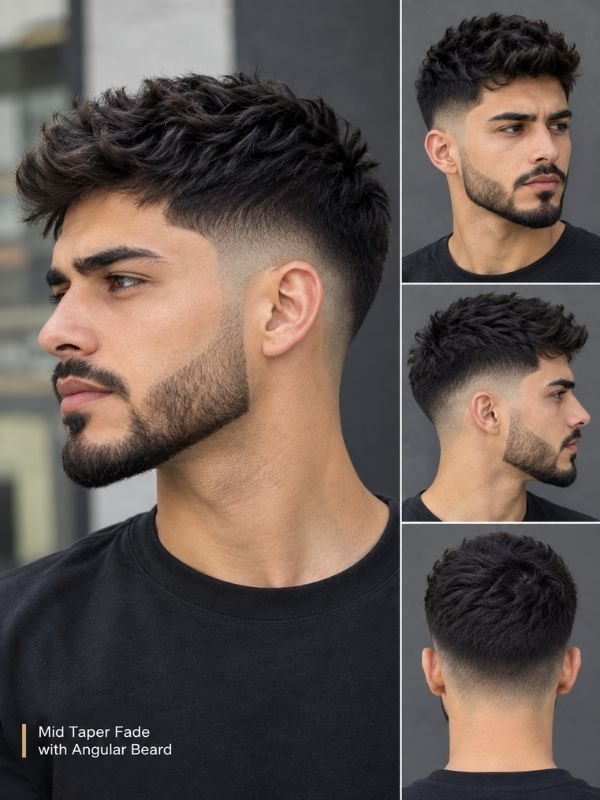
Sharp, geometric beard lines add structure to softer or rounder face shapes. Paired with a mid taper, it creates a bold, editorial-style look that benefits from a barber comfortable with precise razor work.
33. Mid Taper Fade with Shaved Line Design
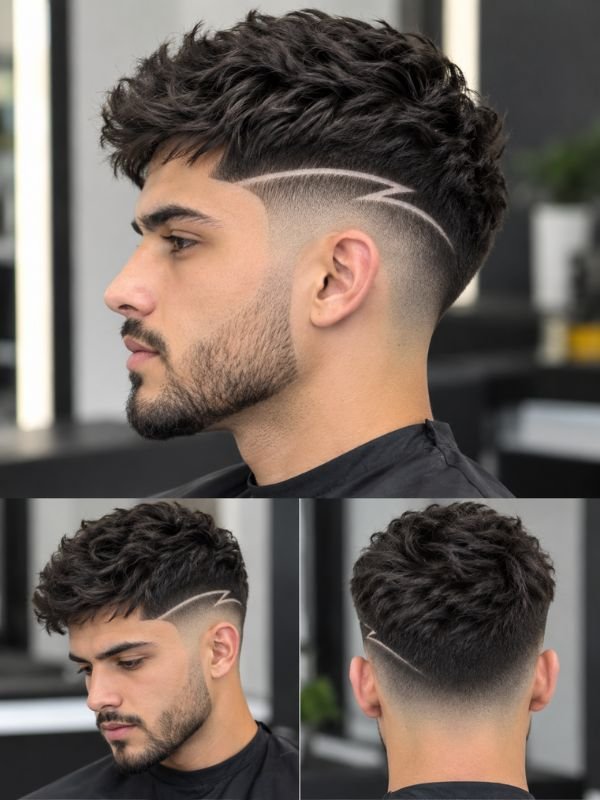
A single clean line shaved into the side or through the fade adds a subtle design element without going overboard. It’s an easy way to personalize a classic cut and grow out gracefully, unlike more detailed designs.
34. Mid Taper Fade with Geometric Design
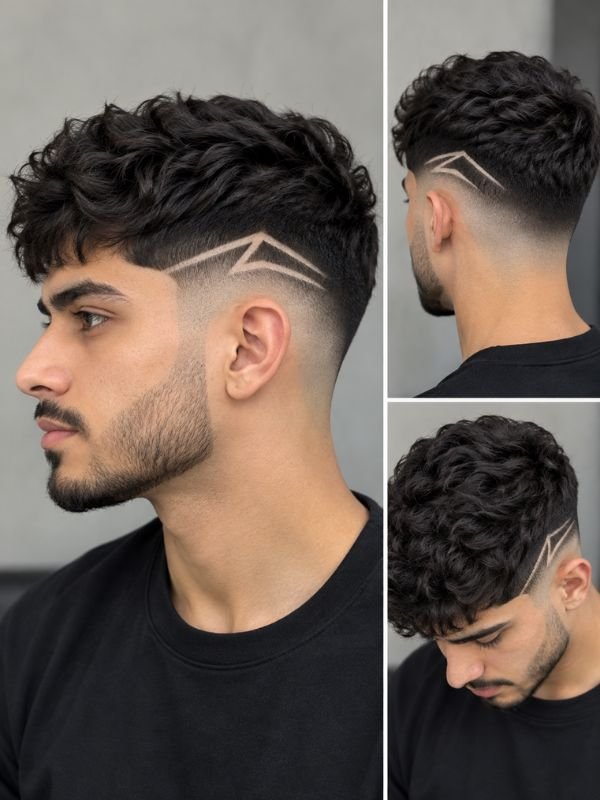
More elaborate shapes, triangles, or patterns shaved into the faded area turn the haircut into a personal statement piece. It’s best suited for men who want their cut to stand out and don’t mind more frequent touch-ups to keep the design crisp.
35. Mid Taper Fade with Full Line-Up
A complete line-up along the hairline, temples, and neckline gives any mid taper fade its final, barbershop-fresh polish. It’s the finishing touch that makes every style on this list look intentional, and it’s worth asking for even on a simple buzz cut.
How to Choose the Right Mid Taper Fade for Your Face Shape
The right mid taper fade should work with your face shape, not against it. Use this table as a quick starting point before you sit in the chair.
| Face Shape | Best Mid Taper Styles | Styles to Avoid |
| Oval | Almost any style on this list works well | Nothing in particular — oval is the most versatile shape |
| Round | High top afro, frohawk, quiff — anything that adds height | Styles that add width at the sides, like a wide afro |
| Square | Caesar cut, 360 waves, textured crop with a beard | Very sharp, angular line designs that add to existing angles |
| Heart | Defined curls, twist-out, low afro | Styles that pile extra volume at the crown |
| Oblong or Long | Side part, textured crop, styles with width | High top afro or anything that adds more vertical length |
| Diamond | Classic afro, sponge twists, side part | Styles that narrow an already slim forehead |
Oval Face Shape
Oval faces are naturally balanced, with roughly even proportions between the forehead, cheekbones, and jaw. That means nearly every style on this list will suit you, from a tight buzz cut to a full high top afro.
Use this as a chance to pick based on hair type and lifestyle rather than face-shape restrictions. If you have an oval face, prioritize how much daily styling time you’re willing to commit to over which cut is “safest.”
Round Face Shape
Round faces benefit from styles that build height rather than width, like the high top afro or frohawk. Height creates the illusion of a longer, more angular face shape and helps break up the natural roundness at the cheeks and jaw.
Avoid top styles that add significant width at the sides, since that can emphasize roundness rather than counter it. A tighter fade on the sides paired with volume on top is usually the better balance.
Square Face Shape
A square jaw pairs well with softer top styles like 360 waves or a textured crop. The goal is to soften the strong horizontal lines of the jaw rather than reinforce them.
Avoid overly sharp, angular design work that echoes the jawline too closely, since it can make the face look boxier. A rounded top style, like a low afro, tends to work in your favor.
Heart Face Shape
Since heart-shaped faces are wider at the forehead and narrower at the chin, keep volume lower and more even, like a low afro or twist-out, rather than piling it up top.
Too much height or width at the crown can exaggerate the forehead-to-chin taper that already defines this face shape. A mid taper fade with a well-groomed beard can also help visually balance the narrower jaw.
Oblong or Long Face Shape
Width helps balance a longer face, so a side part or textured crop that adds fullness at the sides works better than anything that stretches the head vertically.
Styles like the high top afro, which add significant height, tend to make an already long face look even longer. Aim for volume that spreads outward rather than upward.
Diamond Face Shape
Diamond faces are widest at the cheekbones and narrower at both the forehead and jawline, so styles that add a little width at the forehead and jaw, like a classic afro or side part, help even out proportions.
Steer clear of styles that narrow the top of the head even further, since that can make the cheekbones look disproportionately wide by comparison. A slightly fuller top, even with a fairly tight mid taper on the sides, tends to create the most balanced overall silhouette for this face shape.
How to Ask Your Barber for a Mid Taper Fade
Even a great haircut idea can go wrong if your barber doesn’t get the specifics. Being precise about guard numbers and starting points is the difference between “close enough” and exactly what you pictured.
This matters even more for Black hair, where shrinkage can make it hard to judge exact length just by looking at wet hair before a cut. Bringing a reference photo and describing the finished, dry look you want helps your barber account for that shrinkage from the start, since curl pattern alone can make the same guard number look completely different from one head of hair to the next.
Step-by-Step: What to Say to Your Barber
- Name the fade type and starting point: “I want a mid taper fade starting around the temple.”
- Specify the guard numbers: for example, a #1 or #1.5 on top, blending down to a #0 or skin at the bottom.
- Mention how you want the blend to look: “keep it seamless, no visible lines between guards.”
- Describe the top style you want, using a reference photo if you have one.
- Ask for a line-up along the hairline, temples, and neckline to finish the cut.
Exact Barber Scripts by Style
- Buzz cut: “Mid taper fade starting at the temples, #0 at the bottom, #1.5 buzz on top, sharp edge-up on the hairline.”
- Classic afro: “Mid taper fade blending into a natural afro, leave the top unclipped, taper starts mid-temple, clean line-up.”
- 360 waves: “Mid taper fade, #1 on top for brushing, zero guard at the bottom, sharp temple line for the waves to connect into.”
- Dreadlocks or locs: “Mid taper fade around the perimeter only, keep the locs untouched on top, clean fade blend from mid-temple down.”
- Cornrows or braids: “Mid taper fade at the sides and back, leave enough length on top for braiding, no bulk at the nape.”
If your barber is new to you, it also helps to ask a quick question before they pick up the clippers: how they typically blend a mid taper. Some barbers work with a shear-over-comb technique for a softer finish, while others rely entirely on clipper guards for a crisper line, and knowing which one you prefer ahead of time avoids surprises.
How to Maintain a Mid Taper Fade for Black Hair
A sharp mid taper fade doesn’t stay sharp on its own. A little routine maintenance keeps the line crisp and the top looking intentional rather than overgrown, and most of it takes only a few extra minutes a day once it becomes a habit.
How Often Should You Refresh a Mid Taper Fade?
Most men need a touch-up every 2 to 3 weeks to keep the fade blended and the hairline crisp. If your top style is very short, like a buzz cut, you may need a full cut every 2 weeks instead.
Longer top styles like locs, braids, or an afro can stretch that timeline slightly, since only the sides and edges need regular attention between full cuts. A quick “edge and fade refresh” appointment, without touching the top at all, is usually faster and cheaper than a full haircut if your top length is exactly where you want it.
Daily Styling Routine by Style Type
- Afros and curly tops: Finger-fluff or pick out the roots each morning, then apply a light curl cream or oil to reduce frizz.
- 360 waves: Brush in the direction of the wave pattern for a few minutes, apply wave pomade, and tie down with a durag before bed.
- Twists, coils, and braids: Lightly mist with a leave-in spray and seal with oil to prevent dryness between styling sessions.
- Locs: Retwist roots as needed and apply a light oil to keep both the locs and the scalp underneath from drying out.
- Short buzz cuts: Little to no daily styling needed beyond a quick pass of moisturizing lotion on the scalp.
Best Products for Black Hair After a Mid Taper Fade
- A lightweight leave-in conditioner to replace moisture lost during washing.
- A curl-defining cream or gel for textured tops that need hold without stiffness.
- A natural oil, like jojoba or lightweight grapeseed oil, to seal moisture into both hair and scalp.
- A durag or silk/satin bonnet to protect the style and the fade line overnight.
- A gentle, sulfate-free shampoo to avoid stripping natural oils between wash days.
Product buildup is one of the most overlooked issues around a fresh fade, since heavy creams and gels can make the faded area look dull or greasy compared to the crisp line your barber created. Applying products mainly to the top and using a lighter touch near the fade line helps the cut stay looking freshly done for longer.
How to Get a Mid Taper Fade at Home
Getting a barbershop-quality mid taper fade at home is possible with the right tools and a lot of patience, though it works best as touch-up maintenance between professional visits rather than a full replacement for one. Even experienced barbers use two mirrors and years of muscle memory to get the back of a fade right, so don’t be discouraged if your first few attempts aren’t perfectly symmetrical.
Tools You Need
- A quality clipper set with multiple guard sizes (0 through 2 at minimum)
- A trimmer for edge-up and line work
- A handheld mirror or a second mirror set up behind you
- Clipper oil to keep blades gliding smoothly
- A cape or old towel to catch clippings
Step-by-Step: Mid Taper Fade at Home
- Start with clean, dry hair and section it so you can see your natural hairline and temple area clearly.
- Use your largest guard first on top to establish the length you want to keep.
- Switch to a smaller guard around the mid-temple area and work downward, blending in short, upward strokes.
- Drop to a shorter guard or skin near the bottom of the fade, right above the ear and around the neckline.
- Go over the blend zone again with a slightly longer guard to soften any visible lines between sections.
- Finish with a trimmer to clean up the hairline, temples, and neckline for a crisp edge-up.
Take it slow, work in small sections, and check your progress from multiple angles before committing to a shorter guard. It’s far easier to fade further down gradually than to fix a line that’s already too short.
Common Mid Taper Fade Mistakes to Avoid
- Skipping the blend step. Jumping straight from a long guard to skin creates a harsh, visible line instead of a smooth taper.
- Cutting dry, unwashed hair. Product buildup and dirt make it harder to see your natural part and hairline clearly.
- Waiting too long between touch-ups. A mid taper fade grows out faster than a low fade, so stretching past 3, 4 weeks often means starting over.
- Ignoring face shape. Copying a photo without considering your own proportions can make a great style look off on your particular face.
- Neglecting scalp moisture. Fading more of the scalp means more exposure to dryness, so skipping oils or moisturizer can leave the skin looking ashy or irritated.
- Using the wrong guard sequence at home. Jumping guard sizes too quickly, rather than stepping down gradually, is the most common reason at-home fades end up patchy.
- Forgetting the back of the head. It’s the hardest section to see, and the easiest to leave uneven when touching up a fade solo.
Mid Taper Fade Trends for Black Men in 2026
Natural texture is taking center stage more than ever, with barbers leaning into afros, twist-outs, and coils rather than pushing clients toward fully relaxed or heat-styled looks. Line and geometric designs continue to grow as a form of personal expression, especially paired with shorter top styles where the design has room to stand out.
Beard integration, where the fade connects seamlessly into a full or stubble beard, remains one of the most requested full-package looks heading into 2026, alongside a continued preference for skin-tight blends at the bottom of the fade for extra sharpness.
Protective styles paired with a mid taper are also having a bigger moment than in previous years, with more men treating locs, braids, and twists as permanent style choices rather than temporary options, and asking barbers to maintain a sharp fade around them rather than choosing between the two.
Conclusion
The mid taper fade has earned its spot as one of the most versatile, low-fuss cuts for Black men because it works with nearly any hair texture, face shape, and lifestyle. Whether you call it a mid taper, a black taper fade, or simply a mid fade, it’s the same reliable foundation, and one of the most searched-for cuts for Black men heading into 2026. From a classic afro to sharp 360 waves or a fully loc’d look, it gives you a clean, adaptable base to build on.
Bring a reference photo, use the barber scripts above, and keep up with touch-ups every few weeks, and you’ll have a cut that looks intentional from every angle in 2026.
There’s no single “best” style on this list, only the one that fits your face shape, your hair type, and how much time you actually want to spend on it each morning. Start with whichever style caught your eye first, take it to your barber, and adjust from there.