

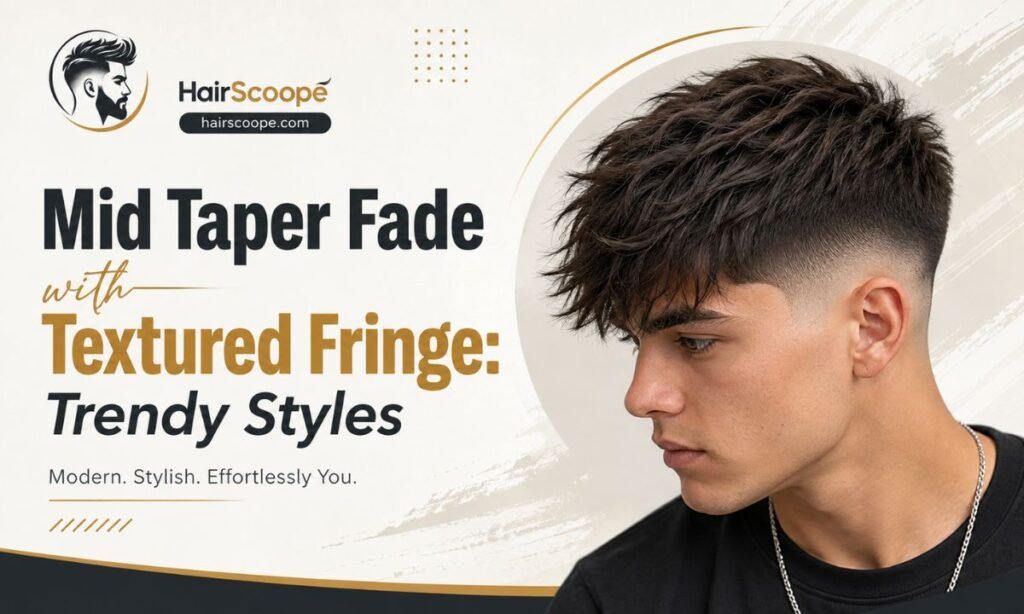
Barbershops are booked out for this one. The mid taper fade with textured fringe has quietly become the most requested men’s haircut of 2026, and it’s not hard to see why. It’s sharp enough for the office, relaxed enough for the weekend, and it works with almost any hair type you’ve got.
If you’re tired of the same tired buzz cut or you want an upgrade from a basic crop, this guide breaks down everything: what the cut actually is, the best variations to try, how to talk to your barber, and how to keep it looking fresh between visits.
What Is a Mid Taper Fade with Textured Fringe?
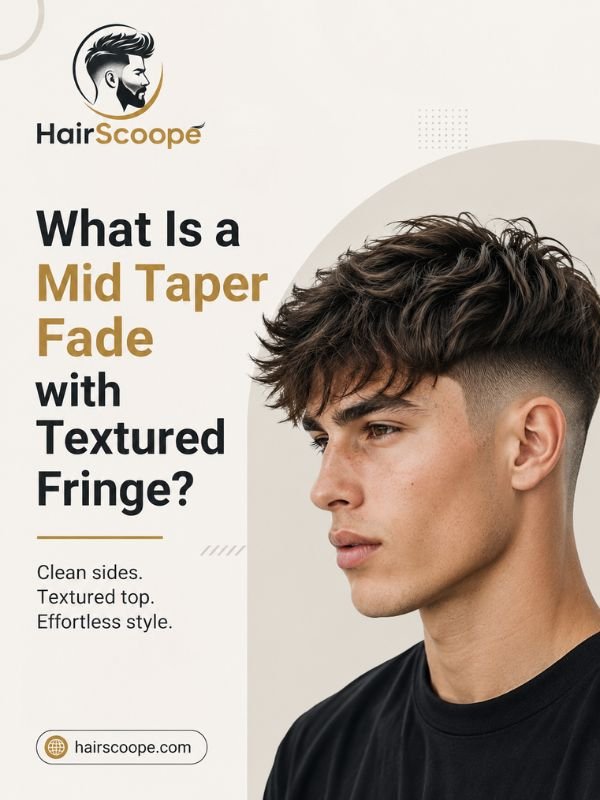
A mid taper fade with textured fringe is a two-part haircut. The sides and back are cut using a mid taper, meaning the fade sits in the middle zone between the ears and the crown, rather than starting high on the head or staying low near the neckline.
Up top, the hair is left longer and cut into choppy, textured layers that fall forward over the forehead as a fringe. Instead of a flat, combed-down front, you get natural movement, a bit of lift, and just enough “undone” energy to make the whole look feel intentional rather than accidental.
The mid taper does the heavy lifting on maintenance. It blends cleanly without the stark contrast of a high fade, so regrowth is far less noticeable between trims. The fringe is where you get to have fun, styling it messy, sleek, swept to one side, or piled up with volume depending on the day.
Together, the two halves create a balanced silhouette: tidy on the sides, expressive on top. That balance is exactly why this cut keeps showing up in barber portfolios and street style shots throughout 2026.
Mid Taper Fade with Textured Fringe Styles
Not every mid taper fringe looks the same. Small changes in fringe length, texture, and direction completely change the vibe. Here are the styles barbers are cutting most this year.
Mid Taper Fluffy Fringe
This version leans into volume. The fringe is left thicker and longer on top, then blow-dried forward and lifted at the root for a soft, cloud-like finish. It suits guys who want something a little more playful without going full curtain bangs.
A light mousse or volumizing spray at the roots helps the fringe hold its fluff through the day. It photographs well and pairs nicely with rounder or square face shapes because the height adds length visually.
Mid Taper Textured Fringe with Straight Hair
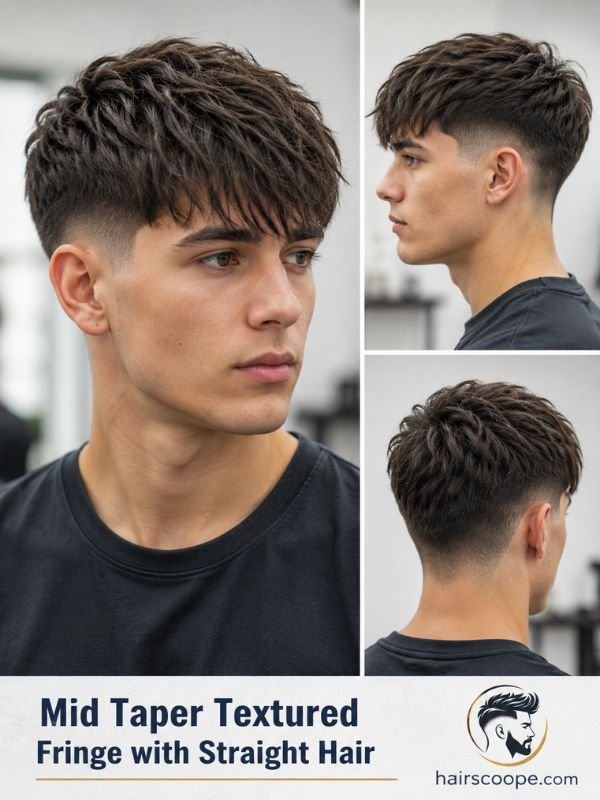
Straight hair takes texturizing scissors extremely well. Point-cutting the ends breaks up the line so the fringe doesn’t sit flat or heavy. The result is a piece-y, separated look rather than a solid block of hair.
Because straight strands don’t add natural texture on their own, product does most of the work here. A matte clay or texture powder keeps the ends separated without weighing the hair down.
Mid Taper Textured Fringe with Curly Hair
Curls already bring their own texture to the table, so this variation is less about creating movement and more about controlling volume. The taper keeps the sides neat while the curls stay full and bouncy on top.
Barbers usually thin out some of the bulk with layering so the curls don’t puff into a triangle shape. A curl cream, rather than a heavy pomade, keeps the definition intact without flattening the spring.
Mid Fade with Wavy Fringe
Waves and fringes were basically made for each other. The natural undulation in wavy hair gives the fringe built-in movement, so this style often needs the least amount of daily effort.
A sea salt spray or light texturizing cream is usually all it takes. Scrunch it in after a shower, let it air dry or diffuse briefly, and the waves do the rest.
Mid Taper with Textured Fringe for Short Hair
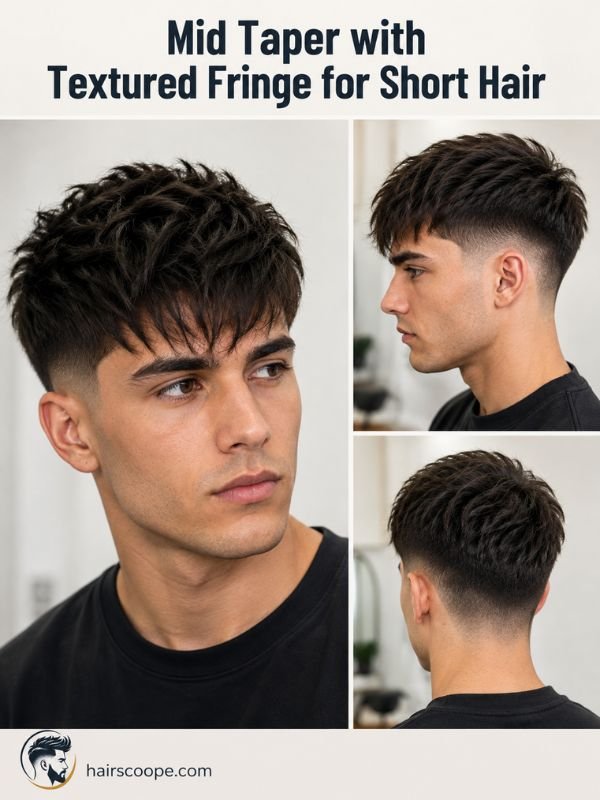
Prefer to keep things low-maintenance? This version keeps the fringe short, landing just above the brow rather than sweeping across the forehead. It’s a cleaner, more subtle take that still gets the textured effect through short, choppy layers.
It’s a strong pick for guys who don’t want to style their hair every single morning but still want more personality than a standard crop offers.
Textured Fringe Mid Taper Fade
This is the classic, do-it-all version most people picture when they hear “mid taper fringe.” Medium-length fringe, moderate texture, a taper that blends cleanly from ear height. It’s flexible enough to dress up or down and forgiving across most hair types and face shapes, which is why it remains the most commonly requested variation at barbershops.
Why Is the Mid Taper Fade with Textured Fringe So Popular?
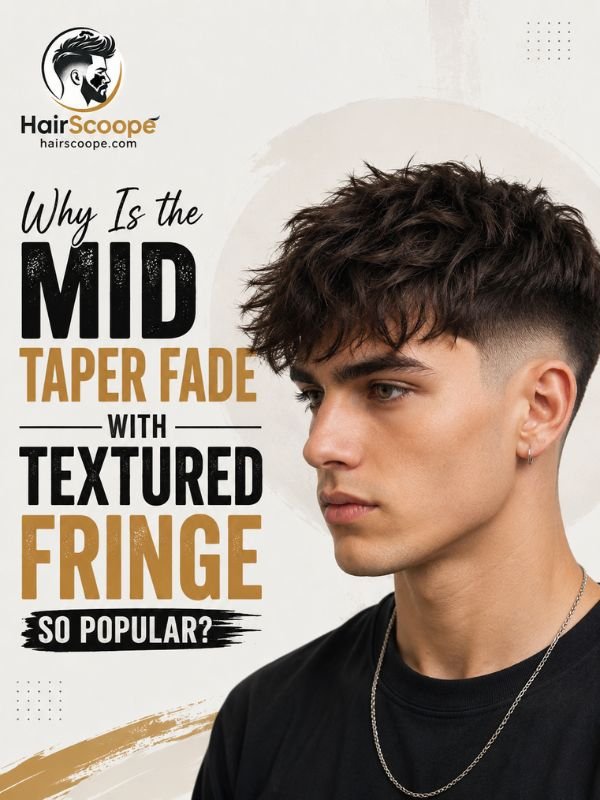
A few reasons keep this cut trending in 2026, and they go beyond looks.
- It’s genuinely low maintenance. The mid taper blends softly, so you don’t need a fresh cut every two weeks to avoid looking grown out.
- It suits nearly every hair type. Straight, wavy, curly, or thick, the fringe adapts because texture comes from cutting technique, not just natural hair pattern.
- It works for most face shapes. The forward fringe softens angular features and adds visual length to rounder faces.
- It transitions from work to weekend. A quick comb-through looks polished for the office; a bit of tousling makes it look effortless for a night out.
- It’s social-media friendly. The textured, dimensional top photographs better than a flat, combed style, which matters more than people admit.
- Barbers can customize it easily. Fringe length and taper height can be adjusted slightly for each client, so no two cuts look identical.
Barbers and stylists have noted the mid fade with fringe as one of the standout men’s cuts trending into 2026, according to FashionBeans.
Mid Taper Fade with Textured Fringe for Different Hair Types
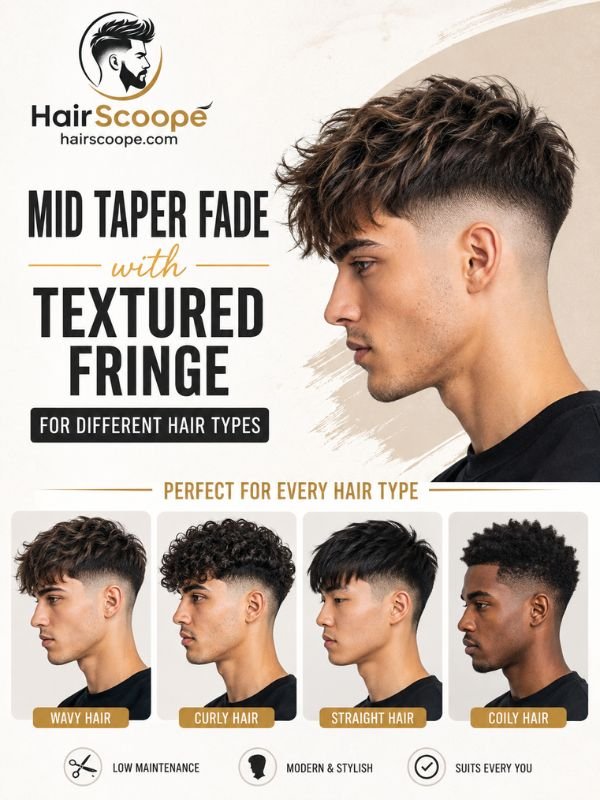
Hair type changes how this cut behaves day to day, so it’s worth understanding what to expect and ask for based on yours.
Straight Hair
Straight hair holds the fringe flat unless you actively build in texture. Ask your barber for point-cut or razor-cut layers, then use texture powder or a matte clay to create separation. Blow-drying the fringe forward while it’s damp adds lift that straight hair won’t produce on its own.
Wavy Hair
Wavy hair is arguably the easiest texture to work with here. The natural movement pairs with the fringe without much effort. A light styling cream or sea salt spray is usually enough to enhance the waves without stiffening them.
Curly Hair
Curly hair brings built-in volume and shape, so the focus shifts to controlling bulk rather than adding texture. Your barber may remove weight through layering so the curls sit closer to the head instead of expanding outward. Curl cream keeps definition without the crunch some gels cause.
Thick Hair
Thick hair holds texture exceptionally well once it’s layered properly. The challenge is preventing the top from looking bulky. Thinning shears or point-cutting reduce density while keeping enough length for a fuller fringe.
How to Ask Your Barber for a Mid Taper Textured Fringe
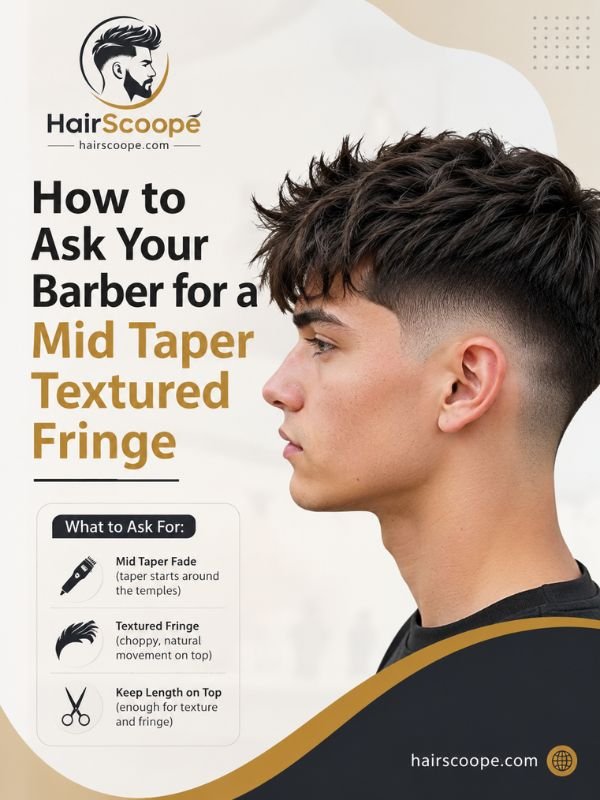
Walking in with the right words saves you a disappointing haircut. Here’s what to say:
- Ask for a mid taper fade, specifying that you want the blend to start around ear level, not higher or lower.
- Request the sides be blended, not blocked, so there’s no harsh line between the fade and the longer top.
- Tell your barber to leave the top longer and cut it into textured layers using point-cutting or texturizing shears.
- Specify where you want the fringe to fall, such as just above the eyebrows, or slightly longer for more styling options.
- Mention your preferred finish, whether that’s fluffy, sleek, swept to the side, or messy and undone.
- Bring a reference photo. Even a rough visual removes guesswork and helps match the exact taper height and fringe length you’re picturing.
Barber Tips for Getting the Best Mid Taper Fringe
A few small details separate an average cut from a great one:
- Check the taper height against your hairline and ear position. This affects how balanced the whole cut looks, not just how it fades.
- Ask for the fringe to be cut dry, after washing and styling. Hair falls differently wet versus dry, and dry-cutting shows the true finished length.
- Request texturizing over thinning if your hair is already fine. Texturizing scissors create movement without stripping density the way thinning shears can.
- Get a consultation on face shape. A good barber will adjust fringe length slightly based on forehead size and jawline.
- Ask about maintenance trims. Establishing a 3 to 4 week schedule keeps the taper sharp without letting the fringe grow past your preferred length.
How to Style a Mid Taper Fluffy Fringe
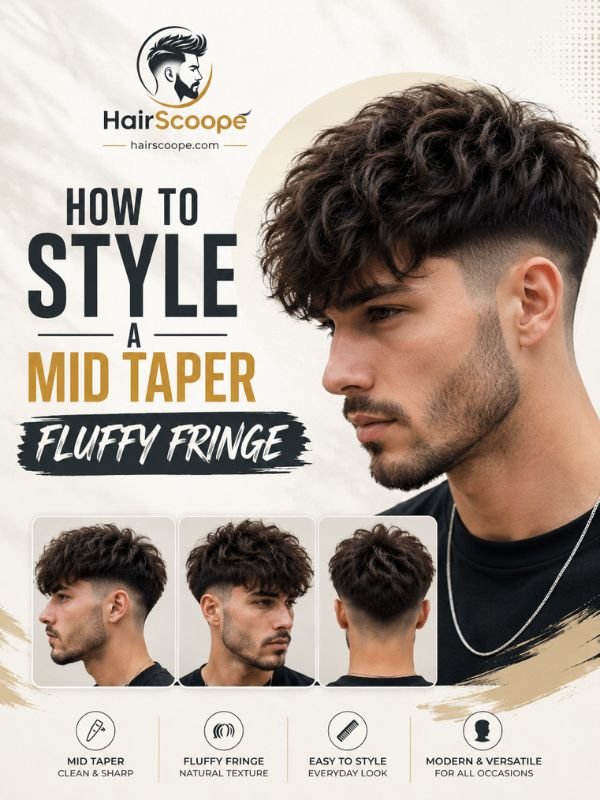
Getting that soft, voluminous fringe look isn’t complicated once you know the order of operations:
- Start with damp, towel-dried hair, not soaking wet.
- Apply a small amount of volumizing mousse or a lightweight sea salt spray through the roots of the fringe.
- Blow-dry on a medium heat setting, directing the airflow upward and forward using a round brush or your fingers.
- Once mostly dry, apply a pea-sized amount of clay or paste to your fingertips and work it through the ends only.
- Use your fingers, not a comb, to pull pieces forward and create separation.
- Finish with a light-hold spray if you want the shape to last through a humid day.
Skip heavy pomades for this style. They flatten volume instead of building it.
Best Styling Products for a Textured Fringe
Different textures and finishes call for different products. Here’s a quick comparison to help you choose.
| Product | Best For | Hold Level | Finish |
| Matte clay | Straight or fine hair | Medium | Matte, textured |
| Texture powder | Adding volume and grip | Light-Medium | Matte, natural |
| Curl cream | Curly or coily hair | Light | Defined, soft |
| Sea salt spray | Wavy hair | Light | Textured, beachy |
| Light styling cream | Wavy or thick hair | Light-Medium | Natural sheen |
| Volumizing mousse | Fluffy fringe styles | Light | Airy, lifted |
| Medium-hold pomade | Sleek, straight finish | Medium-High | Glossy, controlled |
A good rule of thumb: the messier or more textured you want the finish, the lighter and more matte your product should be. Save the heavier, shinier pomades for sleeker, combed-down looks.
Mid Taper Fringe Maintenance and Hair Care
This cut looks effortless, but it still needs a bit of upkeep to stay sharp:
- Trim every 3 to 4 weeks. The taper grows out faster than the fringe, so regular visits keep the contrast clean.
- Wash with a lightweight, moisturizing shampoo. Heavy products can weigh down textured layers over time.
- Avoid brushing dry curls or waves. Brushing disrupts natural texture; finger-detangle instead when possible.
- Deep condition weekly if your hair type runs dry, especially for curly or thick hair.
- Protect the fringe from heat damage by using a heat protectant spray before blow-drying.
- Reshape at home between cuts using a small amount of product on damp hair rather than trying to trim it yourself.
Mid Taper Fringe Variations to Try
Once you’ve nailed the basic cut, small adjustments to fade height and top length can give you a slightly different look without starting over.
| Variation | Fade Height | Top Texture | Best For |
| High Taper Fringe | Above temple, closer to crown | Bold, high-contrast texture | Guys who want maximum contrast and edge |
| Mid Taper Fringe | Ear level, blended softly | Balanced, everyday texture | Most face shapes and hair types |
| Mid Taper Fade with Textured Top | Ear level | Fuller, layered crop-style top | Guys who want more length overall, not just a fringe |
High Taper Fringe
The high taper pushes the fade further up the head, creating sharper contrast between the sides and the fringe. It elongates the face and puts more focus on the textured top, making it a bolder statement than the standard mid taper.
Mid Taper Fringe
This is the baseline version covered throughout this guide, the versatile middle ground between subtle and dramatic. It works for nearly any situation, from client meetings to casual weekends.
Mid Taper Fade with Textured Top
Instead of isolating the texture to a forward-falling fringe, this variation extends layered texture across the entire crown. It gives a fuller, crop-inspired silhouette while still keeping the mid taper sides clean.
Benefits of a Mid Taper Fade with Textured Fringe
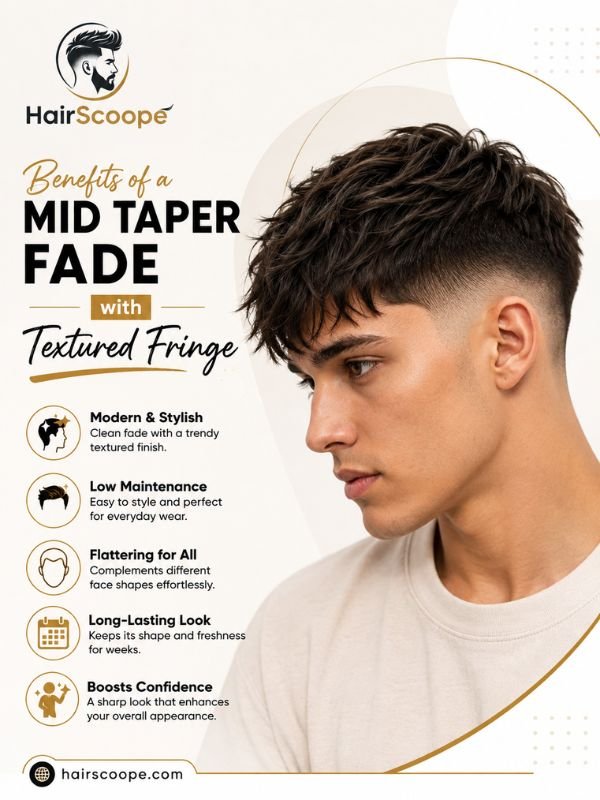
Beyond looking good, this cut earns its popularity through practical advantages:
- Versatile styling options — sleek, messy, swept, or fluffy, all from one haircut.
- Balanced maintenance — not as high-upkeep as a high fade, not as flat as a basic trim.
- Works across hair types — straight, wavy, curly, and thick hair all adapt well.
- Flattering for most face shapes — the forward fringe softens or elongates depending on your features.
- Grows out gracefully — the soft blend means fewer “bad hair week” moments between appointments.
- Easy to communicate to any barber — it’s specific enough to avoid miscommunication but flexible enough to customize.
Conclusion
The mid taper fade with textured fringe earns its spot as one of 2026’s most requested haircuts because it simply works. It flatters a wide range of face shapes, adapts to nearly every hair type, and stays manageable without ever looking boring.
Whether you go fluffy, sleek, wavy, or short, the formula stays the same: clean, blended sides paired with a fringe that has real movement and personality. Bring the right words into your next barber appointment, stick to a consistent trim schedule, and you’ll walk out with a cut that carries you from Monday mornings to Saturday nights without missing a beat.